
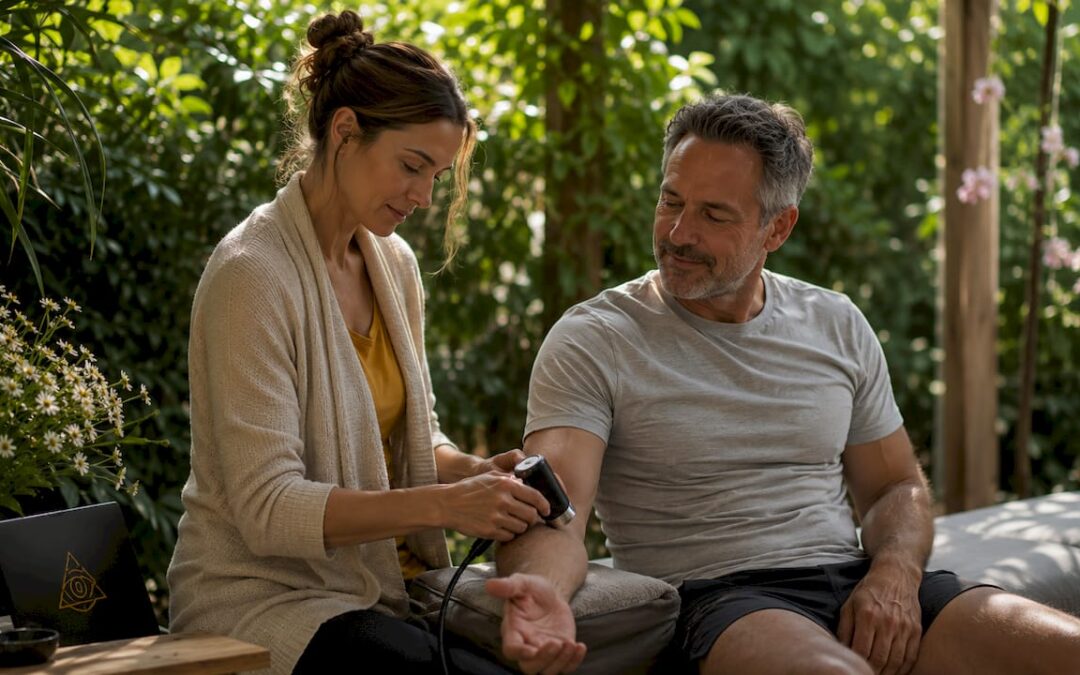
Frequency in tissue recovery is defined as the rate at which a therapeutic stimulus repeats per second, measured in hertz (Hz), and this rate directly determines which cellular repair processes activate, accelerate, or shut down. Modalities like PEMF therapy, pulsed ultrasound, and low-frequency electrical stimulation each rely on precise frequency selection to trigger specific biological responses. Get the frequency right, and you accelerate collagen synthesis, reduce inflammation, and restore nerve function. Get it wrong, and you can stall healing or worsen tissue damage. Understanding the role of frequency in tissue recovery gives you a real advantage when navigating your rehabilitation.
How do different frequencies biologically affect tissue healing?
Frequency is not a dial you turn up for more effect. It is a biological signal that speaks directly to your cells, and each tissue type listens at a different pitch.
Low frequencies in the 1–10 Hz range reduce inflammation and coordinate neuroimmune signaling. Research shows that 2 Hz electrical stimulation consistently outperformed 200 Hz stimulation for peripheral nerve repair, improving nerve conduction velocity, axon density, and sensory recovery. That finding matters because it overturns the assumption that stronger or faster stimulation always heals better.
Mid-range frequencies in the 50–100 Hz range activate fibroblasts, the cells that build collagen scaffolding for soft tissue and bone. PEMF therapy applied in this range stimulates collagen types I and VI through MAPK/ERK pathway activation, which is the biochemical chain reaction that tells tendons and connective tissue to rebuild. Eight hours of daily PEMF exposure at this range increased intracellular collagen synthesis in preclinical tendon studies.
Frequencies above 100 Hz target acute inflammation and edema. They are best applied in the earliest hours and days after injury, when the priority is calming the tissue environment rather than rebuilding structure.
Here is how the frequency spectrum maps to biological activity:
- 1–10 Hz: Reduces inflammation, supports neuroimmune coordination, promotes nerve repair
- 50–100 Hz: Drives fibroblast activity, collagen production, angiogenesis, and bone remodeling
- 100+ Hz: Addresses acute inflammation and edema in early injury phases
- 1–3 MHz (ultrasound): Stimulates chondrocyte activity and cartilage gene expression at the cellular level
Pro Tip: Frequency response follows a bell-shaped curve. There is a peak where biological effect is greatest. Going too high or too low from that peak reduces efficacy and can increase unwanted inflammation.
What are the optimal frequency ranges for different tissue types?
Different tissues speak different frequency languages. Matching the frequency to the tissue type is the single most important variable in any frequency-based recovery protocol.
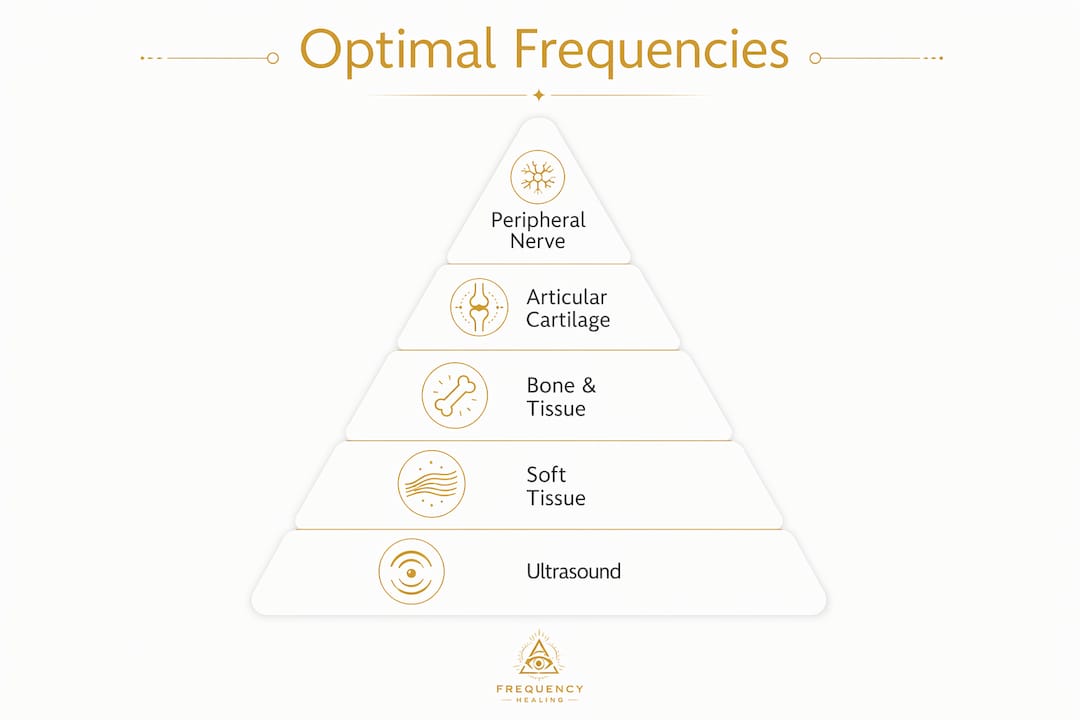
Peripheral nerves respond best to ultra-low frequencies near 2 Hz. The 2 Hz stimulation protocol produced superior axon numbers and functional recovery compared to high-frequency alternatives. This is because low frequencies support the neurotrophic signaling that guides nerve fiber regrowth without overstimulating the fragile repair environment.
Articular cartilage responds to ultrasound in the 1–3 MHz range. A pulsed ultrasound protocol at 2.00 MHz applied for 20 minutes every other day increased COL II mRNA by 1.5-fold and ACAN mRNA by 4.5-fold while reducing unwanted COL I production by 90%. Those numbers represent a significant shift toward cartilage-specific gene expression and away from fibrous scar tissue.
Bone and soft tissue repair responds to PEMF in the 50–100 Hz range. This range activates the structural remodeling phase of healing, where new collagen networks form and tissue tensile strength returns.
| Tissue Type | Optimal Frequency | Modality | Primary Effect |
|---|---|---|---|
| Peripheral nerve | ~2 Hz | Electrical stimulation | Axon regrowth, nerve conduction |
| Articular cartilage | 1–3 MHz | Pulsed ultrasound | Chondrocyte activity, collagen II |
| Bone and soft tissue | 50–100 Hz | PEMF | Structural remodeling, collagen synthesis |
| Acute inflammation | 100+ Hz | PEMF or electrical | Edema reduction, pain relief |
| Diabetic wounds | 1.0 MHz | Focused ultrasound | Wound closure, tissue regeneration |
Depth of penetration also follows frequency rules. 1 MHz ultrasound penetrates approximately 4 cm into muscle tissue, making it the right choice for deep injuries. At 3 MHz, penetration drops to roughly 1.1 cm, which suits superficial tissue work. Choosing the wrong frequency for the depth of your injury means the energy never reaches the target tissue.
Pro Tip: Start your recovery protocol with lower frequencies to stabilize inflammation and nervous system tone. Advance to higher structural repair frequencies only after the acute phase resolves. This phased approach reduces overstimulation risk significantly.
How does frequency modulation compare across therapeutic modalities?
Three modalities dominate frequency-based tissue therapy: electrical stimulation, therapeutic ultrasound, and PEMF. Each uses frequency differently, targets different tissue depths, and produces distinct clinical outcomes.
Electrical stimulation uses low-frequency currents, typically in the 1–10 Hz range, to enhance nerve regeneration and wound healing. The mechanism is direct: electrical pulses mimic the bioelectric signals that cells use to communicate during repair. Low-frequency protocols support neurotrophic factor release and neuroimmune coordination, which is why they outperform high-frequency settings for nerve injuries.
Therapeutic ultrasound uses mechanical wave frequencies in the MHz range. The frequency determines penetration depth and the type of cellular activity stimulated. At 1.0 MHz, focused ultrasound activated a piezoelectric gel bandage that achieved a 93.15% wound closure rate in diabetic wound repair, outperforming commercial recombinant growth factor dressings. That result shows how precisely calibrated ultrasound frequency can match or exceed pharmaceutical interventions.
PEMF therapy offers the widest frequency range and the most condition-specific customization. Condition-matched PEMF protocols use 1–10 Hz for pain and sleep, 50–100 Hz for bone and soft tissue repair, and 100+ Hz for acute inflammation. Generic PEMF devices that apply a single fixed frequency miss this specificity entirely.
Key distinctions across modalities:
- Electrical stimulation excels at nerve repair and wound healing at low frequencies
- Ultrasound frequency controls both depth of penetration and type of cellular stimulation
- PEMF covers the broadest therapeutic range and adapts to multiple healing phases
- All three modalities show reduced efficacy when frequency is mismatched to the condition
One critical point that applies to all three: device-tissue interface and delivery method influence outcomes as much as frequency selection itself. Contact mechanics, tissue matrix environment, and application technology all shape whether the frequency reaches its target and produces the intended effect.
What practical guidelines should you follow for frequency-based recovery?
Translating frequency science into a real recovery plan requires four principles: match frequency to injury type, respect the healing phase, avoid overstimulation, and work with a qualified practitioner.
- Match frequency to your injury. Nerve injuries need low-frequency electrical stimulation near 2 Hz. Cartilage damage responds to MHz-range ultrasound. Soft tissue and bone repair benefit from PEMF in the 50–100 Hz range. Using a bone-repair frequency on a nerve injury produces little benefit and may delay recovery.
- Respect the healing phase. The acute inflammatory phase (days 1–5 after injury) calls for frequencies above 100 Hz to manage swelling and pain. The proliferative phase (days 5–21) benefits from mid-range frequencies that drive collagen production. The remodeling phase (weeks 3 onward) responds to sustained PEMF or ultrasound protocols that strengthen new tissue.
- Avoid overstimulation. Therapeutic frequency response follows a bell-shaped curve. Exceeding the optimal frequency can suppress regeneration or increase inflammation. More is not better. Frequency selection requires precision, not intensity.
- Integrate with conventional rehabilitation. Frequency therapies work best alongside physical therapy, not as a replacement. They accelerate the cellular environment for healing, but mechanical loading, movement, and progressive exercise are still required to restore full function.
- Consult a healthcare professional. Personalized protocols based on imaging, injury severity, and healing stage produce better outcomes than self-directed frequency programs. A physiatrist, physical therapist, or sports medicine physician can guide frequency selection and session duration.
Pro Tip: Typical therapeutic sessions range from 15–30 minutes depending on the modality and tissue target. Consistency across multiple sessions matters more than session length. Daily or every-other-day protocols generally outperform weekly applications for tissue repair.
Key Takeaways
Frequency selection is the most critical variable in tissue recovery therapy, and matching it precisely to tissue type and healing phase determines whether treatment accelerates or hinders repair.
| Point | Details |
|---|---|
| Low frequencies heal nerves | 2 Hz electrical stimulation outperforms 200 Hz for peripheral nerve repair and functional recovery. |
| Mid-range frequencies rebuild structure | PEMF at 50–100 Hz drives collagen synthesis and soft tissue remodeling through MAPK/ERK signaling. |
| Ultrasound frequency controls depth | 1 MHz reaches deep tissue at ~4 cm; 3 MHz suits superficial tissue at ~1.1 cm. |
| Bell-curve response limits dosing | Exceeding optimal frequency reduces efficacy and can worsen inflammation rather than resolve it. |
| Phase your protocol | Start low to calm inflammation, then advance to structural repair frequencies as healing progresses. |
Why I think one-size-fits-all frequency therapy is holding recovery back
After years of working with frequency-based protocols and studying the research behind them, the pattern I keep seeing is this: most people using frequency therapy are using the wrong frequency for the wrong phase of healing. They find a device, set it to a default frequency, and expect results. When results are slow, they assume frequency therapy doesn’t work. The real problem is specificity.
The research on condition-matched protocols makes it clear that generic treatment underperforms targeted treatment every time. A 2 Hz protocol for nerve repair and a 75 Hz protocol for tendon remodeling are not interchangeable. They activate entirely different signaling pathways. Treating them as equivalent is like taking the wrong medication at the right dose.
What excites me about where this field is heading is the shift toward phase-sequenced, adaptive frequency delivery. Instead of a fixed frequency for the entire recovery arc, you start low to stabilize the bioelectric environment, then advance through frequency ranges as the tissue moves from inflammation to proliferation to remodeling. That approach respects the living bioelectric conversation happening inside your body at every stage of repair.
The other thing I want people to understand is that device quality and application method matter as much as frequency selection. The research is unambiguous: device-tissue interaction shapes outcomes. A well-chosen frequency delivered poorly still underperforms. Your recovery deserves both the right frequency and the right delivery.
— Art
How Frequencyhealing supports your personalized recovery protocol
Frequencyhealing is built for exactly the kind of precision this article describes. The platform offers PEMF programs, binaural audio sequences, haptic vibration protocols, and scalar brainwave sessions that can be layered and phased to match your specific recovery stage.
Whether you are managing post-surgical inflammation, rebuilding soft tissue, or supporting nerve repair, Frequencyhealing lets you move through frequency ranges with purpose rather than guesswork. Programs are designed for use with PEMF coils, haptic devices, mats, and wired headphones, so the frequency reaches your tissue through the right delivery channel. Explore personalized frequency programs at Frequencyhealing and build a recovery ritual that matches your body’s actual healing phase.
FAQ
What is the role of frequency in tissue recovery?
Frequency determines which cellular repair processes activate during healing. Different Hz ranges trigger inflammation reduction, collagen synthesis, nerve regrowth, or structural remodeling depending on the tissue type and injury stage.
What frequency is best for nerve repair?
2 Hz electrical stimulation produces the best outcomes for peripheral nerve repair. Research shows it outperforms 200 Hz stimulation for axon density, nerve conduction velocity, and sensory recovery.
How does ultrasound frequency affect tissue penetration?
1 MHz ultrasound penetrates approximately 4 cm into muscle tissue, making it suitable for deep injuries. 3 MHz penetrates roughly 1.1 cm and is better suited for superficial tissue treatment.
Can using the wrong frequency slow healing?
Yes. Frequency response follows a bell-shaped curve, meaning frequencies above or below the optimal range reduce efficacy and can increase inflammation rather than resolve it.
How does PEMF frequency differ from electrical stimulation frequency?
PEMF uses pulsed electromagnetic fields across a wide frequency range (1 Hz to 100+ Hz) to target pain, bone repair, and inflammation without direct electrical contact. Electrical stimulation delivers current directly to tissue and works best at low frequencies near 2 Hz for nerve and wound healing.