

iTorus coil frequency programs are specialized pulsed electromagnetic field (PEMF) sessions that target specific body systems through defined frequencies, session durations, and coil placement. Each program is built around a clear wellness goal, whether that is boosting morning energy, deepening sleep, easing localized pain, or calming the nervous system. The iTorus Life app and platforms like Frequencyhealing give you structured program templates that remove the guesswork from iTorus Coil Frequency Program Examples: 2026 Guide coil frequency program examples and let you start with proven parameters from day one.
1. Top iTorus Coil Frequency Program Examples: 2026 Guide coil frequency program examples and their key parameters
The most widely used iTorus Coil Frequency Program Examples: 2026 Guide coil programs fall into five goal categories: energy and focus, sleep induction, pain relief, stress reduction, and cardiovascular support. Each category uses a distinct frequency band, session length, and coil placement. Understanding these parameters is the fastest way to match a program to your actual need.
Energy and focus programs

Beta and alpha frequencies (roughly 10–30 Hz) drive daytime alertness and mental clarity. A morning energy session runs 15 minutes with the coil positioned near the head or upper chest. This short window is enough to shift brainwave activity without overstimulating the nervous system before the day begins.
Sleep improvement programs
Delta and theta frequencies (1–8 Hz) are the core of any sleep aid preset, with sessions running 20–30 minutes. The coil sits on a nightstand or under the pillow, 10–50 cm from the body. Lower frequencies at this range soothe muscle tension and signal the parasympathetic nervous system to prepare for deep sleep.
Pain relief protocols
Low frequencies in the 5–15 Hz range target localized discomfort. The coil is placed directly near the painful area, and sessions run 15–40 minutes depending on severity. This placement concentrates the electromagnetic field on the target tissue rather than broadcasting it broadly.
Stress reduction and Schumann resonance programs
The Schumann resonance at 7.83 Hz is the most referenced frequency for relaxation and meditation support. Sessions run 15–20 minutes and pair well with theta wave overlays for deeper calming. Many people use this program as a midday reset or pre-meditation preparation.
Cardiovascular support protocols
A 21-day cardiovascular program uses dual coils: one placed over the sternum and heart area, the other over the lower back near the adrenal region. Sessions run 45 minutes daily. This multi-phase protocol is designed for blood pressure and endothelial support, and it represents the more advanced end of structured frequency healing.
Pro Tip: Log your program type, coil placement, and session time in a simple notes app after each session. Three days of data will show you patterns in energy, sleep quality, and mood that no marketing description can predict.
2. How to set up and customize iTorus coil frequency programs
Effective iTorus coil frequency program setup starts with short sessions and clear tracking. Jumping into 45-minute advanced protocols on day one is the most common mistake beginners make. The body needs time to adapt to electromagnetic stimulation, and shorter sessions give you cleaner feedback.
- Start with 10–15 minute sessions. Run a single frequency set for the first week. Note how your sleep, energy, and mood shift within 24 hours of each session.
- Set coil distance at 10–50 cm from the body. Coil proximity directly controls field strength. Closer placement produces stronger effects; move the coil farther away if the session feels too intense.
- Begin at lower intensity. Start at 10–20 Gauss and increase gradually across sessions while monitoring comfort. Progressive ramping prevents overstimulation.
- Use app-based presets first. The iTorus Life app and Frequencyhealing both offer structured program templates. These presets encode the frequency, duration, and intensity parameters that have been tested across multiple use cases.
- Align session timing to your physiology. Morning sessions favor higher frequencies for alertness. Evening sessions favor delta and theta ranges for parasympathetic activation. Matching program type to time of day amplifies the effect.
- Build in a decision rule. If a session feels too strong, shorten it by five minutes and reduce intensity before the next run. This prevents protocol overload and keeps your feedback loop clean.
- Advance to multi-frequency layering only after four weeks. Modern software supports simultaneous playback of multiple frequencies to mimic complex biological resonance. This is a powerful feature, but it requires a baseline of single-frequency experience to interpret the results accurately.
Pro Tip: Keep a dedicated wellness journal for your frequency sessions. Record the program name, coil placement, distance, duration, and a one-sentence note on how you felt two hours later. This log becomes your personal frequency database within a month.
3. Comparison of common iTorus coil programs and frequency healing options
Not all programs serve the same person or the same goal. The table below maps the most common program types against their key parameters so you can choose what fits your current priority.
| Program type | Frequency band | Session length | Coil placement | Best for |
|---|---|---|---|---|
| Morning energy boost | Beta/alpha (10–30 Hz) | 15 min | Head or upper chest | Focus, alertness |
| Evening deep sleep | Delta/theta (1–8 Hz) | 20–30 min | Nightstand, 10–30 cm | Sleep induction |
| Pain relief | Low (5–15 Hz) | 15–40 min | Near target area | Localized discomfort |
| Stress and meditation | Schumann (7.83 Hz) | 15–20 min | Desk or lap | Relaxation, calm |
| Cardiovascular support | Multi-phase, varied | 45 min | Sternum and lower back | Blood pressure, recovery |
Single coil vs. dual coil setups
Single coil configurations deliver focused, localized output. They work well for pain relief and targeted energy programs. Dual coil setups cover wider or multi-target areas and are the standard for complex protocols like the cardiovascular 21-day program. Device selection determines which programs are even available to you.
Entry-level vs. advanced programs
Entry-level programs use one frequency band, short sessions, and simple coil placement. Advanced programs layer multiple frequencies, extend session time, and require precise dual-coil positioning. Beginners benefit most from starting with one or two frequency sets before adding complexity. The jump from simple to layered programs is where most people either see a breakthrough or get confused by too many variables.
- Entry-level: single frequency, 10–20 minutes, one coil, one goal
- Intermediate: two to three frequencies, 20–30 minutes, coil placement adjusted by goal
- Advanced: multi-phase sequences, 30–45 minutes, dual coil, logged and iterated over weeks
4. Situational recommendations: choosing the right program for your lifestyle
The best iTorus coil frequency benefits come from matching the program to a specific moment in your day, not from running the most complex protocol available. These situational recommendations give you a direct starting point based on your current need.
Replace your morning caffeine hit
Run a 15-minute beta frequency session (14–30 Hz) with the coil near your head or upper chest before breakfast. This activates alertness pathways without the cortisol spike that caffeine triggers. Many people find this morning focus program sufficient on its own within two to three weeks of consistent use.
Wind down for sleep
Start a 30-minute delta/theta session 45 minutes before bed. Place the coil on your nightstand at 15–25 cm from your head. This timing gives the parasympathetic nervous system enough runway to shift gears before you actually lie down.
Manage localized pain
Position the coil 5–10 cm from the painful area and run a 5–15 Hz session for 20–30 minutes. Adjust distance if the sensation feels too strong. Consistency matters more than intensity here. Daily sessions over two weeks produce more reliable results than occasional long sessions.
Support stress and anxiety
The Schumann resonance program at 7.83 Hz is the most direct entry point for nervous system calming. Pair it with slow breathing or a body scan meditation for a compounding effect. Sessions of 15–20 minutes work well as a midday reset or pre-meeting preparation.
Biohacker-level rotation
Rotate between energy, recovery, and sleep programs across a weekly cycle to prevent cellular adaptation. A sample rotation: Monday, Wednesday, Friday for energy and focus; Tuesday, Thursday for pain or recovery; Saturday and Sunday for deep sleep and stress programs. This prevents your body from habituating to any single frequency signature.
Pro Tip: Integrate your frequency session with an existing habit, such as running a sleep program while you read before bed or a focus program during your morning routine. Habit stacking removes the friction of remembering to use the device.
Key takeaways
iTorus coil frequency programs deliver the most consistent results when session parameters, coil placement, and timing are matched to a specific wellness goal and logged over time.
| Point | Details |
|---|---|
| Match frequency to goal | Use beta/alpha for energy, delta/theta for sleep, and 5–15 Hz for pain relief. |
| Start short and log everything | Begin with 10–15 minute sessions and record sleep, energy, and mood after each one. |
| Coil distance controls intensity | Keep the coil 10–50 cm from the body; closer placement produces stronger effects. |
| Single vs. dual coil matters | Single coil suits focused goals; dual coil is required for complex multi-target programs. |
| Align timing to physiology | Morning sessions favor higher frequencies; evening sessions favor low delta/theta ranges. |
What I’ve learned from treating frequency sessions as experiments
The biggest mistake I see people make with iTorus coil programs is treating them like supplements. They run the same program every day, at the same intensity, and then wonder why the results plateau after three weeks. Frequency healing is a living bioelectric conversation between the device and your nervous system. Your body adapts. The protocol needs to adapt with it.
The people who get the most out of these programs are the ones who treat each session as a data point. They note what changed, what did not, and what felt different. That log becomes more valuable than any preset after 30 days. The Frequencyhealing platform is built around this principle. Its frequency program library is designed to be iterated, not just consumed.
Coil placement consistency is the variable most people underestimate. Moving the coil two inches between sessions changes the field geometry enough to affect results. Pick a placement, mark it if you need to, and hold it constant for at least a week before drawing conclusions. The science on PEMF is clear that coil orientation and distance are not minor details. They are the delivery mechanism.
Start simple. One program, one goal, two weeks. Then build. The complexity of advanced multi-phase protocols is only useful once you have a baseline to compare against.
— Art
Frequencyhealing’s PEMF programs and devices for every level
Frequencyhealing offers a full range of PEMF coils and structured frequency programs for people at every stage of their practice, from first-time users running a 15-minute sleep session to advanced practitioners building multi-phase weekly rotations.
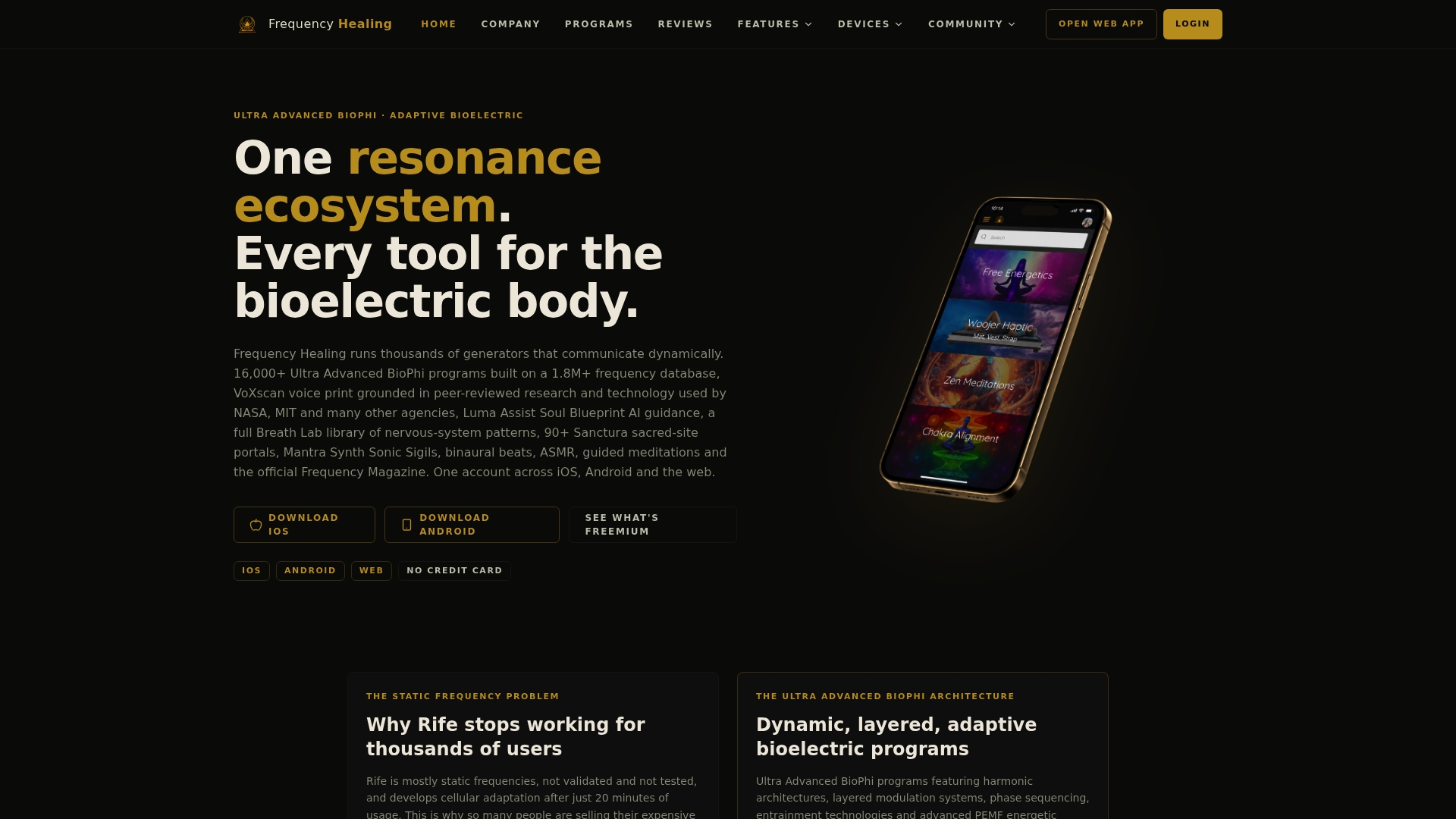
The platform’s PEMF coil catalog includes portable single-coil options for focused daily use and dual-coil configurations for complex protocols. The app-based program library covers energy, sleep, pain relief, stress, and cardiovascular categories, each with preset frequency settings and session lengths. Frequencyhealing also integrates with iMprinters for frequency imprinting into water, crystals, and other media. Every program is built to be personalized, logged, and refined over time.
FAQ
What frequencies do iTorus coil programs typically use?
iTorus coil programs use frequency ranges from 1 Hz to 30 Hz depending on the goal. Relaxation and sleep programs use 1–8 Hz (delta/theta), while energy and focus programs use 10–30 Hz (alpha/beta).
How long should a iTorus coil session last?
Session lengths range from 10–45 minutes depending on the program type. Beginners should start with 10–15 minute sessions and increase duration only after logging consistent responses over one to two weeks.
Where should I place the iTorus coil during a session?
Place the coil 10–50 cm from the target area. For sleep programs, a nightstand placement works well. For pain relief, position the coil directly near the affected area. For energy programs, near the head or upper chest is standard.
Can I use multiple frequencies in one session?
Yes. Modern frequency software supports multi-frequency layering for richer effects. This feature is best used after you have established a baseline with single-frequency sessions so you can accurately interpret the results.
How often should I run iTorus coil frequency programs?
Daily sessions produce the most consistent results. Rotating between program types across the week, such as energy programs on active days and sleep or recovery programs on rest days, prevents adaptation and keeps the bioelectric response active.