
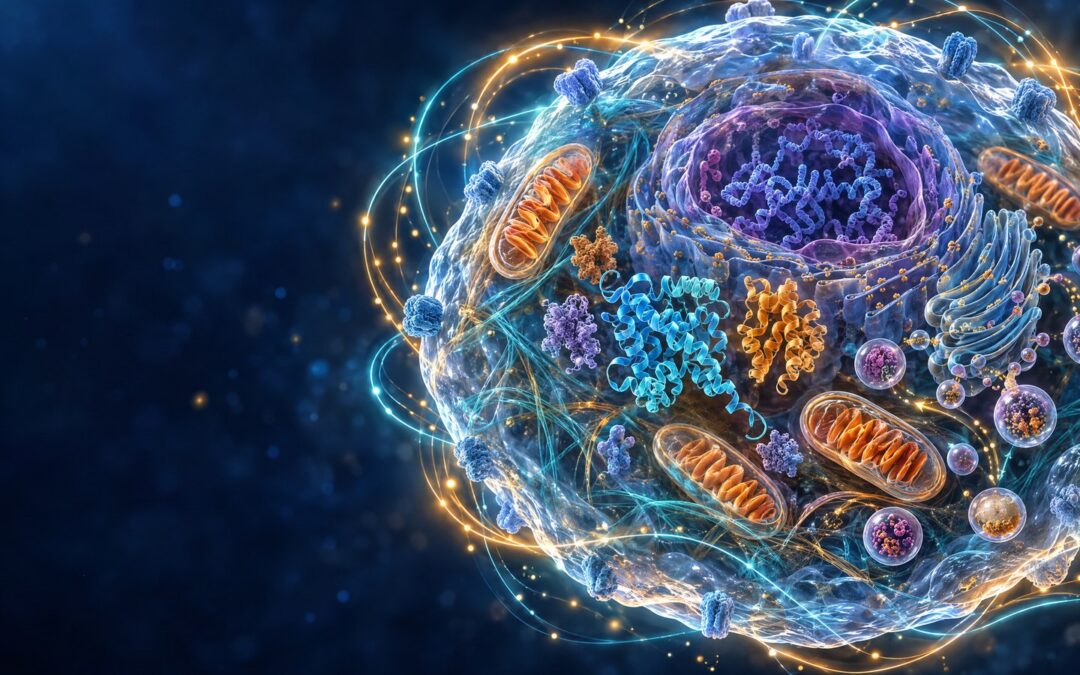
The most interesting question in wellness is changing. It is no longer only, “Which organ hurts?” It is also, “What has changed in the cellular systems that keep that tissue functioning?” Protein folding, mitochondrial maintenance, nutrient sensing and communication between cells are moving into the foreground of biomedical research. These are not slogans about a hidden repair switch. They are specific biological processes with specific jobs.[1]
Upstream cellular regulation means investigating the processes that shape a later functional outcome. It complements organ-level diagnosis and treatment rather than replacing them. The opportunity is to understand how maintenance fails, identify a useful point of intervention and establish whether changing it actually benefits people. That is a compelling scientific direction. Whether a particular herbal blend, device or app can deliver it is a separate question.[1] [7]
This perspective also creates a better way to compare frequency platforms. Instead of asking only how many tones an app contains, ask how it structures a session, what the user can control, what reaches the body and what evidence supports the intended outcome. PEMF Healing, currently branded Frequency Healing, has a documented programme ecosystem that extends beyond isolated-tone selection. Its distinctive combination is curated phase-based design, dedicated live-synthesis tools, botanical-inspired practice and optional hardware routes. Those are meaningful design differences, not yet proof of cellular repair.[10] [11] [12]
What the body maintains before an organ fails
A functioning tissue depends on far more than the presence of healthy-looking cells. Its proteins must adopt workable shapes. Energy-producing organelles must remain functional. Selected damaged components must be processed. Nutrient and stress signals must coordinate the balance between growth, maintenance and breakdown. Cells also communicate with their neighbours and respond to the tissue environment.[1] [2]
The hallmarks-of-aging framework is useful because it places several of these mechanisms together: loss of protein homeostasis, impaired macroautophagy, altered nutrient sensing, mitochondrial dysfunction and cellular senescence. They interact rather than operating as independent compartments. This gives researchers a way to investigate mechanisms shared across apparently different problems. The framework is a research map, not evidence that every proposed intervention works or that aging can be reversed by activating a list of pathways.[1]
The deeper shift is from describing an end state to examining the processes that sustain it. Instead of treating “cellular health” as a single property, research asks which process is impaired, in which cells, under which conditions, and what changes when it is modified. That level of specificity is what makes the upstream perspective scientifically useful.[1] [2]
Protein quality control preserves as well as removes
Proteostasis is the maintenance of a functional protein population. Molecular chaperones assist protein folding and stabilization. Other systems remove selected proteins through the proteasome or lysosome. These are complementary tasks: the goal is not simply to dispose of more material, but to preserve useful function and process what needs to be removed.[1] [2]
A precise clinical example is migalastat, a pharmacological chaperone used in a narrowly defined Fabry-disease setting. It binds and stabilizes certain amenable variants of an enzyme, helping the enzyme reach the lysosome. The FDA’s June 2024 label limits the treatment to adults with confirmed Fabry disease and an amenable disease-causing genetic variant. That label describes accelerated approval based on a kidney substrate marker and the requirement to verify clinical benefit.[3]
This is what a real cellular-level intervention looks like: a particular molecule, a particular protein problem, a defined patient group and measured outcomes. Its importance is not that everyone needs to stimulate chaperones. It demonstrates that understanding the maintenance machinery can reveal a targeted intervention that an organ-level description alone would not fully explain.[3]
Starting clearance is not the same as completing it
Autophagy includes processes that deliver intracellular material to lysosomes for degradation. In macroautophagy, cargo is enclosed in an autophagosome, which must successfully fuse with a functional lysosome. A change early in the pathway does not establish that the entire process has improved.[2]
This distinction matters whenever marketing says that a product “activates cellular clearance.” More autophagosomes might reflect increased formation, impaired downstream processing or both. Appropriate evaluation asks whether cargo is successfully degraded in the relevant tissue. Counting an upstream structure is not automatically evidence of completed maintenance.[2]
The objective is appropriate regulation. Autophagy can limit damage and inflammation, but it can also support the survival and metabolism of some established cancers. Biology therefore does not support a universal “more is better” rule. Tissue, timing and disease context matter.[2]

Mitochondrial maintenance is more specific than “boosting energy”
Mitophagy is selective autophagy of mitochondria. It contributes to mitochondrial quality control and also has normal developmental roles. Its importance is supported by experimental biology and human genetic associations, but the existence of the pathway does not establish that any product described as “mitochondrial support” improves it.[2]
Urolithin A provides an instructive human-research example. A four-month, double-blind trial in 66 older adults investigated a specified oral preparation. Some secondary muscle-endurance and plasma-biomarker findings were favourable. The primary six-minute-walk and hand-muscle ATP-production outcomes did not show significant between-group improvement. The study was small, commercially involved and did not directly establish human target-tissue mitophagy flux.[4]
The lesson is constructive: researchers can take an appealing cellular hypothesis into a human experiment and learn which outcomes do, and do not, move. A preparation with biological promise deserves that discipline. Neither a favourable secondary finding nor a compelling mechanism should be expanded into a general claim of repair, longevity or equivalent action from a different formulation.[4]
Cells regulate trade-offs, not a permanent repair mode
AMPK and mTOR complex 1 are examples of cellular signalling systems that coordinate energy and nutrient responses. AMPK responds to low-energy states, while mTORC1 integrates nutrient and growth signals. Their activity connects with protein synthesis, metabolism and autophagy. A cell must allocate resources between functions; continuously maximizing one process can interfere with another.[2]
Cellular senescence adds another important example. Senescent cells have stable proliferative arrest and can produce inflammatory or tissue-modifying secretions. Persistent accumulation can contribute to dysfunction. Yet limited, localized senescence can also support cancer suppression and wound healing. These cells are not simply dead waste, and their removal is not automatically beneficial in every setting.[1]
The real frontier is precision in regulation. It asks what should change, where and when, rather than assuming that every cellular pathway should be switched on more strongly. This is also why a “repair systems” narrative should lead to better questions about an intervention, not bypass them.[1] [2]
Bioelectric signalling makes the story larger, not simpler
Electrical biology is not confined to nerve impulses. Ion channels establish membrane potentials, and gap junctions allow cells to communicate electrically. Research on endogenous bioelectric signalling links these processes with gene expression and the coordination of growth and form. Experimental manipulation has changed regeneration or patterning in organisms including frogs and planarians. Much of this regenerative intervention evidence remains preclinical.[5]
There are also clinical bioelectronic interventions. The FDA’s 2025 assessment of the implanted SetPoint vagus-nerve stimulation system reviewed a randomized, sham-controlled trial in 242 people with difficult-to-treat rheumatoid arthritis. The prespecified week-12 response endpoint favoured stimulation using the consent baseline, although not all secondary endpoints were significant. The patient population, implanted device, procedure and stimulation protocol are part of that evidence.[6]
This is a concrete reason to take signalling seriously: a defined intervention at a neural target can influence an inflammatory disease. It is equally a reason to distinguish exposures carefully. Endogenous voltage manipulation, implanted electrical stimulation, an external magnetic field and sound through headphones are not interchangeable. The clinical device finding does not validate a consumer audio programme or the PEMF Healing platform.[5] [6]
The useful conclusion is neither that “frequency explains everything” nor that physical signalling has no biological relevance. It is that signalling interventions deserve the same specificity as molecular ones: define the target, characterize what is delivered and measure the outcome that is actually claimed.[5] [6]
The herbal-blend question: a sound thesis needs a real vehicle
For any herbal blend marketed around upstream regulation, the scientific opportunity is credible only when the actual formulation can be evaluated. Botanical materials, preparation methods and batch consistency affect what researchers are studying. Evidence for an isolated constituent cannot simply be assigned to a mixture with different absorption, metabolism and interacting components.[7]
FDA botanical-drug guidance emphasizes characterization, therapeutic consistency, pharmacology, toxicology and controlled clinical evaluation. A full molecular explanation is not always necessary to demonstrate a clinical benefit. But a plausible molecular explanation, on its own, cannot demonstrate that benefit.[7]
The thesis can be sound while the proposed vehicle remains an open question. Promised human trials are plans; published results are evidence. This article does not assess a named herbal blend or attribute a study promise to a company. The standard is straightforward: evaluate the preparation people actually receive, its safety and interactions, and outcomes that matter to its intended users.[7]

Why this perspective fits PEMF Healing’s programme design
The connection to PEMF Healing is strongest at the level of design philosophy and user workflow. A platform can organize a practice around changing phases, multiple audio layers, a chosen experiential aim and a repeatable routine. It can offer a more structured experience than asking a user to choose one number and leave it playing. That is not the same as proving that the structure regulates intracellular repair.[10] [11]
The platform’s public programme documentation describes curated collections, phased and layered stereo designs, harmonics and modulation. Its provider reports more than 16,000 programmes; that quantity is a published provider claim, not an independently counted inventory or a measure of biological potency. The practical distinction is the organisation of sessions and the range of choices, not a claim that a larger catalogue produces stronger cellular effects.[10] [13]
A synthesis workspace, not only a preset list
Haptic Lounge’s public field guide documents independently adjustable left and right oscillators, sweeps, waveform selection, mixes, modulation, amplitude envelopes, timers and saved custom presets. These controls let a user shape a session’s audible structure instead of relying entirely on a fixed preset. Live tone generation is documented for dedicated modules; recorded immersive soundscapes are a separate layer.[11]
This is a concrete, verifiable distinction in software capability. It is also the right place to discuss temporal design: transitions, envelopes and modulation can make signals evolve over time. That does not establish prevention of cellular adaptation. Nor are evolving signals exclusive to PEMF Healing: BrainWave has staged programmes, and Brain.fm uses rhythmic modulation. The differentiator is the particular combination of accessible controls, curated programmes and practice tools.[11] [18] [21]
Why include substance-inspired themes?
Substances enter the biological story because actual molecules can interact with cellular systems. Urolithin A research, for example, investigates a specific preparation and its measured human outcomes. That gives a biological reason to ask about molecular maintenance, but it does not establish that sound can substitute for the molecule.[4]
PEMF Healing’s Essential Energetics makes botanical inspiration an explicit acoustic-practice method. Its public documentation describes botanical-inspired signatures, live generation, tonal and rhythmic choices, collections, journal history and multi-day rituals. This is more specific as a documented practice workflow than an unexplained substance name on a preset. Its provider-described laboratory foundation is design context; human data establishing pharmacological equivalence were not documented in the reviewed sources.[12]
The main catalogue also includes substance-themed titles such as melatonin and tryptophan. Here, their names identify programme themes, not supplied ingredients or measured changes in a reader’s hormone or amino-acid status. Substance-inspired sound is neither substance administration nor demonstrated reproduction of its pharmacology. No proprietary substance-frequency values, signature mappings or internal derivations are needed to explain this distinction.[12]
Side by side: five apps, different strengths
Comparison date: November 6, 2026. PEMF Healing, iTorus and Guru Chants’ Rife Frequency Generator are closely related frequency-programme or tone tools. Brain.fm and BrainWave are adjacent functional-audio choices, not equivalent PEMF applicators. This table compares documented features, not medical effectiveness. “Not documented” means that a feature was not established in the public sources reviewed, not that it is necessarily absent.
| Dimension | PEMF Healing / Frequency Healing[10] [11] [12] | iTorus: PEMF Frequency[15] [16] | Rife Frequency Generator, Guru Chants[17] | Brain.fm[18] | BrainWave, Banzai Labs[21] [24] |
|---|---|---|---|---|---|
| Main offering | Broad curated frequency ecosystem plus dedicated synthesis and botanical-practice modules. | Official iTorus companion with ready-made wellness themes. | Searchable Android pure-sine listening and reference tool. | Activity-specific functional music for focus, relaxation, meditation and sleep. | Staged binaural listening with ambience and music mixing. |
| Temporal design | Provider-described phases, layered stereo, harmonics and modulation; live synthesis documented in dedicated modules. | Curated programmes and an ASMR/binaural category; detailed synthesis and phase architecture not disclosed. | Local pure-sine generation and instant switching; designed multistage modulation not documented. | Rhythmic amplitude-modulated music and spatial audio; explicitly not binaural beats. | One-to-seven-stage programmes, adjustable duration and transition fades. |
| Useful controls | Collections and timers; Haptic Lounge adds independent channels, sweeps, waveform choice, mixes, modulation, envelopes and saved presets. | Programme selection; starred offline favourites documented. Custom signal editing not documented. | Search, preset choice, play/stop, volume and waveform display. | Activity, genre, stimulation level, timers and mobile downloads. | Programme choice, duration, audio balance, amplitude, fades, background source and alarm. |
| Delivery route | Listening; optional audio-driven mechanical haptics or compatible coil hardware. Exact hardware approval and exposure remain separate questions. | Manufacturer-documented i2 phone-output and i5 amplifier routes. Third-party app compatibility must be confirmed. | Audio; a supported coil or therapeutic haptic route is not documented. | Headphones or speakers; therapeutic haptic or coil delivery is not documented. | Separated headphone channels for binaural listening; therapeutic haptic or coil delivery is not documented. |
| Biological or substance organisation | Explicit botanical-inspired practice, journal and ritual workflow; biological programme themes. Pharmacological equivalence not established. | Organ and C60–Shungite themes; validated substance-equivalent signal design not documented. | Historical frequency-reference labels; provider explicitly disclaims verified medical effects. | Auditory attention and entrainment rationale, not substance-specific cellular intervention. | Auditory and brainwave-state rationale, not substance-specific cellular intervention. |
| Product-linked human evidence | Controlled platform-specific clinical or cellular-biomarker validation not identified in reviewed public sources.[14] | App-specific controlled trials not identified; general manufacturer research links are not iTorus-app validation.[16] | App-specific trials not identified; medical claims expressly disclaimed.[17] | Controlled, short-term attention research with conditional findings and disclosed company involvement.[19] [20] | One identified independent student study of Memory Boost and immediate learning; not full-library or disease validation.[22] [23] |
| Best-fit reason to choose it | Curated and customizable practice across several documented modules and optional delivery routes. | Official integration with its own coil ecosystem. | Straightforward pure-tone and historical-reference exploration. | Low-distraction background music with bounded product-linked attention evidence. | Flexible staged binaural sessions with background mixing. |
The alternatives deserve credit for their actual strengths. Brain.fm is not a basic tone generator: its 2024 Communications Biology paper investigated controlled listening and attention, with conditional behavioural effects. A 2026 correction disclosed company employment and equity interests; it did not withdraw the findings. BrainWave’s independent 2022 study in 75 undergraduates reported better immediate test performance with Memory Boost than with theta listening or silence, but it did not establish durable improvement or clinical benefit. These are relevant findings, not evidence that one of the five platforms repairs cells.[19] [20] [22] [23]
Where PEMF Healing stands apart in this comparison is its documented combination. It connects a broad programme catalogue with editable synthesis tools, explicit botanical-inspired organisation and multiple optional hardware routes. That can matter to someone who wants to build and revisit a deliberate wellness practice rather than select only an activity-music stream or a single tone. It is a feature-level advantage for that use case, not a head-to-head finding of superior biological efficacy.[10] [11] [12]
Programme examples: turn the idea into an organised practice
The following are exact current catalogue titles. The Cellular Renewal BioMatrix 12-Phase BioPhi-Harmonic Advanced Energetics is the primary example for this article’s cellular-themed practice. Its public page confirms the title and displays premium access; detailed phase content and native runtime were not publicly verified. Its name is not evidence of measured cell renewal.
- Cellular Renewal BioMatrix 12-Phase BioPhi-Harmonic Advanced Energetics: primary cellular-themed example.
- Nervous System 9-Phase BioPhi Orbital Vagus Reset Energetics: a separate multi-phase nervous-system-themed option, not proof of vagus stimulation.
- Muscle Relaxation Energetics: companion selection for a body-awareness listening interval.
- G: Breath Coherence, Bamboo Water Harmonics ASMR: a breath-themed acoustic companion; breathe normally rather than forcing a pattern.
- Sleep Energetics: a sleep-themed listening choice, not treatment for a sleep disorder.
- C: Earth Grounding Lock, Wind Magic Harmonics ASMR: an alternative ambience-oriented session.
- Lucid Gamma Dream Induction, Stress, Focus, Nervous System Energetics: a distinct dream/focus-themed choice, without a promised dream outcome.
- Melatonin, Sleep, Restoration, Pineal, Circadian, Dreamwork Energetics: a substance-themed catalogue example, not melatonin delivery.
- Tryptophan, (Aromatic), Mood Balance, Sleep, Serotonin Synthesis Energetics: a substance-themed example, not amino-acid supplementation.
- Insomnia, Falling Sleep Advanced: a separately titled sleep option; persistent insomnia warrants clinical assessment.
These examples show how the platform groups subjects and experiences. For a first routine, use a small selection you can evaluate comfortably rather than treating every biological title as an additional target to activate.
From software to the body: choose one route first
Begin with ordinary listening if your goal is to decide whether a session suits you. Where a programme uses binaural beats, separated stereo headphone channels matter. Speakers, monaural pulses and spatial recordings are different forms of audio. A spectrogram can illustrate the signal’s time-frequency structure, but it does not measure cellular response or delivered magnetic exposure.[11] [18] [21]
An audio-driven haptic transducer produces mechanical vibration. A suitable driver and coil produce a time-varying magnetic field. Those are different physical outputs, even if the software supplies the same starting signal. Woojer’s manual documents an audio-to-body-transducer route; iTorus documentation distinguishes its i2 and amplified i5 hardware. Every route needs its own approved connection and current instructions.[16] [25]

A three-day familiarisation plan
A useful starting goal is comfort and repeatability, not a cellular biomarker. The example uses the primary programme first, followed by two short companions. Its 10-minute and five-minute windows are editorial organisation choices, not clinically validated doses or verified full-track lengths. A timed excerpt may omit phases. If a track finishes earlier, stop there; do not loop it to fill a timer. Current programme and device instructions take priority.
- Open the PEMF Healing platform, save the day’s three programmes and choose a comfortable, awake seated setting. Start with audio only and a comfortable level.
- Before playback, note your listening aim and rate comfort or tension on a personal 0–10 scale. This is a subjective log, not a medical test.
- Listen to the primary programme for up to 10 minutes. Stop for discomfort, headache, dizziness or agitation.
- Pause all playback for 10 minutes. Then listen to companion one for up to five minutes, pause for another 10 minutes and listen to companion two for up to five minutes.
- Record the actual minutes, route, comfort and whether the routine was easy to repeat. Keep volume, setting and time of day reasonably consistent. Avoid automatic repeat or next-track playback for this example.
| Day | Primary, up to 10 minutes | Companion one, up to five minutes | Companion two, up to five minutes | Observe |
|---|---|---|---|---|
| 1 | Cellular Renewal BioMatrix 12-Phase BioPhi-Harmonic Advanced Energetics | G: Breath Coherence, Bamboo Water Harmonics ASMR | Muscle Relaxation Energetics | Comfort, sound preference and ease of setup. |
| 2 | Cellular Renewal BioMatrix 12-Phase BioPhi-Harmonic Advanced Energetics | Muscle Relaxation Energetics | Sleep Energetics | Whether the same quiet interval remains comfortable. |
| 3 | Cellular Renewal BioMatrix 12-Phase BioPhi-Harmonic Advanced Energetics | G: Breath Coherence, Bamboo Water Harmonics ASMR | Sleep Energetics | Which combination is easiest to sustain without chasing an effect. |
This reserves up to 20 minutes of playback plus two ten-minute breaks. After Day 3, take a no-session review day. Continue only if the practice is comfortable and useful to you. A personal log can inform preference; it cannot demonstrate proteostasis, mitophagy, hormone changes or superior clinical effectiveness.
If you choose a coil: first obtain confirmation that the exact model, adapter and third-party app route are supported. The i2’s documented connection uses an audio-cable route; the i5 uses its supplied amplifier and model-specific connection. Follow current manufacturer placement and output instructions, do not increase output to pursue a stronger sensation, and do not substitute a higher-power amplifier. In this optional example, reserve approved coil use for the primary window, switch the coil off during both breaks and use ordinary audio for the companions. Do not use this coil example with an implanted medical device; pregnancy, seizure history and other health concerns require individual clinician and manufacturer guidance.[16] [26] [27] [28]
Resources and daily practices that keep the idea practical
The most useful daily foundation is still ordinary physiology: sufficient sleep opportunity and appropriate movement, adapted to your health and ability. A randomized sleep-extension study in a selected short-sleeping population found a change in estimated energy intake, while WHO summarizes broad health benefits of regular activity. Neither finding validates an app’s cellular effects. They show why a sustainable routine is a worthwhile context for wellness tools.[8] [9]
Keep sessions separate from driving, traffic or any activity requiring full awareness. Use comfortable listening levels and stop if the experience is unpleasant. Persistent symptoms, neurological changes, significant sleep problems or concerns about a supplement deserve qualified assessment rather than a change of programme title.[21] [26]
| Resource | Practical role | Important boundary |
|---|---|---|
| Frequency Healing App | Programme access, collections and supported practice tools. | Choose by workflow and preference; a programme name is not a clinical measurement. |
| iTorus i2 | Optional consumer coil with its documented audio-cable route. | Confirm exact third-party compatibility and follow current instructions. |
| iTorus i5 | Optional consumer coil with its supplied amplifier route. | Its connection and exposure are not interchangeable with the i2. |
| Woojer Vest 4; use code EPEMF10 | Audio-derived mechanical vibration for a separate body-contact experience. | Not magnetic stimulation or a measured cellular intervention; follow its manual. |
| Metatronic iMPrinter | Optional personal ritual, separate from the listening plan. | No claim that water acquires a substance, pharmacology or demonstrated health effect. |
Affiliate disclosure: Some product links are tracked affiliate links. Any benefit to the publisher does not establish product effectiveness or change the evidence standard.
If an imprinter is part of your practice, use it according to its instructions and keep any water container clean and suitable for drinking. Treat the activity as a personal ritual, not a substitute for medication, nutrition or evidence-based hydration. There is no basis here for calling a recording of a substance its delivery into water or the body.
The takeaway: better questions produce better wellness choices
The upstream perspective matters because it makes biology more specific, not because it removes the need for evidence. Protein quality control, mitochondrial maintenance and signalling can reveal useful intervention targets. Success still depends on what is changed, in whom, and whether the resulting outcome is beneficial.[1] [2]
PEMF Healing’s documented contribution is a broad, deliberately organised ecosystem for exploring sound-based practice, editable synthesis, botanical-inspired themes and optional hardware. For users seeking that combination, it offers a different workflow from the alternatives reviewed here. The strongest case is not “our frequencies prove cellular repair.” It is that the platform gives users more ways to structure, understand and revisit their practice while keeping biological interpretation accountable to research.[10] [11] [12]
Educational and wellness disclaimer: This article provides education and a feature comparison, not diagnosis, medical advice or treatment. It does not establish that an app, botanical product or consumer device changes a cellular pathway or produces a clinical outcome. Do not delay or replace licensed care. Follow manufacturer instructions, and obtain qualified advice for medical conditions, supplements, pregnancy, implants, seizure history or uncertainty about equipment suitability.[26]
Related Articles
- Prion Protein Homeostasis: A 9-Phase BioPhi Research Guide
- 40 Hz Alzheimer’s Research: Evidence and a Daily App Guide
- Calmity vs PEMF Healing Platform: Scope, Evidence, and the Free Report
References
- López-Otín and colleagues. (2023). Hallmarks of aging: An expanding universe. Cell. Source.
- Levine and Kroemer. (2019). Biological functions of autophagy genes: a disease perspective. Cell. Full text.
- FDA. (2024). GALAFOLD, migalastat: US prescribing information, revised June 2024. Label.
- Liu and colleagues. (2022). Effect of Urolithin A Supplementation on Muscle Endurance and Mitochondrial Health in Older Adults: A Randomized Clinical Trial. JAMA Network Open. Source.
- Levin. (2021). Bioelectric signaling: Reprogrammable circuits underlying embryogenesis, regeneration, and cancer. Cell. Source.
- FDA. (2025). SetPoint System, P240039: Summary of Safety and Effectiveness Data. Assessment.
- FDA. (2016). Botanical Drug Development: Guidance for Industry. Guidance.
- Tasali and colleagues. (2022). Effect of Sleep Extension on Objectively Assessed Energy Intake Among Adults With Overweight in Real-life Settings: A Randomized Clinical Trial. JAMA Internal Medicine. Full text.
- World Health Organization. Physical activity. Accessed November 6, 2026. Fact sheet.
- Frequency Healing. Programme architecture and catalogue. Provider documentation, accessed November 6, 2026. Documentation.
- Frequency Healing. Haptic Synth public field guide. Provider documentation, accessed November 6, 2026. Field guide.
- Frequency Healing. Essential Energetics botanical sound practice. Provider documentation, accessed November 6, 2026. Documentation.
- Frequency Healing. PEMF Healing homepage and published programme-count claim. Accessed November 6, 2026. Homepage.
- Frequency Healing. Public Science research index. Accessed November 6, 2026. Index.
- iTorus. Official public programme catalogue. Accessed November 6, 2026. Catalogue.
- iPyramids. PEMF FAQ. Manufacturer guidance, accessed November 6, 2026. FAQ.
- Guru Chants. Rife Frequency Generator: official Google Play description and medical disclaimer. Accessed November 6, 2026. Listing.
- Brain.fm. Our Science. Provider technology description, accessed November 6, 2026. Documentation.
- Rapid modulation in music supports attention in listeners with attentional difficulties. (2024). Communications Biology. Primary paper.
- Author Correction: Rapid modulation in music supports attention in listeners with attentional difficulties. (2026). Communications Biology. Employment and equity disclosure correction. Correction.
- Banzai Labs. BrainWave iOS app help. Operational documentation, accessed November 6, 2026. Help.
- Oberle and colleagues. (2022). Positive effects of a beta-frequency binaural beats programme on memory. Journal of Cognitive Psychology. Public abstract reviewed; full methods access-restricted. Study.
- Oberle. Binaural Beats and Memory. Public investigator data deposit. Repository.
- Banzai Labs. BrainWave: 40 Binaural Series. Current standalone App Store listing, accessed November 6, 2026. Listing.
- Woojer. Vest 4 official user manual. Accessed November 6, 2026. Manual.
- Frequency Healing. Medical disclaimer. Accessed November 6, 2026. Disclaimer.
- iPyramids. C60 Shungite iTorus i2 product specifications. Accessed November 6, 2026. Specifications.
- iPyramids. Aqua Superluminal iTorus i5 product specifications. Accessed November 6, 2026. Specifications.