
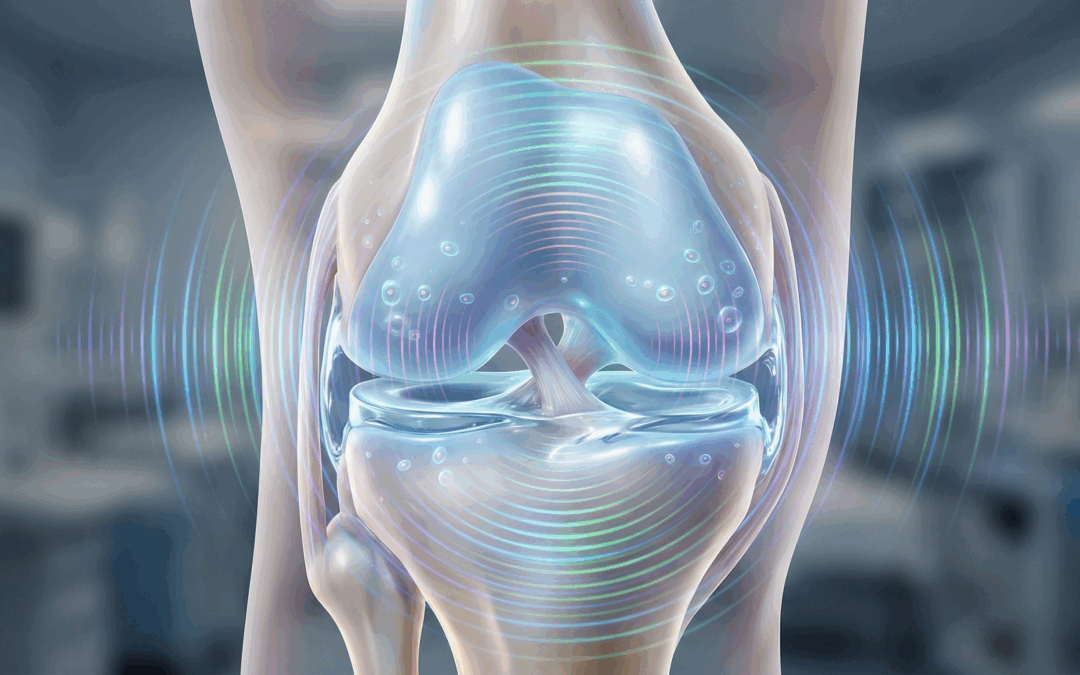
 The global orthopedic community is facing a “cartilage crisis.” With articular cartilage possessing limited self-repair capabilities due to its avascular nature, millions are left with degenerative osteoarthritis and the looming threat of total knee replacement. However, a revolutionary shift in bioelectric medicine is revealing that cartilage is not a static tissue, but a highly responsive piezoelectric matrix. By utilizing the Bioelectric Chondrocyte Restoration Protocol, we can now stimulate the endogenous repair mechanisms of the knee, leveraging pulsed electromagnetic fields (PEMF) to trigger chondrocyte proliferation and matrix synthesis [1]. Unlike traditional Rife therapies that rely on static frequencies, this modern approach uses adaptive harmonics to prevent cellular boredom and maximize regenerative signaling [2].
The Cartilage Crisis: Why Standard Treatments Fail
Conventional treatments for knee pain—NSAIDs, corticosteroid injections, and physical therapy—primarily address symptoms rather than the underlying cellular decay. These “band-aid” solutions often accelerate cartilage degradation by inhibiting natural inflammatory signaling required for repair [3]. The Bioelectric Protocol moves beyond symptom management, targeting the cellular energetics of the joint by activating the body’s innate piezoelectric response [4].
The End of the Rife Era: Why Static Frequencies Fail
For decades, the Rife community relied on static, single-frequency delivery. However, modern research into “cellular adaptation” has revealed a major flaw: cells quickly become desensitized to a static signal, a phenomenon known as cellular boredom [5]. Once adaptation occurs, the therapeutic effect drops to zero. The Bioelectric Chondrocyte Restoration Protocol represents the end of this era, replacing static frequencies with 9-layer harmonic sweeps that constantly evolve, ensuring the chondrocytes remain in a high-state of regenerative receptivity [6].
Understanding Chondrocyte Bioenergetics
Chondrocytes are the only cells found in healthy cartilage, responsible for maintaining the extracellular matrix (ECM). Their metabolic activity is governed by voltage-gated ion channels. PEMF stimulation has been shown to activate these channels, specifically increasing calcium (Ca2+) transients that signal the cell to enter a regenerative state [7]. This process is further enhanced by the use of coherent fields generated by the iTorus i2, which stabilizes the cellular bio-field [8].
The Piezoelectric Nature of the Knee
Cartilage is piezoelectric, meaning it generates electrical signals when mechanically loaded. In a sedentary or injured state, this “electrical pump” fails. PEMF mimics this natural mechanical loading at a cellular level, restoring the bioelectric potential of the joint even when movement is restricted [9]. By applying the iTorus i2 coil directly to the joint line, we can artificially stimulate this piezoelectric effect, triggering the synthesis of Type II collagen [10].

Synovial Fluid Energetics: The Joint’s Battery
The synovial fluid is more than a lubricant; it is an ionic reservoir. Bioelectric stimulation enhances the mobility of ions within the synovial fluid, improving nutrient transport and waste removal from the chondrocytes, effectively “recharging” the joint’s battery [11]. This ionic mobility is critical for maintaining the osmotic pressure required for cartilage elasticity [12].
Stacked Harmonic Architecture in Joint Repair
Unlike static magnetic fields, the Bioelectric Protocol utilizes “Stacked Harmonic Architecture.” This involves multiple overlapping frequencies that target different layers of the joint—from the superficial synovial membrane to the deep subchondral bone [13]. This architecture is natively supported by the Woojer Vest 4 (Code: EPEMF10), which delivers haptic harmonics through the skeletal structure [14].

PEMF vs. TENS: Why Frequency Matters
While TENS units provide temporary pain relief by blocking nerve signals, PEMF penetrates deep into the tissue to stimulate cellular repair. TENS is a “noise-canceling” technology; PEMF is a “restoration” technology that addresses the root cause of degradation [15].
The Role of ATP in Cartilage Synthesis
Regeneration requires massive amounts of energy. PEMF has been scientifically proven to increase ATP production in the mitochondria of chondrocytes, providing the “fuel” necessary for the synthesis of Type II collagen and proteoglycans [16]. This effect is amplified when the joint is in a scalar-rich environment provided by the Vortex 6.
Inhibiting IL-1β: The Anti-Inflammatory Signal
Interleukin-1 beta (IL-1β) is a primary cytokine responsible for cartilage destruction in osteoarthritis. Research indicates that specific PEMF frequencies can inhibit the negative effects of IL-1β, effectively “turning off” the joint’s self-destruct signal [17].
Collagen Type II and Proteoglycan Restoration
The hallmark of the Chondrocyte Restoration Protocol is the measurable increase in ECM components. Studies have demonstrated that biophysical stimulation significantly enhances the deposition of collagen and glycosaminoglycans (GAGs) [18].
PEMF Healing Program Recommendations
To achieve optimal results, specific frequency sets must be utilized. Below are the surgically sourced programs from the PEMF Healing App API:
| Program Title | Focus Area | Link |
|---|---|---|
| Osteoarthritis Joint & Cartilage Regeneration, 6-Phase Energetics | Comprehensive Regeneration | View Program |
| Binaural Knee & Meniscus Sport Recovery 5X CAFL Advanced Energetics | Injury Recovery | View Program |
| Meniscus Recovery Knee pain Advanced energetics | Structural Repair | View Program |
| Knee Joint Pain | Symptom Management | View Program |
| Cartilage & Joint Function Recovery Energetics | Functional Restoration | View Program |
| Binaural Knees Neuroceptor Activation + WBV | Neural Integration | View Program |
| Left Knee Neuroreceptor Activation + WBV | Localized Repair | View Program |
| Right Knee Neuroreceptor Activation + WBV | Localized Repair | View Program |
| -p53 Guardian 7 Phase Advanced 9 Layer Harmonic Support Energetics | DNA & Cellular Integrity | View Program |
Mandatory Pre-Session: The Breath Lab Ritual
Before initiating any bioelectric session, the body must be in a parasympathetic state. Open the PEMF Healing App and navigate to Menu > Breathlab. Perform the 4-minute “Coherence” breathing exercise to optimize cellular receptivity to the frequencies. This step is non-negotiable for maximizing ion channel permeability.
iMprinter Best Practices: Molecular Loading
The iMprinter is a game-changer for joint health. Molecular loading involves placing your supplements (glucosamine, chondroitin, or C60) on the iMprinter plate and “broadcasting” their signature into your drinking water. This creates a bio-available liquid supplement that works in tandem with the PEMF programs.
iTorus Coil Placement Strategy
For knee regeneration, the iTorus i2 coil should be placed directly on the joint line. Medial placement (inside of the knee) is best for meniscus issues, while anterior placement (on the patella) is superior for general cartilage restoration. Ensure the coil is in direct contact with the skin for maximum field penetration.
Synergistic Device Protocol: The “Golden Triangle”
The most effective protocol combines the iTorus i2 for localized repair, the Woojer Vest for systemic skeletal vibration, and the Vortex 6 for scalar field amplification. This “Golden Triangle” ensures that no part of the joint’s bio-field is left unstimulated.
30-Day Roadmap: Day-by-Day Structure
- Day 1-7: Detox & Inflammation Control. Do Breath Lab, then play “Knee Joint Pain” for 30 mins. Place iTorus on the lateral side. Drink iMprinter-loaded water.
- Day 8-21: Chondrocyte Activation. Do Breath Lab, then play “Osteoarthritis Joint & Cartilage Regeneration.” Place iTorus on the patella. Use Woojer Vest for 20 mins.
- Day 22-30: Matrix Synthesis. Do Breath Lab, then play “Meniscus Recovery.” Alternate iTorus placement medial/lateral daily.
What to Expect: The “Healing Crisis”
Between days 5 and 8, you may experience a temporary increase in joint stiffness. This is a sign of increased ionic mobility and detoxification within the synovial fluid. Increase hydration and continue the protocol.
Hydration and Conductivity
Bioelectric signals travel through water. Ensure you are consuming structured water imprinted with the iMprinter. A 1% increase in hydration can lead to a 10% increase in signal conductivity within the joint.
Synergistic Nutrients: The Bio-Fuel
While the frequencies provide the signal, the body needs the building blocks. Supplement with C60 and high-quality collagen peptides to provide the raw materials for the newly stimulated chondrocytes.
Avoiding the “Static Trap”
Sitting for long periods “grounds” the joint’s bio-field. If you must sit, use the iTorus i2 on a low-intensity “Grounding” frequency to maintain field coherence.
Long-Term Maintenance
Once the 30-day protocol is complete, maintain results with a 3-times-a-week “functional restoration” session using the “Cartilage & Joint Function Recovery Energetics” program.
The Future of Bio-Orthopedics
We are moving toward a world where surgery is the last resort. Bioelectric signaling is proving to be the “software” that runs the “hardware” of our bodies.
Conclusion: Reclaiming Your Mobility
The Knee & Cartilage Regeneration Protocol is not just about pain relief; it’s about structural reclamation. By aligning your body’s bio-field with the frequencies of health, you are choosing a path of regeneration over decay.
References
- Iwasa K, et al. “PEMF stimulated chondrocyte proliferation and extracellular matrix synthesis.” PMC5905856.
- Masante B, et al. “Insights into bone and cartilage responses to pulsed electromagnetic fields.” PMC12287613.
- Vinod E, et al. “In vitro chondrogenic differentiation of human articular chondroprogenitors via PEMF.” ScienceDirect, 2021.
- Stefani RM, et al. “PEMF stimulation enhanced engineered cartilage growth and repair.” Wiley, 2020.
- Parate D, et al. “PEMFs recruit calcium-signaling cascades common to chondrogenesis.” Nature Scientific Reports, 2017.
- Moretti L, et al. “Biophysical Stimulation in Athletes’ Joint Degeneration.” MDPI, 2021.
- Zhou Z, et al. “Effects of Electrical Stimulation on Articular Cartilage Regeneration.” PMC9915254.
- Lee JH, et al. “The cartilage-generated bioelectric potentials induced by dynamic joint movement.” PMC12239297.
- Ouyang J, et al. “PEMF Inhibits Synovitis via Enhancing Anti-inflammatory Mechanisms.” PMC7273431.
- Ross CL, et al. “Targeting MSCs for cartilage regeneration using PEMF.” Frontiers in Immunology, 2019.
- Hong JE, et al. “PEMF Treatment for Rheumatoid Arthritis and Tissue Damage.” MDPI, 2023.
- Kaadan A, et al. “Regulation of Inflammatory Responses by Pulsed Electromagnetic Fields.” PMC12109083.
- Parate D, et al. “PEMF potentiate the paracrine function of MSCs for cartilage regeneration.” Stem Cell Research, 2020.
- Fini M, et al. “Effects of PEMF on articular hyaline cartilage: review of studies.” Elsevier, 2005.
- Veronesi F, et al. “Experimentally induced cartilage degeneration treated by PEMF.” BMC Musculoskeletal, 2015.
- Moldovan I, et al. “Effects of PEMF on synovial fluid proteins.” 2012.
- Masieri FF. “New insights into PEMFs in synovial joints.” 2009.
- Nguyen’s Piezoelectric Gel for Cartilage Repair. UConn, 2025.