
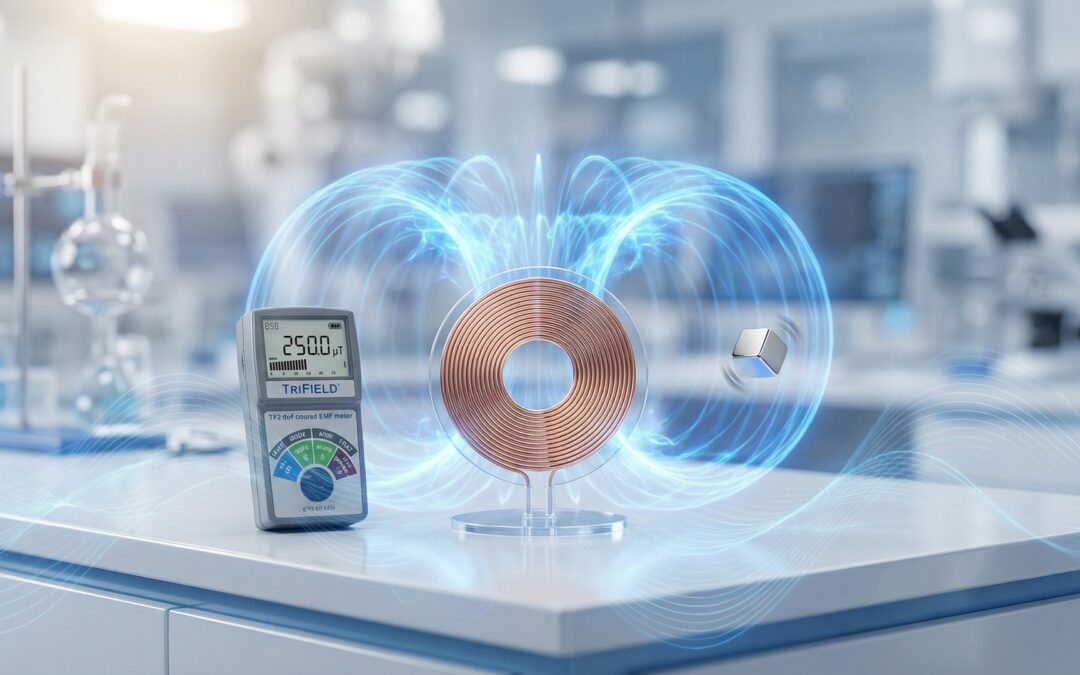
What if the key to unlocking your body’s innate healing potential wasn’t a pill or a potion, but an invisible force? Pulsed Electromagnetic Field (PEMF) therapy promises just that, a revolutionary approach to wellness that uses the power of magnetic fields to supercharge your cells. But in a world of wellness fads and unproven claims, a healthy dose of skepticism is not just warranted, it’s essential. How can you be sure that the PEMF device you’ve invested in is more than just an expensive paperweight? This article will equip you with the knowledge and tools to cut through the noise and obtain concrete proof that your PEMF device is generating the healing fields it promises.
The Science Behind the Skepticism: What is PEMF?
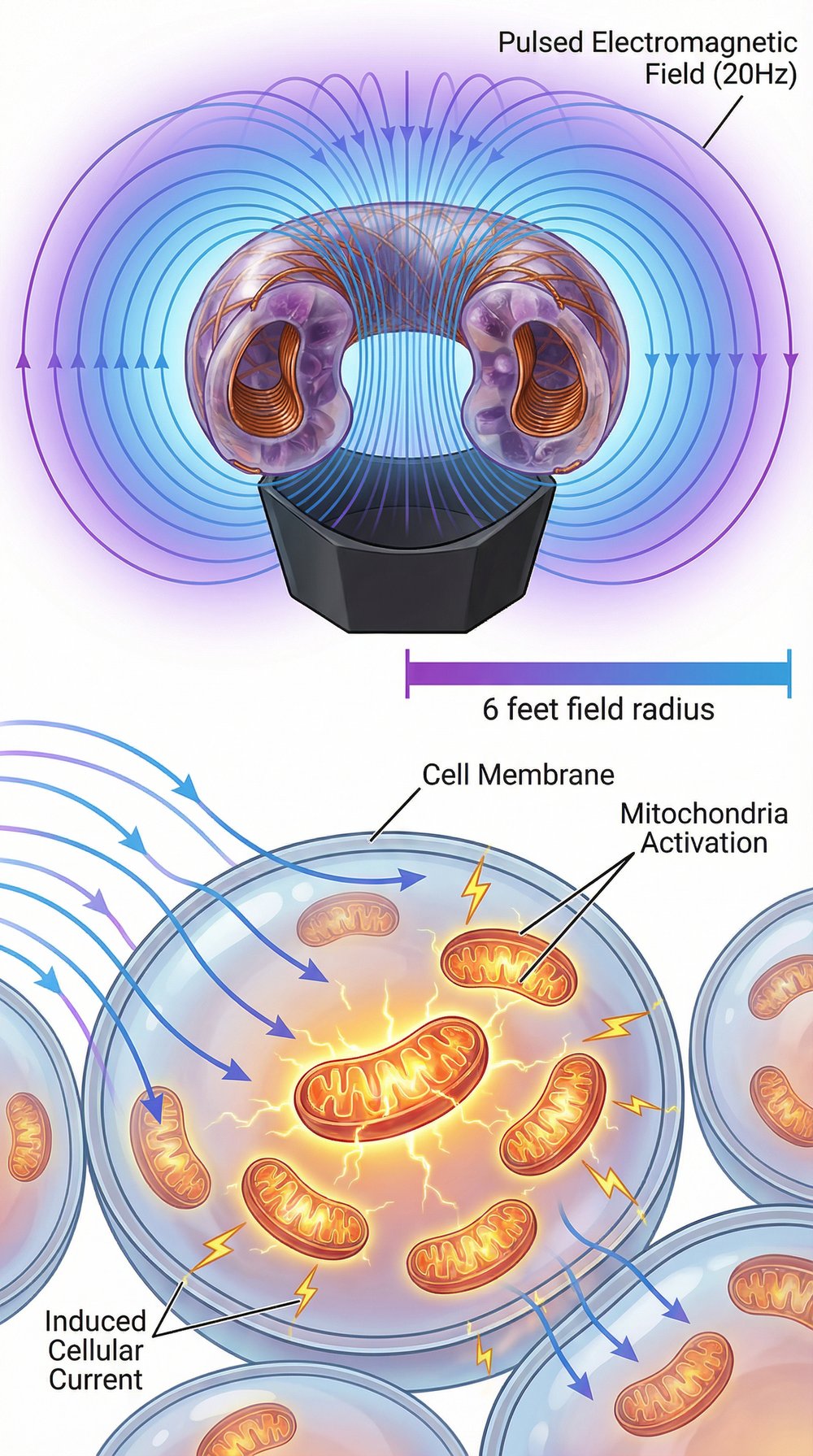
Before we dive into testing, let’s briefly touch on the science that makes PEMF so compelling. At its core, PEMF therapy is the process of applying magnetic fields to the body in pulses. These pulses induce a tiny electrical current in your cells, a phenomenon grounded in Faraday’s law of induction. This is not some new-age pseudoscience; the therapeutic use of electromagnetic fields has been studied for decades, with the FDA approving PEMF for bone healing in 1979 [1]. Since then, a wealth of research has emerged, with institutions like Johns Hopkins University and numerous clinical trials demonstrating its effectiveness in reducing pain and inflammation, promoting wound healing, and even showing promise in neurological applications [2] [3].
“PEMF therapy has been used successfully in the management of postsurgical pain and edema, the treatment of chronic wounds, and in facilitating vasodilatation and angiogenesis.” – Johns Hopkins University School of Medicine [2]
Why Test? The Importance of Validation for the Modern Biohacker
The wellness market is flooded with devices making bold claims. For the discerning biohacker and the everyday user alike, verifying these claims is paramount. Testing your PEMF device not only provides peace of mind but also ensures you are receiving the therapeutic benefits you paid for. It empowers you to move from a passive consumer to an active participant in your wellness journey, armed with data and proof. This article will focus on testing the iTorus i2 coil, a popular and accessible PEMF device, using both simple DIY methods and a more advanced EMF meter.

Simple DIY Methods to Validate Your iTorus i2 Coil
You don’t need a degree in physics to get a basic confirmation that your PEMF device is working. Here are two simple methods you can try at home:
1. The Neodymium Sphere Magnet Test: A Visual and Auditory Confirmation
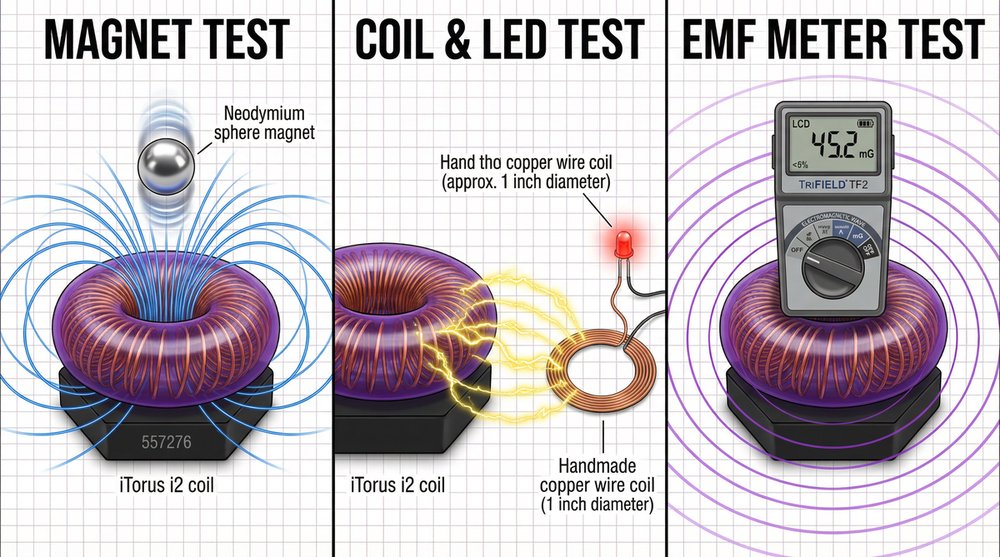
This is the simplest and most intuitive test. The magnetic field generated by your PEMF device will interact with a neodymium magnet, causing it to move or vibrate [4]. Here’s how to do it:
- Get a neodymium sphere magnet. A strong N52 Neodymium Sphere magnet works best for this test. You can also use a magnet tester, which is a small tube with a magnet inside.
- Activate your iTorus i2 coil. Using the PEMF Healing App, select the 20Hz Free Energetics program (no subscription required).
- Bring the magnet close to the coil. You should see the neodymium sphere twitch or vibrate in sync with the pulses from the coil. If you are using a magnet tester, you will hear the magnet rattling inside the tube.
This simple test provides immediate, tangible proof that your device is emitting a magnetic field. The neodymium sphere’s strong magnetic properties make it highly responsive to the pulsed electromagnetic field, giving you clear visual and auditory confirmation.
2. The Coil and LED Test: Seeing the Induced Current
This test takes the concept a step further by demonstrating Faraday’s law of induction in action. You will need a small coil of wire and an LED light.
- Create a small coil. Wrap a thin, insulated copper wire into a coil of about 1-2 inches in diameter. The more turns of wire, the better.
- Connect the LED. Solder or twist the ends of the wire to the leads of the LED.
- Activate your iTorus i2 coil. Again, use the 20Hz Free Energetics program.
- Place your DIY coil near the iTorus coil. The pulsing magnetic field from the iTorus will induce a current in your coil, causing the LED to flash in time with the pulses.
This is a powerful visual confirmation that your PEMF device is not just a static magnet, but is actively generating a pulsed electromagnetic field that can induce electrical currents in nearby conductors.
Advanced Testing with the TriField EMF Meter Model TF2
For those who want to go beyond simple validation and quantify the strength of their PEMF device, an EMF meter is the next logical step. The TriField EMF Meter Model TF2 is a popular and reliable choice for this purpose. It is important to note, however, that not all EMF meters are created equal. Many cheaper meters are not designed to accurately measure the fast pulses of a PEMF device and can give misleading readings [5].
How to Use the TF2 to Measure Your iTorus i2 Coil
- Set up your iTorus i2 coil. Connect it to your phone and open the PEMF Healing App. Select the 20Hz Free Energetics program (no subscription required).
- Set up your TF2 meter. Turn the dial to the “Weighted MAG” setting. This setting is designed to measure the magnetic field strength in a way that is relevant to biological effects.
- Take your measurement. Place the top of the TF2 meter directly on the surface of the iTorus i2 coil. You will see a reading on the meter’s display, likely in the range of 10-100 mG (milliGauss).
Understanding the Readings
The reading on your TF2 meter represents the magnetic field strength of your PEMF device. This is a crucial piece of data, as the intensity of the magnetic field is a key factor in its therapeutic effects. The table below summarizes the different testing methods and what they can tell you:
| Testing Method | What it Proves | What it Measures | Cost | Complexity |
|---|---|---|---|---|
| Neodymium Sphere Magnet Test | Presence of a magnetic field | N/A (Visual/Auditory) | Low ($10-20) | Very Low |
| Coil and LED Test | Presence of a pulsed magnetic field (electromagnetic induction) | N/A (Visual) | Low ($5-15) | Low |
| TriField TF2 Meter | Quantifiable magnetic field strength | Magnetic field strength (in mG or µT) | Medium ($186) | Medium |
How to Use Your iTorus i2 with the PEMF Healing App
The iTorus i2 coil is designed to work seamlessly with the PEMF Healing App, which offers access to thousands of frequencies and programs. To get started, simply download the app (available on iOS and Android), connect your iTorus i2 via Bluetooth, and explore the “Free Energetics” section, which requires no subscription. Start with lower frequencies like 7.83Hz (Schumann Resonance) or 20Hz for general wellness, and gradually explore programs tailored to your specific needs.
Best Practices and What to Expect
When using your iTorus i2 coil, consistency is key. For general wellness, aim for daily sessions of 20-30 minutes. You can wear the coil as a pendant, place it on specific areas of the body, or keep it in your pocket. The 6-foot toroidal field generated by the device means you don’t need direct skin contact for it to be effective. Weekly protocols might include rotating between different frequency programs to address various aspects of health, from stress relief to cellular regeneration. Most users report subtle improvements in energy levels, sleep quality, and pain reduction within the first few weeks of consistent use.
Explore the World of PEMF Healing Programs
Now that you have validated your device, you can explore the vast potential of PEMF therapy. The PEMF Healing App offers a wide range of programs designed for specific wellness goals. Here are some recommended programs to get you started:
- 250Hz + 11th Energetics: Stress Relief
- AC Joint Recovery & Ligament Deep Healing Advanced Energetics
- Adrenal Fatigue Energetics
- Alzheimer’s Basic Recovery Rife Energetics
- Autism Kids and Adults Advanced Energetics
- Bipolar Disorder Advanced+ Energetics
- 528Hz Full Body Healing, DNA Repair, Cell Regeneration
- 10.5Hz Alpha Healing, Lower Blood Pressure, Immunity, Contemplation
- Cancer Healing Frequency Generic Energetics
- H. Pylori Detox & Gut Healing – Ultra Advanced Energetics
- 120Hz + 20Hz Cold/Flu, Cancer, Fatigue, Sinus Infections Rife
- Mitochondrial Energy – Respiration & Oxidative Phosphorylation Energetics
Further Exploration: Other PEMF Devices
The iTorus i2 is just one of many PEMF devices available. For those looking for a full-body experience, the offers a powerful and immersive PEMF session. For more targeted applications, the Archimedean Tesla Spiral Frequency Imprinter and the Metatronic Flower of Life Frequency Imprinter offer unique coil configurations for specific energetic work.
References
- Flatscher J, Pavez Loriè E, Mittermayr R, et al. Pulsed Electromagnetic Fields (PEMF)—Physiological Response and Its Potential in Trauma Treatment. Int J Mol Sci. 2023;24(14):11239.
- Strauch B, Herman C, Dabb R, Ignarro LJ, Pilla AA. Evidence-Based Use of Pulsed Electromagnetic Field Therapy in Clinical Plastic Surgery. Aesthetic Surg J. 2009;29(2):135-143.
- Influence of Pulse Electromagnetic Field Therapy on Pain, Physical Function, and Quality of Life in Patients With Chronic Low Back Pain. ClinicalTrials.gov.
- How to test your PEMF therapy device is working, using a magnet! – PEMF News.
- Gauss measuring | curatronic.
Disclaimer: The information provided in this article is for educational purposes only and is not intended as medical advice. Please consult with a qualified healthcare professional before using any PEMF device or starting any new health regimen.