
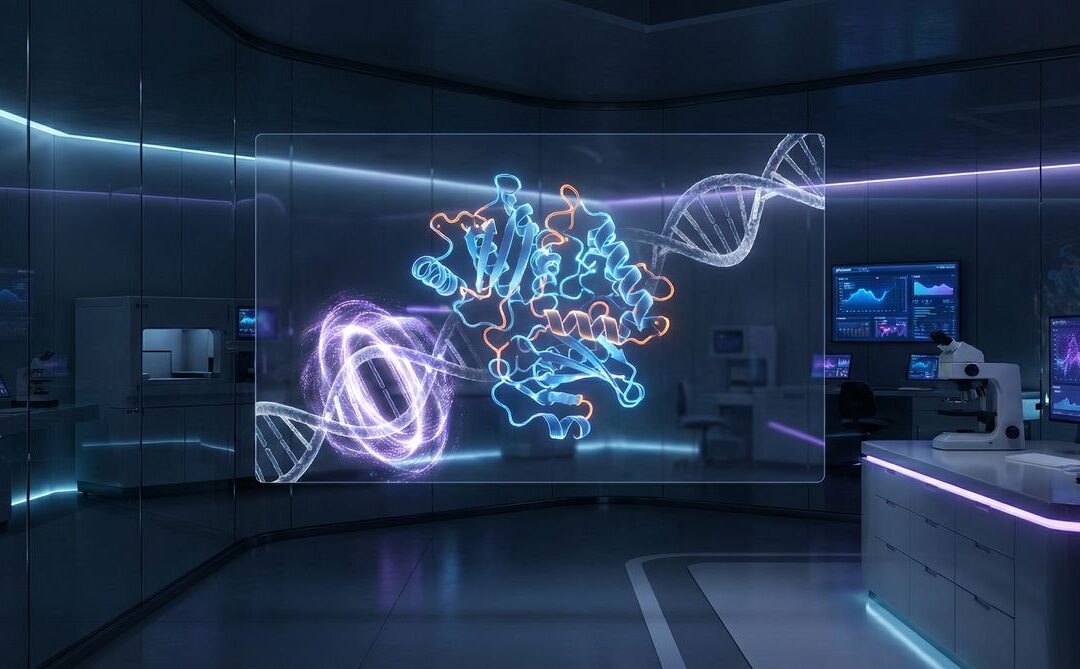
What if the very defense mechanism designed to protect you from cancer was being subtly undermined by a global health crisis? For years, scientists have hailed the p53 protein as the “Guardian of the Genome,” a critical tumor suppressor that stands sentinel against cellular chaos. But recent, unsettling research suggests a hidden battle unfolding within our bodies, where the infamous SARS-CoV-2 Spike Protein may be disarming this vital protector, potentially paving the way for unforeseen health challenges. This isn’t just a scientific curiosity; it’s a critical insight into how the pandemic’s long shadow might extend far beyond acute illness, impacting our fundamental cellular integrity. Discover how this silent war is being waged and how cutting-edge biohacking with PEMF healing platform and devices like the iTorus 2 could offer a new line of defense.
Understanding p53: The Guardian of Your Genome
The p53 protein, often referred to as the “Guardian of the Genome,” is a pivotal tumor suppressor. Its primary role is to maintain genomic stability by regulating cell division, repairing damaged DNA, and initiating programmed cell death (apoptosis) when damage is irreparable. This intricate dance ensures that mutated or potentially cancerous cells are eliminated before they can proliferate and form tumors[1][2].
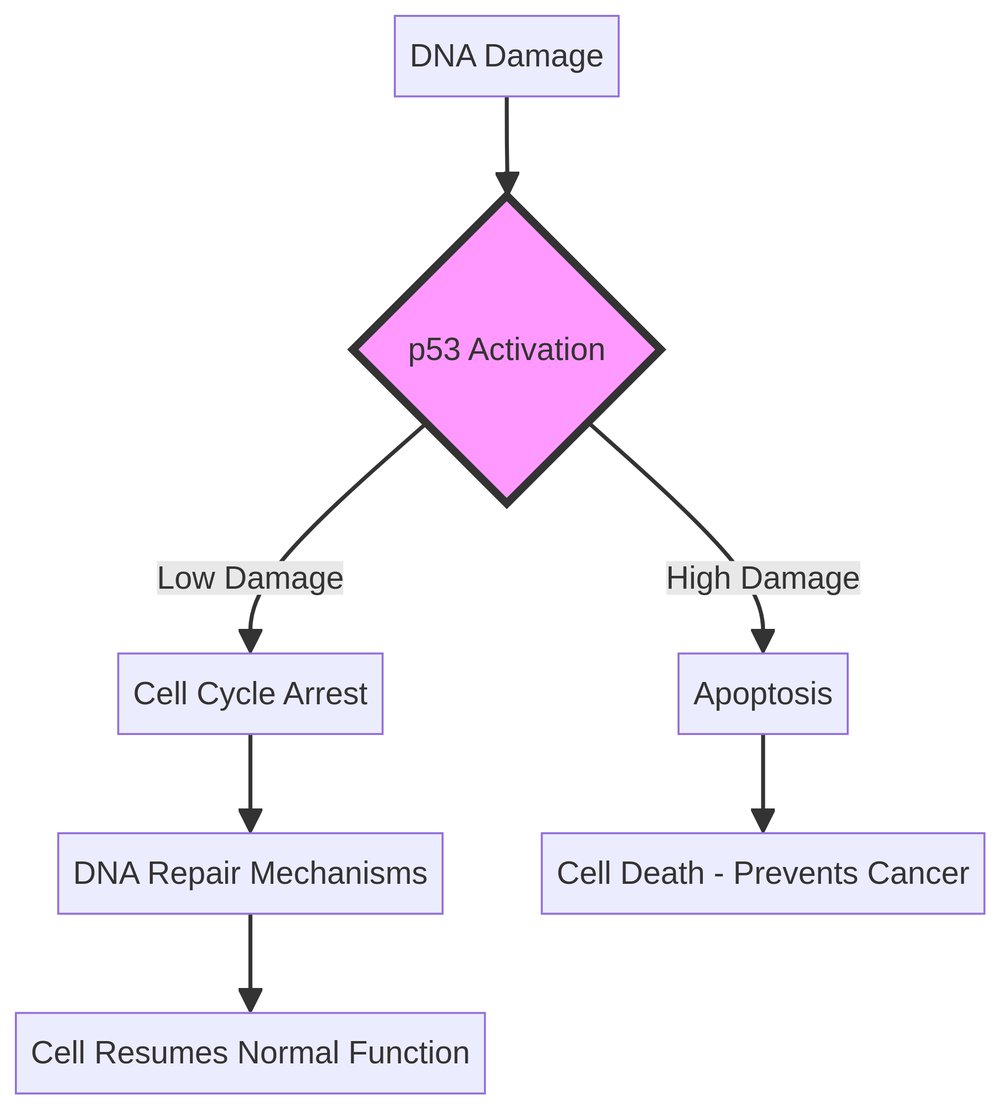
Figure 1: The normal regulatory pathway of p53 in maintaining cellular integrity.
Acting as a transcription factor, p53 orchestrates the expression of genes involved in crucial cellular processes. When DNA incurs damage from environmental toxins, radiation, or viral infections, p53 springs into action. It can halt the cell cycle, allowing time for DNA repair mechanisms to fix the errors. If the damage is too extensive, p53 triggers apoptosis, effectively sacrificing the compromised cell for the greater good of the organism[3]. This makes p53 an indispensable component of our natural defense against cancer and other diseases stemming from cellular dysfunction.
The Unseen Threat: COVID-19 and p53 Interaction
Emerging scientific literature has begun to shed light on a concerning interaction between the SARS-CoV-2 Spike Protein and the p53 pathway. Studies indicate that the Spike Protein can interfere with p53 activation, potentially compromising its tumor-suppressing functions[4][5].

Figure 2: How the Spike Protein disrupts the p53 activation pathway.
This interference is not a direct binding in all cases but rather a modulation of p53’s downstream effects, leading to a reduction in the activity of genes like p21, DR5, and MDM2, which are crucial for cell cycle arrest, apoptosis, and p53 regulation, respectively[6]. This subtle but significant disruption can have profound implications. By inhibiting p53’s normal function, the Spike Protein may:
- Reduce DNA Repair Capacity: Cells with compromised p53 activity are less efficient at repairing DNA damage, increasing the risk of accumulating mutations.
- Impair Apoptosis: The body’s ability to eliminate pre-cancerous cells is weakened, potentially allowing damaged cells to survive and multiply.
- Contribute to Immune Dysfunction: Given p53’s role in immune responses, its suppression could further exacerbate immune dysregulation observed in post-COVID conditions.
The concept of “turbo cancers” – aggressive, rapidly progressing malignancies – has gained traction in certain circles, with some researchers exploring a potential link to the widespread exposure to the Spike Protein, either from infection or vaccination[7]. While more research is needed to establish a definitive causal link, the observed interference with p53 provides a plausible biological mechanism for such concerns. The Spike Protein appears to stabilize p53 in an inactive state or promote its degradation, effectively silencing the genome’s guardian when it’s needed most[8].
PEMF Therapy: Re-activating Your Inner Guardian
In the face of these challenges, many are turning to innovative biohacking strategies to bolster their cellular defenses. Pulsed Electromagnetic Field (PEMF) therapy has emerged as a promising modality, with research suggesting its potential to positively influence cellular processes, including those related to p53 and DNA repair[9].
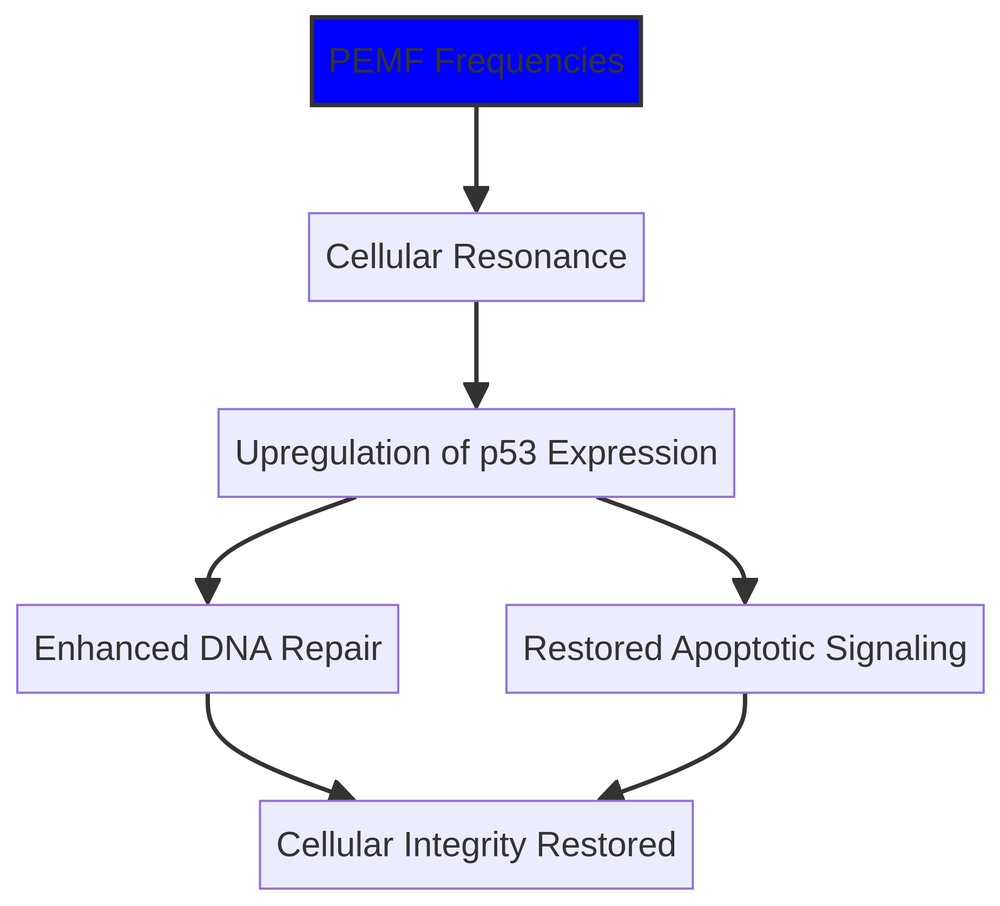
Figure 3: PEMF resonance assisting in the re-activation of p53 expression.
Studies have shown that PEMF can increase p53 levels and enhance cellular repair mechanisms. For instance, PEMF treatment has been observed to quicken the in vitro repair of skeletal muscle damage and modulate gene expression within the cell nucleus[10]. This suggests that PEMF could play a role in restoring the delicate balance disrupted by viral interactions, helping to reactivate p53 pathways and support the body’s intrinsic ability to heal and protect itself.
The therapeutic benefits of PEMF extend to influencing DNA conformation and overall repair processes, offering a non-invasive approach to cellular rejuvenation and protection. By delivering specific electromagnetic frequencies, PEMF devices aim to optimize cellular function, reduce inflammation, and enhance the body’s natural regenerative capabilities[11].
PEMF Programs for Cellular Defense and Regeneration
Leveraging the power of PEMF, several specialized programs are designed to support cellular health, immune function, and detoxification, which are all critical in maintaining p53 integrity and overall well-being. These programs can be accessed through PEMF healing apps and utilized with compatible devices.
- Cov-Vax Detox 2026 Support – 9 Phase PEMF Haptic Adv Energetics
- Ivermectin – Biofield Detox & Immune Activation Energetics
- Fenbendazole Enbendazole – Cellular Detox & Immune Energetics
- 741Hz Detox Full Body Cell Level Solfeggio
- 800Hz Cure All Universal Healing Whole Body Regeneration
- Deep Tissue Regeneration, Recovery Tesla 3 6 9 Energetics
- Metastatic Cancer, 7 Phases, Coherence, Transmutation, Cellular Renewal, Energetics
- NADH, Energy, Clarity, Vitality, Focus, Stamina, Repair, Detox
- Overall cellular health and function
- Youthing Anti-Aging Reverse Cellular Aging
- Radiation Detox
How to Use PEMF for p53 Support
Integrating PEMF therapy into your daily routine can be a powerful way to support your body’s natural defenses and cellular repair mechanisms. Here’s how you can utilize various devices:

Figure 4: How the iTorus 2 toroidal field interacts with the body’s biofield.
With iMprinter:
The program can be imprinted onto water or other substances using the iMprinter for continuous, subtle exposure throughout the day.
Links:
With iTorus i2 Coil:
Use the iTorus i2 Coil to generate a powerful, localized PEMF field for targeted cervical application or to create an ambient neuro-spinal support field in your environment.
Link: iTorus i2 Pocket PEMF
With Woojer Haptic Systems:
Woojer devices translate the program’s low-frequency architecture into gentle tactile vibration, allowing the cervical and upper spine region to experience rhythmic neuromuscular and circulatory support without headphones.
Links:
The provides a full-body experience, immersing you in the coherent cervical-to-spine energetic field for deep systemic entrainment.
Link:
Best Practices & Protocols for Optimal p53 Support
To maximize the benefits of PEMF therapy in supporting your p53 function and overall cellular health, consider the following best practices and protocols:
Daily Protocol:
- Consistency is Key: Aim for at least 20-30 minutes of PEMF exposure daily. This consistent application helps to reinforce cellular signaling and maintain optimal energetic states.
- Morning Activation: Use PEMF in the morning to energize your cells and set a positive tone for the day.
- Targeted Application: For specific concerns, use devices like the iTorus i2 Coil directly over areas of interest, such as the cervical spine or chest, to provide localized support.
Weekly Protocol:
- Program Rotation: Rotate through different PEMF programs from your PEMF healing app, including specialized options like the **Cov-Vax Detox 2026 Support**, to address various aspects of cellular health, immune support, and detoxification.
Best Practices:
- Hydration: Ensure adequate hydration before and after PEMF sessions to facilitate cellular communication and detoxification.
- Mindful Breathing: Combine PEMF sessions with deep, conscious breathing to enhance relaxation and optimize energetic flow.
- Listen to Your Body: Start with shorter sessions and gradually increase duration as your body adapts. Pay attention to how you feel and adjust your protocol accordingly.
What to Expect:
Individual experiences with PEMF therapy can vary. Some users report immediate feelings of relaxation, increased energy, or reduced discomfort. For deeper cellular changes, such as enhanced p53 function and DNA repair, consistent use over several weeks or months is often necessary. Expect a gradual improvement in overall well-being, resilience, and vitality.
Who is this for:
This information is for individuals interested in proactive health management, particularly those concerned about the long-term cellular impacts of viral infections like COVID-19. It is also relevant for biohackers, health enthusiasts, and anyone seeking to support their body’s natural defense mechanisms and promote optimal cellular longevity.
How can this help:
By supporting p53 function and cellular repair, PEMF therapy can help to:
- Strengthen the body’s natural tumor suppression mechanisms.
- Enhance DNA repair processes, reducing the risk of mutations.
- Boost overall cellular resilience and vitality.
- Support a balanced immune response.
- Contribute to a holistic approach to post-viral recovery and long-term health.
Scientific Research & Citations
- Levine, A. J. (1997). p53, the cellular gatekeeper for growth and division. Cell, 88(3), 323-331. https://doi.org/10.1016/S0092-8674(00)81875-1
- Vogelstein, B., Lane, D., & Levine, A. J. (2000). Surfing the p53 network. Nature, 408(6810), 307-310. https://doi.org/10.1038/35042675
- Vousden, K. H., & Prives, C. (2009). Blinded by the Light: The p53 Response to DNA Damage. Cell, 137(3), 413-431. https://doi.org/10.1016/j.cell.2009.04.037
- Suresh, V., et al. (2023). Roles of p53-Mediated Host–Virus Interaction in Coronavirus Infection. Viruses, 15(4), 868. https://pmc.ncbi.nlm.nih.gov/articles/PMC10094438/
- Ghasemi, S., et al. (2022). p53/NF-kB Balance in SARS-CoV-2 Infection. International Journal of Molecular Sciences, 23(12), 6704. https://pmc.ncbi.nlm.nih.gov/articles/PMC9201997/
- Hussain, M., et al. (2024). SARS-CoV-2 spike S2 subunit inhibits p53 activation of p21(WAF1). bioRxiv. https://www.biorxiv.org/content/10.1101/2024.04.12.589252v1
- Oncotarget. (2026). How HPV and COVID-19 Spike Proteins May Interact to Impact Cancer Suppression. Oncotarget, 17(6). https://www.oncotarget.org/2026/02/09/how-hpv-and-covid-19-spike-proteins-may-interact-to-impact-cancer-suppression/
- Suresh, V., et al. (2023). Roles of p53-Mediated Host–Virus Interaction in Coronavirus Infection. Viruses, 15(4), 868. https://pmc.ncbi.nlm.nih.gov/articles/PMC10094438/
- De Luca, A., et al. (2023). Pulsed Electromagnetic Fields Induce Skeletal Muscle Cell Repair by Sustaining the Expression of Proteins Involved in the Response to Cellular Damage and Oxidative Stress. International Journal of Molecular Sciences, 24(23), 16631. https://www.mdpi.com/1422-0067/24/23/16631
- De Luca, A., et al. (2023). Pulsed Electromagnetic Fields Induce Skeletal Muscle Cell Repair by Sustaining the Expression of Proteins Involved in the Response to Cellular Damage and Oxidative Stress. International Journal of Molecular Sciences, 24(23), 16631. https://www.mdpi.com/1422-0067/24/23/16631
- Patil, M. R., & Bihari, A. (2022). A comprehensive study of p53 protein. Journal of Cellular Biochemistry, 123(11-12), 1787-1802. https://onlinelibrary.wiley.com/doi/abs/10.1002/jcb.30331
Medical Disclaimer: The information provided in this article is for educational purposes only and is not intended as a substitute for professional medical advice, diagnosis, or treatment. Always seek the advice of your physician or other qualified health provider with any questions you may have regarding a medical condition.