
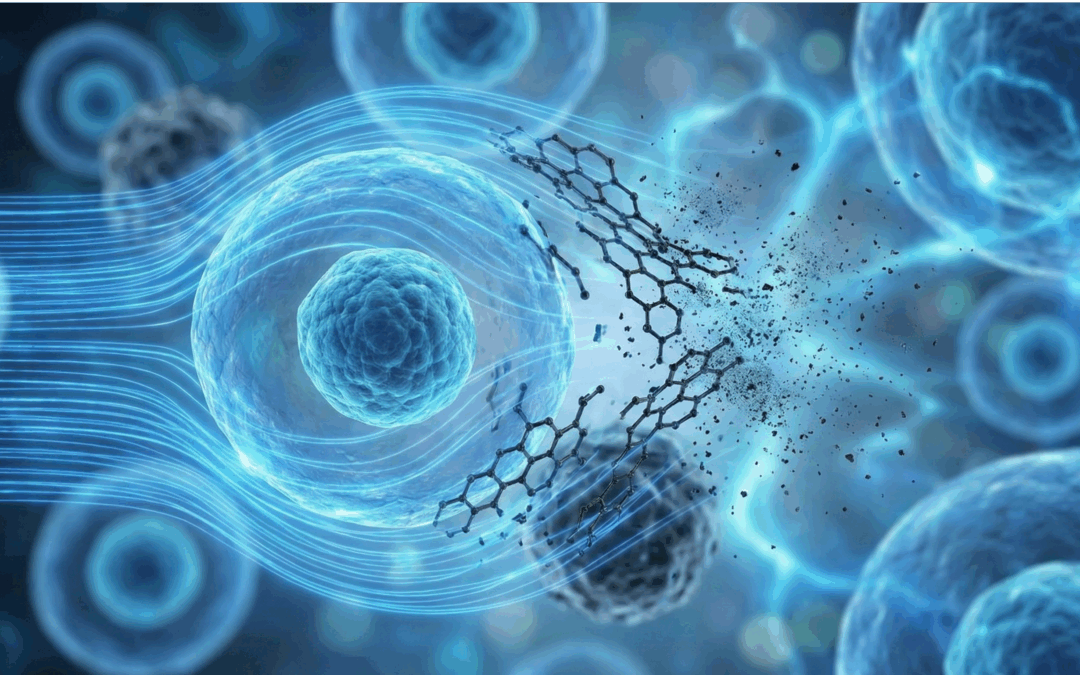
What if the most sophisticated bio-threats of the 21st century aren’t biological at all, but structural? Recent breakthroughs in quantum biology and nanotechnology have revealed a startling truth: the human body is increasingly becoming a repository for advanced nanomaterials, from graphene oxide to bio-engineered nanostructures. While the “elite” have long utilized sophisticated frequency-based countermeasures, the general public has been left with outdated tools. Today, we are witnessing the end of the Rife era. The static, single-tone frequencies that once defined vibrational medicine are no longer sufficient to combat the adaptive, self-assembling nature of modern nanotech. To truly cleanse the system, we must move beyond the static and embrace the dynamic power of Nanobot & Graphene System Detox Support Energetics.
The Hidden Reality: Nanobots and Graphene in the Biofield
Nanotechnology is no longer science fiction. Graphene oxide (GO) and carbon nanotubes (CNTs) are being utilized in everything from environmental engineering to advanced drug delivery systems[1]. These materials possess unique electromagnetic properties; they are highly conductive and can resonate with external frequencies, including 5G and other ambient EMFs[2]. When these materials enter the biological system, they don’t just sit idle. They can interfere with cellular signaling, induce oxidative stress, and even self-assemble into complex structures under the influence of specific electromagnetic triggers[3].
Traditional detoxification methods—chelators, binders, and herbs—often struggle to address these materials because they are not just chemical; they are structural and energetic. This is where frequency therapy becomes essential. However, not all frequency therapy is created equal.
The End of the Rife Era: Why Static Frequencies Fail
For decades, the work of Royal Raymond Rife has been the gold standard for frequency healing. The “Rife Era” was built on the principle of the Mortal Oscillatory Rate (MOR)—the idea that a single, static frequency could shatter a pathogen like a singer breaking a wine glass. While revolutionary in the 1930s, this approach has hit a biological wall in the modern age.
The primary issue is cellular adaptation. Biological systems, and especially advanced nanostructures, are incredibly adaptive. When exposed to a single, static frequency for an extended period, the “target” can shift its resonant window or develop a form of energetic resistance[4]. Static frequencies are “predictable” to the bio-intelligence of the cell and the structural intelligence of nanotech. This predictability allows the system to compensate, rendering the frequency ineffective over time. Furthermore, static tones lack the complexity required to address the multi-layered assembly process of modern nanobots.
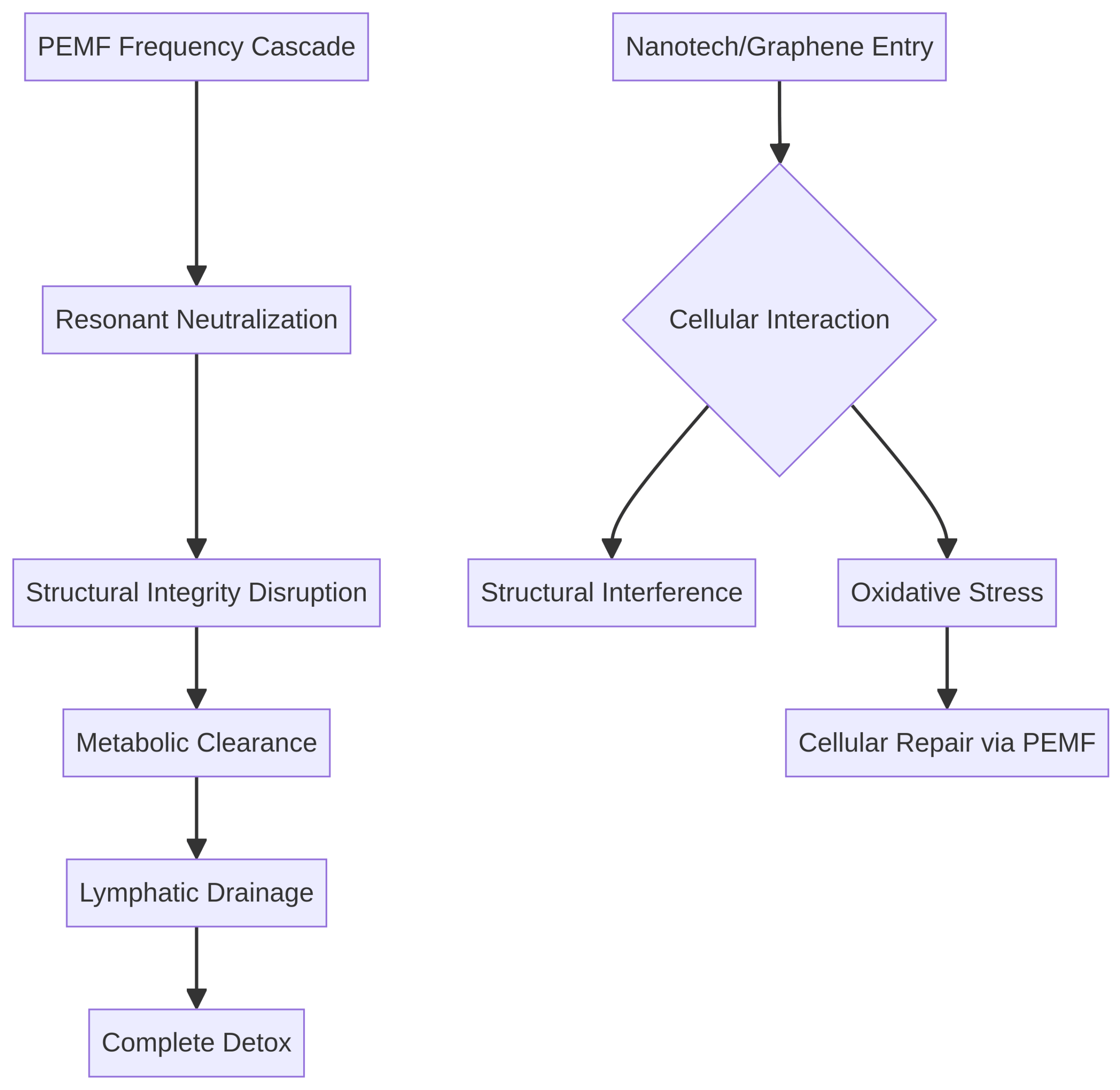
Figure 1: The cascade of nanotech interaction and the resonant neutralization process.
The 10-Phase Energetic Revolution
To overcome cellular adaptation and effectively neutralize adaptive nanotech, we have developed a 10-phase advanced energetic system. Unlike the single-tone approach of the past, this system utilizes a dynamic, shifting landscape of harmonics that prevents the target from ever “locking on” or adapting.
Our 10-phase system is a whole different level of energetics. It operates on the principle of harmonic density and non-linear resonance. Instead of one frequency, it delivers a cascade of 10 distinct energetic phases, each designed to address a different layer of the nanotech assembly and the body’s detoxification response. This prevents cellular adaptation and ensures that the structural integrity of graphene and nanobots is consistently disrupted until they can be safely eliminated by the body’s natural pathways.

Figure 2: Spectral analysis showing the high harmonic density and multi-phase structure of our advanced detox energetics.
As seen in the spectral analysis above, the “waterfall” of frequencies shows a rich tapestry of harmonics. This density is what makes the Nanobot & Graphene System Detox Support Energetics program so effective. It doesn’t just “hit” the target; it creates an environment where the target cannot exist.

Figure 3: Close-up of the pitch curves and phase transitions, illustrating the dynamic nature of the 10-phase system.
The second spectral image reveals the intricate pitch curves and phase transitions. Notice the lack of “static” lines; everything is in motion. This movement is the key to bypassing the body’s defense mechanisms and the nanotech’s adaptive capabilities.
Comparison: Rife vs. 10-Phase Advanced Energetics
| Feature | Traditional Rife (Static) | 10-Phase Advanced Energetics |
|---|---|---|
| Frequency Structure | Single-tone, static | Dynamic, 10-phase cascade |
| Cellular Adaptation | High (system adapts quickly) | None (target cannot adapt) |
| Harmonic Density | Low | Ultra-High (Full Spectrum) |
| Nanotech Interaction | Limited to resonant window | Multi-layered structural disruption |
| Effectiveness | Decreases with use | Cumulative and sustainable |

Figure 4: The systemic elimination pathway from frequency emission to systemic clearance.
Recommended Programs for Systemic Support
To achieve the best results, we recommend integrating the following real-world PEMF programs into your protocol. These programs have been selected for their specific resonance with nanotech detoxification and systemic support.
- Nanobot & Graphene System Detox Support Energetics (Main Program)
- NanoMorph Detox
- Covid Vax Detox
- 963Hz + 741Hz + 432Hz EMF Protect & Detox Solfeggio
- 741Hz Detox Full Body Cell Level Solfeggio
- Heavy Metal Detox Advanced+ Energetics
- Lymphatic Drainage and Detox Advanced Energetics
- 5G Emissions EMF Protection
- Chlorine Dioxide + 11 Harmonics: Detox
How to Use: Protocols for Optimal Results
With iMprinter:
The Nanobot & Graphene System Detox Support Energetics program can be imprinted onto water or other substances using the iMprinter for continuous, subtle exposure throughout the day. This is especially effective for maintaining a consistent energetic field that repels nanotech assembly.
Links:
With iTorus i2 Coil:
Use the iTorus i2 Coil to generate a powerful, localized PEMF field. For nanotech detox, we recommend placing the coil over the liver or kidneys to support metabolic clearance, or using it as an ambient field in your workspace to shield against 5G-triggered assembly.
Link:
With Woojer Haptic Systems:
Woojer devices translate the program’s complex frequency architecture into tactile vibration. This allows the body’s tissues to experience the 10-phase cascade physically, which can help “shake loose” structural nanomaterials from the cellular matrix. Use discount code EPEMF10 at checkout for an exclusive discount.
Links:
Best Practices & Protocols
Daily Protocol: For active detoxification, use the Nanobot & Graphene System Detox Support Energetics program twice daily for 30-60 minutes. Morning sessions are best for protection, while evening sessions support the body’s natural nighttime repair and detox cycles.
Weekly Protocol: Maintain the daily protocol for 4-6 weeks for a deep systemic cleanse. After the initial phase, reduce to 3 times per week for maintenance and protection against environmental exposure.
What to Expect: Many users report a significant reduction in “brain fog,” improved energy levels, and a sense of “lightness” within the first 7-10 days. As nanomaterials are neutralized and cleared, you may experience a mild Herxheimer reaction (detox symptoms); ensure you are staying hydrated and supporting your lymphatic system.
Scientific Research & Citations
- Kostarelos, K., & Novoselov, K. S. (2014). Exploring the Interface of Graphene and Biology. Science, 344(6181), 261-263. https://doi.org/10.1126/science.1246736
- Dragoman, M., & Dragoman, D. (2010). Graphene-based antennas. Applied Physics Letters, 96(6), 063102. https://doi.org/10.1063/1.3309673
- Sanchez, V. C., et al. (2012). Biological Interactions of Graphene-Family Nanomaterials. Chemical Research in Toxicology, 25(1), 15-34. https://doi.org/10.1021/tx200339h
- Lynch, I., & Dawson, K. A. (2008). Protein-nanoparticle interactions: The concept of the ‘protein corona’. Nano Today, 3(1-2), 40-47. https://doi.org/10.1016/S1748-0132(08)70014-8
- Bianco, A., et al. (2013). Graphene-based materials for health and environmental applications. Advanced Materials, 25(16), 2243-2261. https://doi.org/10.1002/adma.201204938
- Pumera, M. (2011). Graphene in biosensing. Chemical Society Reviews, 40(1), 220-236. https://doi.org/10.1039/C0CS00041A
- Seabra, A. B., et al. (2014). Graphene oxide: Toxicity and biological applications. Chemical Research in Toxicology, 27(2), 159-168. https://doi.org/10.1021/tx400385x
- Wang, Y., et al. (2011). Graphene and graphene oxide: Bio-functionalization and applications in drug delivery. Journal of Controlled Release, 156(3), 270-285. https://doi.org/10.1016/j.jconrel.2011.07.029
- Zhang, Y., et al. (2010). Cytotoxicity of graphene sheets and multiwalled carbon nanotubes. ACS Nano, 4(6), 3181-3186. https://doi.org/10.1021/nn1007176
- Chung, H. J., et al. (2013). Graphene-based nanomaterials for tissue engineering. Nano Today, 8(5), 506-523. https://doi.org/10.1016/j.nantod.2013.08.005
Medical Disclaimer: The information provided in this article is for educational purposes only and is not intended as a substitute for professional medical advice, diagnosis, or treatment. Always seek the advice of your physician or other qualified health provider with any questions you may have regarding a medical condition.