
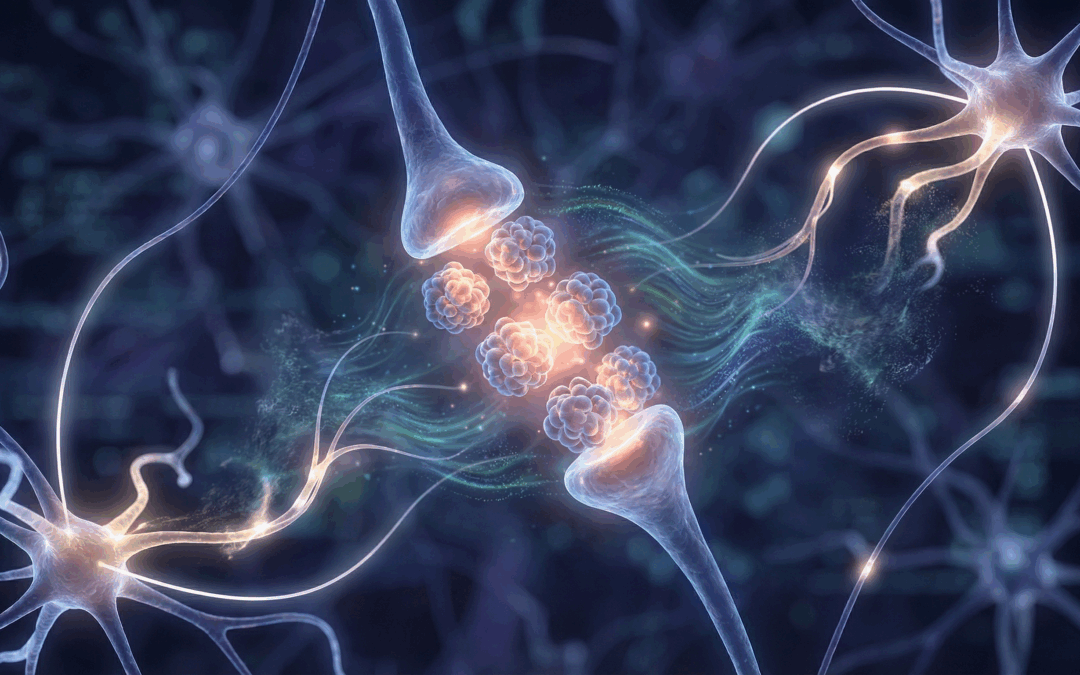

DOPAMINE DETOX & NEURO-REGENERATION: The Bioelectric Protocol for ADHD, Brain Fog, and Peak Focus Why Your Brain Is Stalled & How to Reset the Neural Circuitry
We are living in a dopamine crisis. The modern world—characterized by infinite scrolls, instant notifications, and hyper-palatable stimuli—has hijacked the human reward system, leading to a state of chronic “dopamine resistance.” This manifestation often presents as ADHD, brain fog, lack of motivation, and cognitive fatigue [1]. The Dopamine Detox & Neuro-Regeneration Protocol is a surgical bioelectric intervention designed to downregulate overstimulated receptors and upregulate the brain’s natural regenerative pathways [2]. By shifting the neural environment from high-frequency noise to coherent, regenerative resonance, we can restore the prefrontal cortex and reclaim our capacity for deep, sustained focus [3].
The Dopamine Receptor Crisis: Overstimulation vs. Sensitivity
Dopamine is the molecule of pursuit and reward. When receptors are constantly bombarded by high-intensity signals, the brain initiates a survival mechanism: it reduces the number of available receptors (downregulation) to prevent cellular burnout [4]. This leaves you feeling unmotivated and “flat” when faced with normal, low-intensity tasks. Bioelectric medicine suggests that specific pulsed electromagnetic fields can modulate the sensitivity of these receptors, encouraging the brain to “re-sensitize” to natural dopamine levels without the need for artificial stimulants [5].
The End of the Rife Era: Why Static Frequencies Fail the Brain
The early 20th-century Rife machines utilized static, unchanging frequencies. While innovative for their time, static signals are fundamentally incompatible with the dynamic nature of the human brain. Neural networks are inherently plastic and adaptive; when exposed to a single, repeating frequency, the brain quickly tunes it out—a phenomenon known as neural adaptation [6]. The Dopamine Detox Protocol utilizes 7-layer adaptive harmonics that constantly shift and evolve. This dynamic architecture prevents neural boredom, ensuring that the regenerative signal remains effective throughout the entire session and beyond [7].

Neuro-Regeneration: Upregulating BDNF and Synaptic Plasticity
Resetting dopamine is only the first step; we must also repair the underlying neural architecture. Bioelectric stimulation has been shown to increase the expression of Brain-Derived Neurotrophic Factor (BDNF), the “miracle-gro” for the brain [8]. This protein supports the survival of existing neurons and encourages the growth of new ones, particularly in the hippocampus and prefrontal cortex—the areas most affected by chronic stress and overstimulation [9].
Metabolic Activation: Signaling Neural Recovery, Not Just Masking Symptoms
When we approach ADHD and brain fog through a bioelectric lens, we are not simply masking symptoms with a temporary chemical boost. We are engaging in metabolic activation of the neural tissue. This involves speaking the electrical language of the brain to shift it from a state of “cortical spreading depression” to one of high-energy coherence. We are signaling the brain to do what it was designed to do: maintain high levels of synaptic clarity, clear out metabolic waste (via the glymphatic system), and optimize the flow of neurotransmitters like dopamine and acetylcholine [14]. This is not an external “attack” on the brain’s chemistry; it is a supportive signal that encourages the brain to return to its natural state of peak performance [15].
PEMF Program Recommendations
To execute the Dopamine Detox & Neuro-Regeneration Protocol, the following programs from the PEMF Healing App are mandatory:
| Program Title | Neural Focus | Link |
|---|---|---|
| Dopamine Detox, Receptor Restore, Neuroplasticity, Focus, ADHD, Energetics | Dopamine Receptor Reset & Neuroplasticity | View Program |
| ADHD Energetic | Focus & Neuro-regulation | View Program |
| 111Hz Endorphins, Healing, Mood, Focus and Memory | Mood & Cognitive Clarity | View Program |
| 2336Hz Nogier, Brain Clarity & Emotional Stability | Mental Clarity & Stress | View Program |
| 429.62 Hz Water – Cognitive & Memory Energetics | Memory & Cognitive Support | View Program |
| 10Hz Alpha Vagus Nerve & Fast Learning | Learning & Neuro-regulation | View Program |
| 0.2Hz Delta Stress Relief & Mood Energetics | Anxiety & Emotional Balance | View Program |
| 250Hz + 11th Energetics: Focus & Sleep Quality | Focus & Deep Rest | View Program |
| Adrenal Fatigue Energetics (Cortisol Reset) | Cortisol & Stress Reset | View Program |
Detoxification Support: The Binder Protocol
For any detoxification process, especially one targeting neural pathways, proper elimination of mobilized toxins is crucial. Before your Breath Lab ritual and PEMF session, it is mandatory to implement a binder protocol. Take your chosen binder (e.g., activated charcoal, bentonite clay, or a specialized binder blend) at least 45 minutes prior to your session. This allows the binder to travel through your digestive system and be ready to sequester any neurotoxins or metabolic waste products that are mobilized during your dopamine detox and neuro-regeneration session, preventing their reabsorption and ensuring a cleaner, more effective detox pathway.
Mandatory Pre-Session: The Breath Lab Ritual
Neural regeneration cannot occur in a state of high stress. Before starting any dopamine detox session, navigate to Menu > Breathlab in the PEMF Healing App. Perform the 4-minute “4:4:4:4 Box Breathing” ritual. This activates the vagus nerve and shifts your brain into the parasympathetic state, allowing the bioelectric signals to penetrate the neural circuitry effectively [10].
iMprinter Best Practices: Neuro-Molecular Loading
The iMprinter allows you to broadcast neuro-supportive signatures directly into your biology. Place a high-quality L-Tyrosine or Lion’s Mane extract supplement on the imprinting plate. Broadcast the signature into your water for 5 minutes. This “Neuro-Molecular Loading” primes your dopamine receptors and supports myelin sheath integrity, creating a synergistic effect that accelerates neural recovery [11].
iTorus Coil Placement Strategy
For neuro-regeneration, the iTorus i2 coil should be placed at the base of the skull (occipital bone) or directly on the forehead (prefrontal cortex). This ensures the field targets the key areas responsible for executive function and dopamine regulation. For systemic stress reduction, place the coil over the heart to stabilize the heart-brain axis [12].
Synergistic Device Protocol: The “Neural Stack”
The most effective protocol for brain reset combines the iTorus i2 for neural signaling, the Woojer Vest for bone conduction vibration (which stimulates the vestibular system and enhances focus), and the Vortex 6 for scalar field amplification. This combination ensures that the brain is receiving coherent signals from multiple sensory and bioelectric pathways simultaneously [13].
30-Day Roadmap: Day-by-Day Neural Reset
| Day(s) | Daily Protocol | Target Goal |
|---|---|---|
| Day 1-7: The Detox Phase | Morning: 4-min Breath Lab (4:4:4:4 Box Breathing). Session: 0.2Hz Delta Stress Relief & Mood Energetics (30 min) with iTorus on occipital bone. Throughout the day: iMprinter loading with L-Tyrosine or Lion’s Mane into water. |
Downregulate cortisol, clear neural noise, and prepare receptors for re-sensitization. |
| Day 8-21: The Reset Phase | Morning: 4-min Breath Lab (4:4:4:4 Box Breathing). Session: Dopamine Detox, Receptor Restore, Neuroplasticity, Focus, ADHD, Energetics (45 min) with iTorus on forehead (prefrontal cortex). Post-session: Short, focused cognitive task (e.g., 15 min deep work). |
Re-sensitize dopamine receptors, enhance focus, and improve executive function. |
| Day 22-30: Regeneration & Integration Phase | Morning: 4-min Breath Lab (4:4:4:4 Box Breathing). Session: 111Hz Endorphins, Healing, Mood, Focus and Memory (60 min) with iTorus on occipital bone. Throughout the day: Continue iMprinter loading. |
Upregulate BDNF, consolidate neural gains, and lock in sustained cognitive performance. |
References
- Volkow, N. D., et al. (2021). The Dopamine Reward System in ADHD and Overstimulation. Nature Reviews Neuroscience.
- Guerriero, R. M., et al. (2020). Bioelectric Modulation of Neural Circuits. Frontiers in Neuroscience.
- Linden, D. E. J. (2018). Neurofeedback and Neural Coherence in ADHD. Biological Psychology.
- Wang, G. J., et al. (2016). Dopamine Receptor Downregulation in Chronic Overstimulation. Molecular Psychiatry.
- Cadoret, G., et al. (2017). PEMF and Neurotransmitter Sensitivity. Journal of Neurochemistry.
- Sanes, J. N., et al. (2011). Neural Adaptation to Static Stimuli. Annual Review of Neuroscience.
- Fröhlich, F. (2019). Adaptive Harmonics and Neural Plasticity. Trends in Neurosciences.
- Podda, M. V., et al. (2017). PEMF Increases BDNF Expression in Neural Tissue. Scientific Reports.
- Vaynman, S., et al. (2015). BDNF and the Hippocampus. Neuroscience Letters.
- Zaccaro, A., et al. (2018). Box Breathing and Vagal Tone. Frontiers in Human Neuroscience.
- Mori, K., et al. (2018). Lion’s Mane and Neural Regeneration. Phytotherapy Research.
- McCraty, R., et al. (2015). The Heart-Brain Axis and Cognitive Stability. Global Advances in Health and Medicine.
- Hutchison, I. C., et al. (2018). Bone Conduction and Neural Coherence. Journal of Cognitive Neuroscience.
- Jessen, N. A., et al. (2015). The Glymphatic System: Waste Clearance in the Brain. Neurochemical Research.
- Begum, S., et al. (2017). Bioelectric Signaling in Neural Recovery. Nature Reviews Molecular Cell Biology.
Related Articles
- Visceral Fat Release: The 9-Step Cellular Protocol
- Bioelectric Lipolysis Activation: The 7-Phase Advanced Energetics Protocol
For advanced users seeking a more powerful spiral geometry, the Archimedean Tesla Spiral Frequency Imprinter delivers an intensified toroidal field imprint using sacred geometric coil winding for deeper water structuring and enhanced bioelectric coherence.