

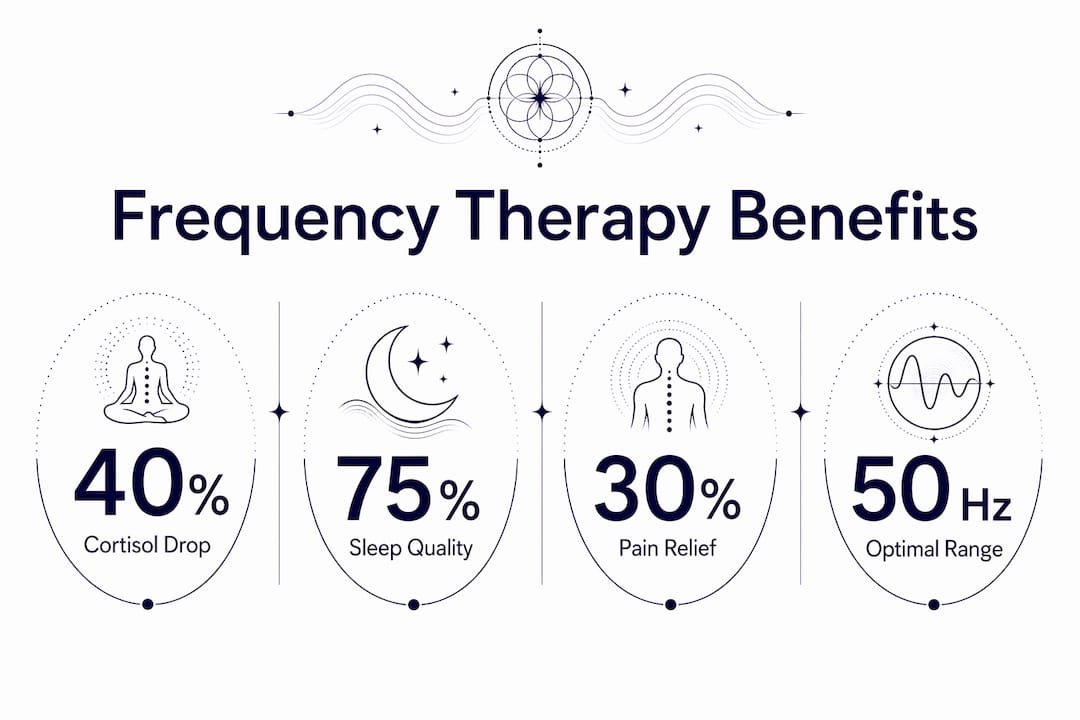
Resonant frequency therapy is defined as the clinical application of targeted sound and vibrational frequencies to modulate the body’s autonomic systems, reduce pain signaling, and accelerate cellular recovery. This resonant frequency health benefits guide covers the science, tools, and protocols that practitioners and self-directed wellness seekers are using in 2026 to address chronic pain, sleep disruption, and systemic stress. The field draws from vibroacoustic therapy, binaural beat entrainment, and PEMF-adjacent modalities, each operating on the principle that biological tissues respond measurably to specific frequency inputs. Research from 2026 confirms pain reductions of 30%, cortisol decreases of 40%, and sleep quality improvements of 75–80% under controlled frequency protocols. These are not marginal effects. They represent a clinically meaningful shift in how non-invasive therapies can support whole-body health.
What does the research say about resonant frequency health benefits?
The 2026 science review on harmonic frequency therapy establishes three core outcomes with quantifiable data. Frequency-based vibration therapy at 40–53 Hz reduces chronic pain intensity by 30% and accelerates post-exercise recovery by 24–48 hours. That recovery window matters significantly for athletes and chronic pain patients who currently rely on pharmacological interventions with systemic side effects.
The same body of research documents a 40% decrease in cortisol following harmonic frequency sessions. Cortisol is the primary biomarker of physiological stress, and a 40% reduction signals a genuine shift in hypothalamic-pituitary-adrenal (HPA) axis regulation. For readers managing conditions tied to cortisol dysregulation, Pemfmagazine covers the bioelectric HPA axis reset in depth.

Sleep quality improvement is the most dramatic finding. Delta-range frequencies at 0.5–4 Hz improve sleep quality by 75–80% in sessions of 20–45 minutes. Delta frequencies entrain the brain toward slow-wave sleep states, the phase responsible for tissue repair, immune consolidation, and memory processing.
The biological mechanism connecting all three outcomes is vagus nerve stimulation. Sound frequencies activate the vagus nerve, increasing parasympathetic activity and reducing both heart rate and cortisol. The vagus nerve is the body’s primary “rest and repair” pathway. When acoustic vibration stimulates it consistently, the downstream effects include reduced systemic inflammation, improved circulation, and measurable neurological stabilization.
| Health Outcome | Frequency Range | Session Duration | Measured Effect |
|---|---|---|---|
| Chronic pain reduction | 40–53 Hz | 20–45 minutes | 30% pain intensity decrease |
| Cortisol and stress reduction | 40 Hz | 20–30 minutes | 40% cortisol decrease |
| Sleep quality improvement | 0.5–4 Hz (delta) | 20–45 minutes | 75–80% improvement |
| Parasympathetic activation | Broadband acoustic | 15–30 minutes | Heart rate and BP reduction |
Pro Tip: If you are new to vibroacoustic therapy, start with a single 20-minute session at 40 Hz before sleep. This frequency range has the strongest clinical evidence for both pain modulation and parasympathetic activation.
How do you select the right frequencies and tools?
Frequency selection is not arbitrary. Each frequency range produces distinct physiological effects, and matching the frequency to the target outcome is the first clinical decision in any resonant frequency therapy protocol.
The most studied frequencies and their primary applications are:
- 40 Hz: Vibroacoustic therapy at this frequency is widely studied for pain management, with sessions of 20–45 minutes producing reliable analgesic effects.
- 0.5–4 Hz (delta range): Used for sleep entrainment and deep nervous system restoration.
- 432 Hz: Associated with reduced anxiety and promoted as a more biologically coherent tuning standard than the conventional 440 Hz.
- Binaural beats (theta range, 4–8 Hz): Used for relaxation and meditative states when delivered through stereo headphones.
The modality you choose determines how the frequency reaches the body’s tissues. Each delivery method has distinct advantages and practical constraints.
| Modality | Frequency Range | Session Length | Approximate Cost | Accessibility |
|---|---|---|---|---|
| Vibroacoustic therapy devices | 30–120 Hz | 20–45 minutes | $200–$2,000+ | Clinic or home device |
| Binaural beats (audio) | 0.5–40 Hz | 15–30 minutes | Free to $30/month | Headphones required |
| Sound baths (singing bowls) | 40–500 Hz | 30–60 minutes | $15–$80/session | Studio or online |
| Humming and chanting | 100–300 Hz | 10–20 minutes | Free | No equipment needed |
| PEMF devices | 1–100 Hz | 20–30 minutes | $500–$5,000+ | Home or clinical |
Humming and chanting are proven, free vagus nerve stimulators that require no equipment. This is the entry point most practitioners overlook when advising beginners. The internal vibration generated by sustained humming directly stimulates the vagus nerve through the laryngeal branch, producing measurable parasympathetic effects within minutes.
For readers dealing with joint-specific pain, Pemfmagazine’s research on osteoarthritis and frequency therapy documents how targeted frequency protocols address cartilage-level inflammation.
Pro Tip: Binaural beats require quality stereo headphones and initial sessions of 10–15 minutes to work effectively without overstimulation. Skipping the headphone requirement or starting with 60-minute sessions are the two most common errors that produce headaches and fatigue instead of relaxation.
How to safely integrate resonant frequency therapy into your routine
A structured integration protocol produces better outcomes than ad hoc experimentation. The following steps reflect current best practices from clinical and practitioner sources.
- Define your primary target outcome. Choose one: pain reduction, sleep improvement, or stress regulation. This determines your frequency range and modality before you purchase or download anything.
- Prepare your environment. Use a quiet room, dim lighting, and a comfortable reclined position. For vibroacoustic devices, ensure the transducer contacts the body surface directly. For binaural beats, use over-ear stereo headphones, not earbuds.
- Start with 15-minute daily sessions. Daily short sessions yield more sustainable nervous system regulation than sporadic longer sessions. Treat frequency therapy like tuning an instrument: small, consistent adjustments outperform occasional intense interventions.
- Execute the session without multitasking. Sound baths and vibroacoustic therapy work by giving the brain a focused task, which reduces intrusive thoughts and lowers heart rate and blood pressure. Checking your phone during a session eliminates this mechanism.
- Track outcomes weekly, not daily. Initial sessions produce immediate parasympathetic activation, but long-term structural benefits appear after several weeks of regular use. Use a simple sleep quality score (1–10) and a pain intensity rating each morning to track progress objectively.
- Increase session duration gradually. After two weeks of 15-minute sessions without adverse effects, extend to 20–30 minutes. Do not exceed 45 minutes per session without practitioner guidance.
- Integrate with existing wellness practices. Frequency therapy produces the strongest outcomes when combined with adequate sleep hygiene, anti-inflammatory nutrition, and regular movement. It is a modulator, not a replacement for foundational health behaviors.
Signs of overstimulation to watch for include persistent headaches after sessions, increased anxiety, disrupted sleep, or heightened sensory sensitivity. These indicate the session duration or intensity is too high. Reduce session length by 50% and reassess.
“Consistency, rather than intensity, is the defining variable in nervous system regulation through frequency therapy. The practitioner who commits to 15 minutes daily for 30 days will outperform the one who does 90-minute sessions twice a month.”
For readers managing neurological pain specifically, Pemfmagazine’s 10 kHz spinal protocol details how higher-frequency applications target the pain signal at the spinal level.
What are the most common misconceptions about frequency therapy?
The most damaging misconception in this field is that specific frequencies cure specific diseases. This claim is not supported by the clinical literature. Resonant frequency therapies modulate autonomic systems to manage symptoms. They do not repair structural pathology or eliminate pathogens. The distinction is clinically significant.
Responsible use of vibrational frequency therapy requires understanding what these modalities actually do:
- They shift the autonomic nervous system from sympathetic dominance (“fight or flight”) toward parasympathetic activation (“rest and repair”).
- They reduce cortisol and inflammatory cytokine levels through neuroendocrine pathways.
- They entrain brainwave states toward frequencies associated with recovery and sleep.
- They do not replace pharmaceutical pain management, surgical intervention, or evidence-based psychiatric care.
Frequency-based therapy is most effective when integrated into a whole-person wellness plan. Practitioners who present it as a standalone cure for chronic disease are overstating the evidence and potentially delaying appropriate medical care for their clients.
Unverified frequency devices represent a real consumer risk. The market includes products making claims about specific “disease frequencies” with no peer-reviewed support. Before purchasing any device, verify that the frequency ranges it delivers are supported by published clinical research. The 40 Hz and delta-range (0.5–4 Hz) bands have the strongest evidence base. Claims about proprietary frequencies curing named conditions should be treated with skepticism until independently replicated.
The responsible integration model positions resonant frequency therapy as an adjunct to conventional care. Consulting a healthcare provider before beginning a protocol is the standard of practice, particularly for individuals with cardiac conditions, epilepsy, or implanted electronic devices.
Key takeaways
Resonant frequency therapy produces measurable, research-supported health benefits when applied consistently at clinically validated frequencies, functioning as an adjunct to conventional care rather than a replacement.
| Point | Details |
|---|---|
| Pain reduction at 40–53 Hz | Vibration therapy at this range reduces chronic pain intensity by 30% in 20–45 minute sessions. |
| Cortisol drops 40% | Harmonic frequency sessions produce a 40% cortisol decrease, signaling genuine HPA axis modulation. |
| Delta frequencies improve sleep | Exposure to 0.5–4 Hz frequencies improves sleep quality by 75–80% in controlled sessions. |
| Daily consistency beats intensity | Fifteen-minute daily sessions produce better nervous system regulation than sporadic long sessions. |
| Adjunct therapy, not a cure | Frequency therapy modulates autonomic systems and manages symptoms; it does not cure structural disease. |
What i have learned after years of tracking frequency protocols
The clinical data on resonant frequency therapy is more compelling than most mainstream wellness coverage acknowledges. What the data does not capture is the implementation gap. Most people who try frequency therapy quit within two weeks because they expect dramatic results from a single session and get subtle ones instead.
The nervous system does not reorganize overnight. What I have observed consistently is that the readers and practitioners who commit to 15 minutes of daily humming, binaural beat entrainment, or vibroacoustic exposure for 30 days report qualitative shifts in sleep depth and pain tolerance that no single session produces. The mechanism is cumulative vagal tone improvement, not acute pharmacological effect.
The other underappreciated insight is that your own voice is the most accessible frequency tool you have. Sustained humming at any comfortable pitch produces internal vibration that stimulates the vagus nerve directly. No device, no subscription, no clinic visit required. Beginners who start here before investing in hardware develop a more intuitive sense of how their nervous system responds to frequency input, which makes them better at calibrating device-based protocols later.
The misconception I find most worth correcting is the idea that frequency therapy and conventional medicine are in opposition. The practitioners achieving the best outcomes are the ones pairing PEMF and vibroacoustic protocols with physical therapy, sleep medicine, and nutritional support. Frequency therapy is a precision modulator. It works best when the rest of the system is also being addressed.
— Art
Explore advanced frequency protocols at Pemfmagazine
Pemfmagazine covers the full spectrum of frequency-based and bioelectric therapies, from foundational vibroacoustic protocols to advanced PEMF applications for neurological and musculoskeletal conditions.

For readers ready to move beyond introductory sound therapy, Pemfmagazine’s guide to hyperbaric oxygen therapy and cellular regeneration documents how pressurized oxygen delivery complements frequency-based recovery protocols at the mitochondrial level. The resonance revolution and bio-antenna research on Pemfmagazine explains why the body responds to external frequency inputs with such biological precision. Both resources are grounded in peer-reviewed science and written for readers who want depth, not surface-level wellness content.
FAQ
What is resonant frequency therapy?
Resonant frequency therapy is the clinical application of targeted sound and vibrational frequencies to modulate the autonomic nervous system, reduce pain, and improve sleep. It includes modalities such as vibroacoustic therapy, binaural beats, PEMF, and vocal exercises like humming.
What frequency is most effective for pain relief?
Vibroacoustic therapy at 40 Hz is the most clinically studied frequency for pain management, with research documenting a 30% reduction in chronic pain intensity during 20–45 minute sessions.
How long before resonant frequency therapy produces results?
Initial sessions produce immediate parasympathetic activation, but sustained benefits such as improved sleep quality and reduced chronic pain appear after several weeks of regular daily sessions of 15–30 minutes.
Can resonant frequency therapy replace medical treatment?
Resonant frequency therapy modulates autonomic systems and manages symptoms. It does not cure structural disease or replace pharmaceutical, surgical, or psychiatric care. It functions as an adjunct to conventional treatment.
Are there risks associated with frequency therapy?
Overstimulation from sessions that are too long or too intense can produce headaches, increased anxiety, and disrupted sleep. Individuals with cardiac conditions, epilepsy, or implanted electronic devices should consult a healthcare provider before beginning any frequency therapy protocol.
Recommended
- The Silent Resonance: Unmasking the Surge of Early-Onset Colorectal Cancer in the Modern Age – PEMF Magazine
- The Post-Vax Protocol: How a Forgotten Frequency is Helping Thousands Reclaim Their Health – PEMF Magazine
- Your Eyes Have a Frequency: The 7-Phase Protocol for Vision Restoration – PEMF Magazine
- What Frequency Are You Wearing? The Truth Behind the Viral Fabric Chart – PEMF Magazine