
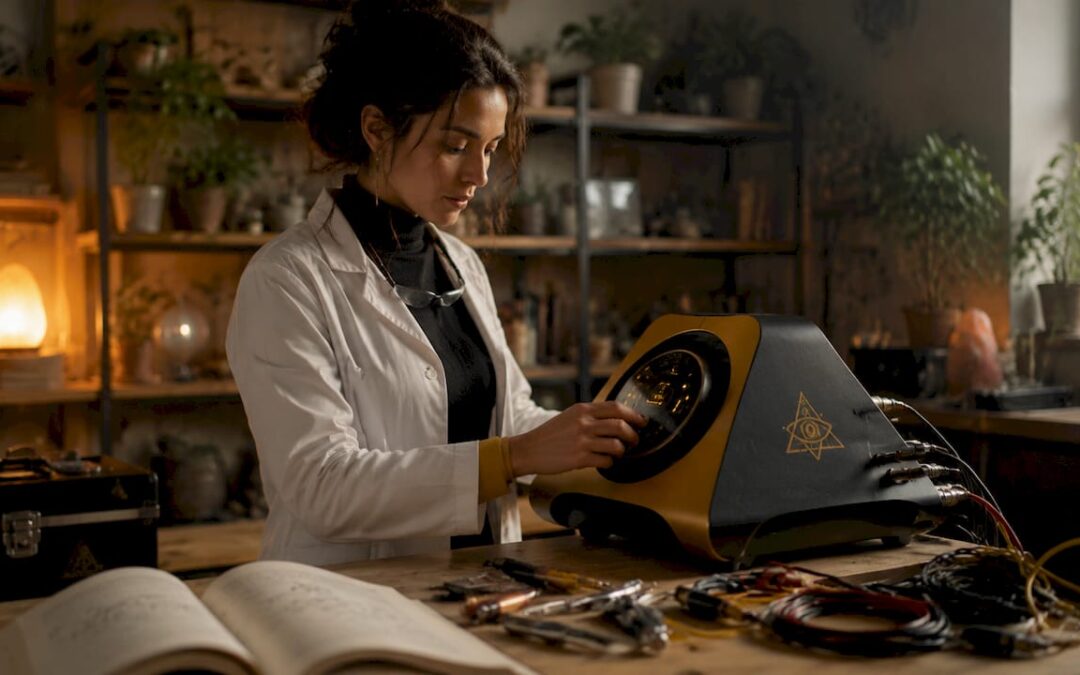
Clinical frequency applications are defined by their operating frequency range, with each tier producing distinct physiological effects that determine therapeutic or diagnostic suitability. Low-frequency currents (1–1,000 Hz) target nerve stimulation and pain relief. Medium-frequency currents (1,000–100,000 Hz) penetrate deeper tissue for muscle re-education and joint therapy. High-frequency modalities drive tissue heating, cellular repair, and advanced diagnostics. Tools like TENS units, tuning forks, interferential therapy devices, and 24 GHz radar systems each represent examples of clinical frequency applications across specialties from rehabilitation to cardiology.
1. Low-frequency applications: pain relief and muscle stimulation
Low-frequency currents like TENS manage both acute and chronic pain by stimulating peripheral nerves to interrupt pain signal transmission. The NHS recognizes TENS as a first-line, non-pharmacological pain management tool for conditions including labor pain, osteoarthritis, and postoperative discomfort. Neuromuscular electrical stimulation (NMES) operates in the same frequency tier and drives muscle contractions directly, making it a standard tool in post-surgical rehabilitation where voluntary muscle activation is limited.
Electrotherapy at low frequencies also addresses musculoskeletal conditions like post-surgical edema and joint stiffness. Clinicians apply it through surface electrodes placed near the target nerve or muscle group, with frequency selection tuned to the desired effect. Pain gate modulation typically uses higher settings within the low-frequency range, while endorphin release protocols use lower pulse rates.
- TENS: 1–150 Hz range, targets acute and chronic pain via nerve stimulation
- NMES: Drives muscle contraction for rehabilitation after orthopedic surgery
- Electrotherapy: Addresses edema, stiffness, and musculoskeletal pain
- Microcurrent therapy: Sub-milliamp currents support cellular repair and wound healing
Pro Tip: Electrode placement matters as much as frequency selection. Misaligned electrodes over fatty tissue rather than directly over the nerve pathway significantly reduce treatment efficacy, especially for TENS in lumbar pain management.
2. Medium-frequency applications: deep pain relief and tissue re-education
Medium-frequency currents in the 1,000–100,000 Hz range penetrate deeper into tissue than low-frequency alternatives. This depth advantage makes them the preferred choice for joint pain, deep muscle conditions, and lymphatic drainage. Interferential therapy (IFT) is the most widely used medium-frequency modality. It works by crossing two medium-frequency currents inside the tissue, producing an interference pattern that generates a lower effective frequency deep within the target area. This mechanism allows clinicians to reach structures that surface-level low-frequency currents cannot access effectively.
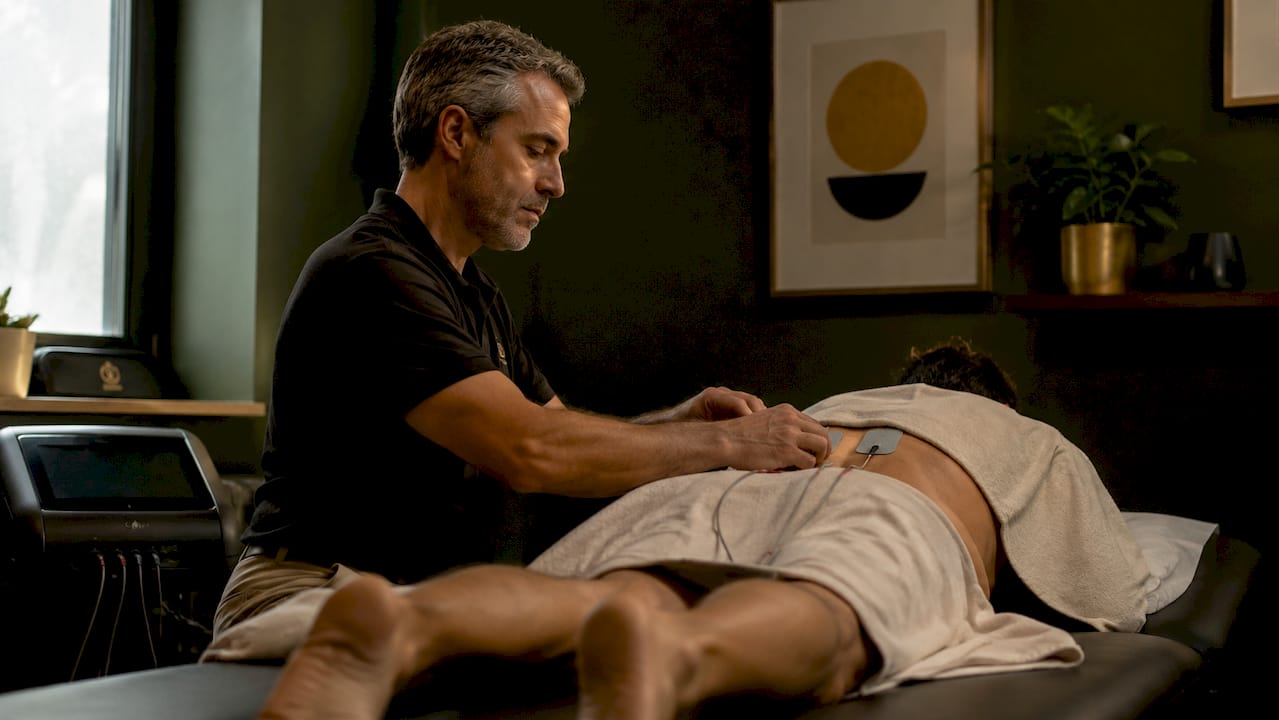
Russian stimulation, another medium-frequency application, uses 2,500 Hz carrier currents to produce strong muscle contractions for re-education after neurological injury or prolonged immobilization. Clinicians also apply medium-frequency currents in chronic soft tissue injuries where scar tissue formation limits recovery. The deeper current penetration supports tissue remodeling without the discomfort associated with high-intensity low-frequency stimulation.
| Feature | Low frequency (1–1,000 Hz) | Medium frequency (1,000–100,000 Hz) |
|---|---|---|
| Tissue depth | Superficial to moderate | Deep tissue |
| Primary use | Pain relief, nerve stimulation | Joint pain, muscle re-education |
| Patient comfort | Moderate | Generally higher |
| Key modalities | TENS, NMES | Interferential therapy, Russian stimulation |
| Lymphatic effect | Minimal | Clinically relevant |
- Interferential therapy: Deep tissue interference for joint and muscle conditions
- Russian stimulation: 2,500 Hz for post-neurological muscle re-education
- Lymphatic drainage: Medium-frequency currents reduce chronic soft tissue swelling
- Chronic injury management: Supports remodeling in fibrotic or scarred tissue
Pro Tip: In interferential therapy, the beat frequency, not the carrier frequency, determines the therapeutic effect. Set your beat frequency between 80–150 Hz for pain relief and 1–10 Hz for muscle pumping effects.
3. High-frequency clinical diagnostics and therapeutic heating
High-frequency modalities produce thermal and non-thermal effects that support deep tissue healing and advanced diagnostics. Pulsed shortwave therapy (PSWT) uses radiofrequency energy to generate heat in deep tissue, accelerating repair in tendons, ligaments, and joint capsules. Pelvic floor therapy programs also use high-frequency electrical stimulation to strengthen weakened musculature without requiring voluntary contraction, making it accessible for patients with severe dysfunction.
Respiratory oscillometry represents one of the most clinically significant recent advances in high-frequency diagnostics. A novel respiratory reactance index combining multiple oscillometric frequencies improves COPD severity detection with an AUC of 0.858, sensitivity of 81.0%, and specificity of 79.5%. That level of diagnostic accuracy positions oscillometric frequency analysis as a viable alternative to spirometry for patients who cannot perform forced expiratory maneuvers.
- Pulsed shortwave therapy: Deep tissue heating for tendon and ligament repair
- Pelvic floor stimulation: High-frequency electrical activation for incontinence management
- Microwave diathermy: Localized deep heating for joint and soft tissue conditions
- Respiratory oscillometry: Frequency-dependent indices for COPD severity grading
The clinical data from oscillometric research confirms that frequency selection within the diagnostic range directly affects sensitivity. Combining reactance measurements across multiple frequencies produces a composite index that outperforms single-frequency measurements. This principle applies broadly: multi-frequency approaches consistently outperform single-frequency protocols in both therapeutic and diagnostic contexts.
4. Frequency applications in diagnostics: tuning forks and cardiac mapping
Tuning forks remain one of the most cost-effective and clinically reliable frequency tools in medicine. The 128 Hz tuning fork tests vibration sensation at peripheral sites including the great toe and medial malleolus, providing a rapid screen for peripheral neuropathy in diabetic patients. The test requires no equipment beyond the fork itself, making it practical in any clinical setting.
For audiological assessment, the 512 Hz tuning fork is the standard choice for Rinne and Weber tests. It produces a clean tone that aligns with speech frequency ranges and minimizes tactile interference that lower-frequency forks generate. Clinicians who use 256 Hz forks for hearing tests risk false positives because patients may detect bone conduction vibration rather than true auditory signal. The 512 Hz standard eliminates that confound.
- 128 Hz fork: Vibration sensation testing, peripheral neuropathy screening
- 512 Hz fork: Rinne and Weber tests, audiological assessment
- Cardiac peak frequency mapping: Identifies slow pathway ablation targets
Cardiac electrophysiology represents the most technically demanding frequency diagnostic application. Peak frequency mapping at approximately 199 Hz identifies slow pathway ablation sites with a 63% single-lesion success rate, reducing overall procedure time compared to voltage mapping alone. Precise catheter contact is required to avoid noise contamination, and peak frequency mapping can outperform voltage mapping for ablation target identification in complex arrhythmia cases.
Pro Tip: When using peak frequency mapping in electrophysiology, static noise from poor catheter contact is the most common source of false readings. Confirm stable contact before recording to avoid misidentifying ablation targets.
5. Non-contact and advanced frequency applications in vital sign monitoring
Non-contact vital sign monitoring uses radiofrequency and optical technologies to measure heartbeat and respiration without physical sensors touching the patient. This approach reduces white-coat hypertension, eliminates electrode placement errors, and improves comfort for patients with fragile or burned skin. The clinical advantage is measurable: removing contact artifacts from the signal chain improves baseline accuracy across all patient populations.
A 24 GHz FMCW radar system enables accurate real-time heartbeat detection by replacing computationally heavy Hilbert transforms with moving-RMS algorithms. This substitution makes the system practical for bedside deployment without high-performance computing hardware. Static clutter suppression remains the key signal processing challenge, and current implementations address it through adaptive filtering calibrated to the room environment.
Machine learning combined with multi-frequency microwave signals pushes non-contact diagnostics further. Using 64 microwave frequencies, machine learning models classify lung diseases with 98% test accuracy. Remarkably, just 8 of those 64 frequencies are sufficient to achieve 96% accuracy. That finding means clinical systems can reduce hardware complexity significantly without meaningful loss of diagnostic performance.
LiFi technology using DCO-OFDM modulation addresses the data transmission side of frequency-based healthcare monitoring. A 4 dB PAPR reduction achieved through SLM-based techniques maintains 0.9 bits per second per Hz spectral efficiency while improving signal reliability in hospital environments. Reliable data transmission is as critical as signal acquisition in any frequency-based monitoring system.
Key takeaways
Clinical frequency applications span a defined spectrum from 1 Hz to gigahertz ranges, with each tier producing specific physiological effects that determine its therapeutic or diagnostic role.
| Point | Details |
|---|---|
| Frequency tier determines depth | Low frequencies target nerves superficially; medium and high frequencies reach deep tissue and internal structures. |
| Interferential therapy beats low frequency for joints | Medium-frequency interference patterns penetrate deeper than TENS, making them the better choice for joint and deep muscle conditions. |
| Oscillometric diagnostics rival spirometry | A multi-frequency reactance index achieves 81% sensitivity and 79.5% specificity for COPD severity grading. |
| 512 Hz is the audiological standard | The 512 Hz tuning fork minimizes tactile interference and aligns with speech frequencies, outperforming 256 Hz for Rinne and Weber tests. |
| Non-contact monitoring is clinically viable | 24 GHz FMCW radar and machine learning with 8 microwave frequencies achieve near-clinical accuracy without patient contact. |
Frequency selection is the clinical decision most practitioners underestimate
After working across rehabilitation, respiratory diagnostics, and cardiac electrophysiology contexts, the pattern I see most often is this: clinicians select a frequency modality based on habit or equipment availability rather than the specific tissue depth and physiological target the condition requires. A TENS unit is not a substitute for interferential therapy when the pathology sits in a deep joint capsule. A 256 Hz tuning fork is not equivalent to a 512 Hz fork for audiological assessment. These are not minor calibration differences. They are the difference between a meaningful clinical result and a missed finding.
The emerging non-contact and multi-frequency diagnostic tools change the calculus further. When dynamic frequency tier selection becomes standard practice rather than an afterthought, outcomes improve across the board. The research on peak frequency cardiac mapping and oscillometric COPD indexing both confirm that multi-frequency approaches consistently outperform single-frequency protocols. My recommendation: treat frequency selection as a primary clinical variable, not a secondary equipment setting.
— Art
Explore frequency-based wellness with Frequencyhealing
Frequencyhealing translates the science behind clinical frequency applications into accessible, personalized wellness programs. The platform delivers PEMF, binaural audio, haptic vibration, scalar brainwave, and BioPhi energetic sequences designed for nervous system balance, recovery support, sleep, and focus. Each program is built on frequency sequencing principles drawn from the same bioelectric science that underlies clinical electrotherapy and diagnostic modalities. Whether you work with PEMF coils, haptic mats, or wired headphones, Frequencyhealing adapts to your hardware and your goals. Explore the full range of frequency wellness programs and build a daily ritual grounded in real frequency science.
FAQ
What are the main examples of clinical frequency applications?
Clinical frequency applications include TENS for pain relief, interferential therapy for deep joint conditions, respiratory oscillometry for COPD diagnostics, tuning fork tests for neuropathy and hearing, and 24 GHz radar for non-contact vital sign monitoring.
How is interferential therapy different from TENS?
Interferential therapy uses medium-frequency currents (1,000–100,000 Hz) that cross inside the tissue to produce deep therapeutic effects. TENS operates at low frequencies (1–150 Hz) and primarily targets superficial nerve pathways for pain relief.
Which tuning fork frequency is best for hearing tests?
The 512 Hz tuning fork is the clinical standard for Rinne and Weber hearing tests. It aligns with speech frequency ranges and eliminates the tactile interference that lower-frequency forks produce, reducing false positive results.
Can non-contact radar systems accurately monitor heartbeat?
Yes. A 24 GHz FMCW radar system using moving-RMS signal processing achieves accurate real-time heartbeat detection without physical contact. Static clutter suppression is the primary technical requirement for reliable performance.
What is peak frequency mapping used for in cardiology?
Peak frequency mapping at approximately 199 Hz identifies slow pathway ablation targets in cardiac electrophysiology procedures. It achieves a 63% single-lesion success rate and can outperform voltage mapping for locating arrhythmia sources.