
There is a quiet, systemic failure mode spreading through the modern population, and almost no one is discussing it in the correct language. We call it chronic inflammation. We treat it with chemicals, diets, and suppressive drugs. We measure it in blood markers like C-reactive protein and cytokines. But these are the symptoms of a much deeper, more fundamental breakdown. Before inflammation is a chemical event, it is a bioelectric failure. Your body is not just a chemical factory; it is an electromagnetic engine, and chronic inflammation is the signature of a cellular brownout.[1]
The global epidemic of chronic inflammatory diseases—from autoimmune conditions to neurodegeneration and metabolic syndrome—is the defining health crisis of our time. It is a state where the body’s natural defense system becomes trapped in a self-perpetuating loop of destruction. The near-universal assumption is that the immune system has simply “gone rogue.” In reality, the biology is responding to a loss of signal coherence and a collapse of cellular voltage. When the electrical potential of the cell membrane drops below a critical threshold, the inflammatory cascade is no longer a temporary repair mechanism; it becomes the permanent baseline.[2]
What follows is a complete breakdown of why chronic inflammation is an electrical failure, the molecular mechanisms of bioelectric signaling, and the precise, 30-day Inflammation Basic Energetics protocol designed to restore cellular voltage and bypass the inflammatory ceiling. This is not just about suppressing symptoms; it is about providing the coherent electromagnetic environment your cells need to reset their own defense architecture.
This article reveals the “Bioelectric Breakdown” model of inflammation—a perspective that bridges the gap between traditional immunology and the frontier of bioelectronic medicine. You will learn how voltage-gated ion channels govern the inflammatory response, why static anti-inflammatory approaches often fail, and how advanced PEMF architectures can entrain your biology back toward a state of systemic coherence. The future of health is not just chemical; it is orchestrated signal intelligence.
The Bioelectric Breakdown: Why Chronic Inflammation Is an Electrical Failure
The foundational mistake in modern immunology has been the exclusion of bioelectricity from the inflammatory model. Biological tissue is not a passive collection of chemicals; it is a complex, self-organizing electromagnetic system. Every cell in the human body maintains a transepithelial potential difference (TEP)—a separation of charge across the cell membrane that powers every biological process, from nutrient transport to immune signaling.[3] When this potential is healthy (typically -70mV to -90mV in most cells), the cell operates in a regenerative state. When it drops, the cell enters a state of “electrical stress,” which is the primary trigger for the inflammatory cascade.
Research in bioelectronic medicine has confirmed that the nervous system, particularly the vagus nerve, exerts a direct “cholinergic anti-inflammatory” effect on the immune system through precise electrical signaling. This is not a metaphor; it is a hard-wired bioelectric circuit. When this circuit is disrupted—by environmental electromagnetic noise, chronic stress, or nutritional deficiencies—the immune system loses its “off-switch.” The result is chronic inflammation: a state of persistent bioelectric noise that prevents the body from returning to a state of repair.[4]
A 2020 study published in Cold Spring Harbor Perspectives in Medicine highlighted that harnessing neural control of inflammation through bioelectronic medicine holds extraordinary promise for treating chronic diseases. The study confirmed that inflammation is not just a localized chemical event but a system-wide failure of neural and bioelectric regulation. When the “signal-to-noise ratio” of the body’s internal communication collapses, the immune system reverts to its most primitive, destructive mode of operation.[1]
Furthermore, recent findings from 2024 and 2025 have demonstrated that transepithelial potential difference governs epithelial homeostasis through electromechanics. When this electrical gradient is compromised, cells lose their ability to coordinate repair, leading to the “leaky” membranes and persistent tissue damage characteristic of chronic inflammatory states. Inflammation, therefore, is the biological attempt to repair a system that lacks the electrical energy to complete the job.[13]
Voltage-Gated Ion Channels: The Gatekeepers of Inflammatory Response
To understand why advanced PEMF architectures work where static systems fail, we must examine the molecular gatekeepers of the cell: voltage-gated ion channels (VGICs). These are specialized proteins embedded in the cell membrane that open and close in response to changes in electrical potential. They govern the flux of calcium, sodium, and potassium ions—the very signals that tell an immune cell whether to attack, repair, or stand down.[5]
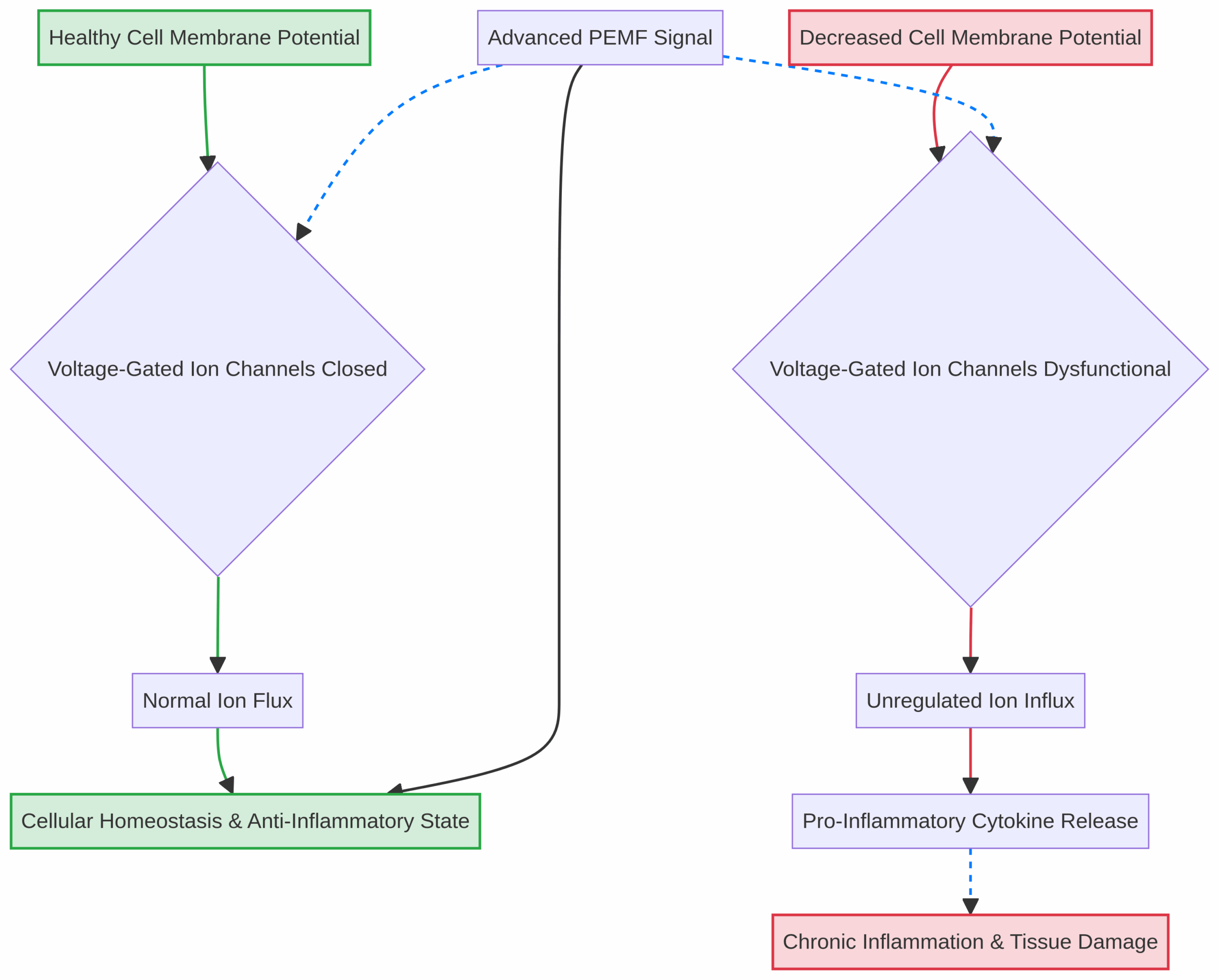
When a cell is under “bioelectric stress,” its ion channels become trapped in a state of dysfunction. Calcium ions, in particular, play a dual role. In healthy concentrations and rhythms, they are the primary “second messenger” for cellular repair. In chronic inflammatory states, however, “calcium flooding” occurs—a persistent, unregulated influx of calcium that triggers the release of pro-inflammatory cytokines and reactive oxygen species. This ionic imbalance is the molecular signature of inflammation.[6]
Recent research published in Global Translational Medicine (2025) emphasizes that voltage-gated ion channels are the key targets for electrical stimulation in the reduction of inflammation. By modulating the membrane potential, PEMF therapy can effectively “re-gate” these channels, restoring the natural ionic balance and signaling the immune system to exit the inflammatory loop. This is not a chemical suppression; it is an electrical recalibration of the cell’s own decision-making machinery.[11]
Another 2025 study in Bioelectronic Medicine confirmed that PEMF therapy is more effective than traditional electrical stimulation in certain inflammatory contexts because it can penetrate deep into tissues and interact with ion channel populations across the entire cell membrane, not just at the surface. This “whole-cell” recruitment is essential for breaking the self-perpetuating cycle of chronic inflammation.[12]
Why Chemical-Only Approaches Fail: The Missing Voltage Dimension

The multi-billion dollar anti-inflammatory drug industry is built on a single premise: that we can chemically block the messengers of inflammation (like COX-2 or TNF-alpha) to restore health. While these drugs can be life-saving in acute scenarios, they fail to address the underlying bioelectric breakdown. They are the biological equivalent of trying to fix a flickering light bulb by painting the glass a different color. They change the appearance of the problem without addressing the faulty wiring.
Static chemical interventions often lead to a “rebound effect” or a plateau because they do not restore the transepithelial potential difference or the ion channel sensitivity required for long-term repair. The cell remains in a state of electrical brownout, and as soon as the chemical block is removed, the inflammatory cascade resumes. Furthermore, many anti-inflammatory drugs have systemic side effects because they interfere with the very signaling pathways the body needs for healthy maintenance in other organ systems.
The missing dimension is voltage. A cell with low voltage cannot repair itself, regardless of how many chemicals are present. By introducing a coherent, pulsed electromagnetic field, we provide the “inductive kick” required to restore membrane potential and re-establish the bioelectric conditions for regeneration. This is why users of advanced PEMF protocols often report results that chemical-only approaches could never achieve: they are finally addressing the root cause of the breakdown.
Endogenous Anti-Inflammatory Signaling: The Vagus Nerve and Earth’s Resonances
The human body was designed to operate within a specific electromagnetic environment. For billions of years, biological life co-evolved alongside the Schumann resonance—the 7.83Hz electromagnetic pulse of the Earth-ionosphere cavity. This resonance acts as a “biological metronome,” entraining our neural and immune systems toward a state of coherence. In the modern world, however, we are disconnected from this natural template, submerged instead in a chaotic sea of “electrosmog” from WiFi, cellular networks, and smart devices.[8]
This disconnection is a primary driver of the chronic inflammation epidemic. Without the entrainment signal of the Earth’s natural resonances, our internal bioelectric circuits lose their timing. The vagus nerve, the primary highway for the “cholinergic anti-inflammatory pathway,” becomes desynchronized. Research from Northwell Health (2024) has confirmed that vagus nerve stimulation can “calm” chronic inflammation by restoring the electrical signaling that controls immune cell activation.[15]
Advanced PEMF technology does not seek to override your biology with artificial signals. Instead, it uses the “Natural Template” of structured complexity—harmonic ratios, amplitude modulation, and phased signal progression—to provide a coherent field that mimics the Earth’s natural resonances. This environment allows the vagus nerve and the immune system to “remember” their healthy, anti-inflammatory state. It is a process of entrainment, not imposition.
The PEMF Inflammation Protocol for Cellular Repair
Modern advanced PEMF programs represent a complete departure from the single-frequency “Rife” model of the past. To break a chronic inflammatory loop, the signal must be as sophisticated as the biology it is attempting to influence. The Inflammation Whole Body + Pulsed Energetics protocol is built on a “Solution Architecture” that stays ahead of cellular adaptation through three specific layers of signal intelligence.
First, it uses **carrier frequencies** that establish a baseline electromagnetic environment conducive to repair. Second, it layers **sub-carrier harmonics** that resonate with specific ion channel populations and immune cell receptors. Third, it incorporates **dynamic waveform modulation**, changing the character of the signal over time to prevent the cell from “tuning out” the therapy. This multi-layered approach ensures that the immune system remains actively engaged with the healing signal across the entire session.[10]
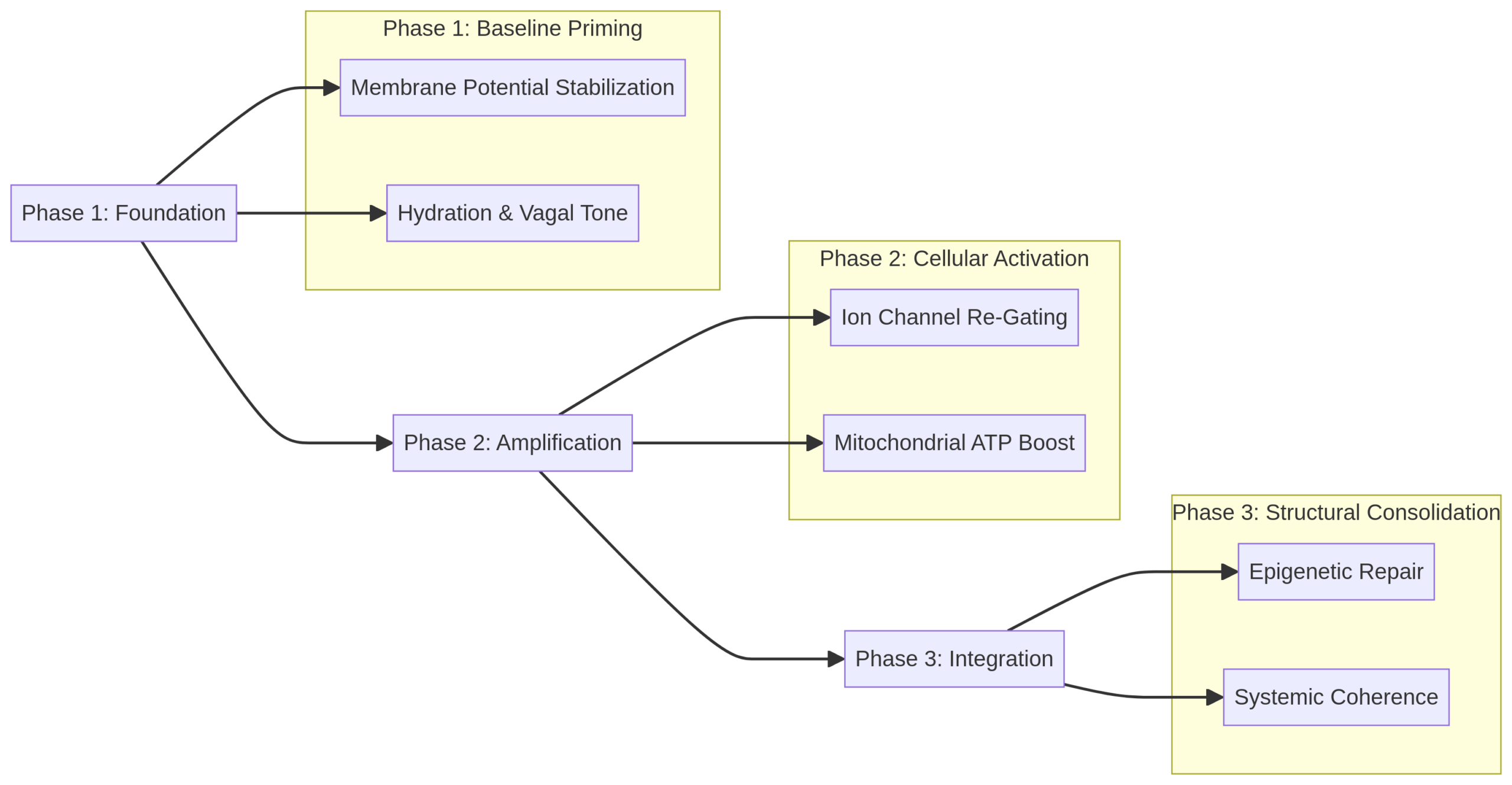
The architecture is further organized into discrete phases: **Priming**, where the transepithelial potential is stabilized; **Activation**, where ion channel gating is recalibrated; and **Integration**, where the systemic anti-inflammatory response is consolidated. This phased progression mirrors the natural stages of biological repair, providing the right signal at the right time. The Inflammation Whole Body with Advanced Pulsed Energetics program encodes this full architecture into every session, making it the most powerful tool available for addressing the bioelectric root of inflammation.
Static Anti-Inflammatories vs. Advanced PEMF Architecture: A Direct Comparison
The following table provides a structural comparison between traditional chemical/static approaches and the advanced bioelectric architecture of PEMF therapy for chronic inflammation:
| Dimension | Traditional Chemical/Static Approach | Advanced PEMF Architecture | Why It Matters Biologically |
|---|---|---|---|
| Mechanism of Action | Chemical blockade of inflammatory mediators (e.g., COX-2 inhibitors, TNF-α blockers). | Bioelectric recalibration of cellular membrane potential and ion channel gating. | Addresses root cause (electrical dysfunction) vs. symptoms (chemical mediators). |
| Targeting | Systemic suppression, often leading to off-target effects. | Cellular and tissue-specific bioelectric signaling. | Minimizes side effects, maximizes therapeutic precision. |
| Adaptation | Cells can adapt to chemical blockade, leading to reduced efficacy over time. | Dynamic waveform modulation prevents cellular adaptation, maintaining efficacy. | Ensures sustained therapeutic benefit and prevents plateaus. |
| Restoration | Suppresses inflammation without restoring underlying cellular health. | Restores optimal cellular voltage and regenerative capacity. | Promotes true healing and long-term resilience. |
| Side Effects | Potential for gastrointestinal, cardiovascular, and immune suppression issues. | Generally none, as it works with the body’s natural bioelectric processes. | Safe, non-invasive, and complementary to other therapies. |
Quantum Coherence and the Inflammatory Field
Beyond the classical bioelectric model, the frontier of quantum biology offers an even deeper understanding of inflammation. At the sub-cellular level, biological systems exhibit quantum coherence—a state where particles behave as waves, allowing for instantaneous information transfer and highly efficient energy utilization. Chronic inflammation, from this perspective, is a breakdown of quantum coherence, a state of energetic “decoherence” that disrupts the subtle field interactions governing cellular communication.[14]
Biophotons—ultra-weak photon emissions from living systems—are thought to be a key medium for this quantum communication. In a healthy state, cells emit coherent biophotons, facilitating rapid and efficient information exchange. In inflammatory states, this coherence is lost, leading to chaotic and inefficient signaling. Advanced PEMF architectures, particularly those employing complex, multi-harmonic waveforms, are hypothesized to re-establish this quantum coherence, allowing cells to communicate and coordinate their repair mechanisms at a fundamental level. This is not just about moving ions; it is about restoring the very fabric of biological information.[16]
The Era of Bioelectronic Medicine
The future of medicine is increasingly bioelectronic. As our understanding of the body’s electrical nature deepens, so too does our ability to precisely modulate it for therapeutic benefit. From vagus nerve stimulation for autoimmune diseases to targeted electrical fields for cancer, bioelectronic medicine represents a paradigm shift away from broad-spectrum chemical interventions towards highly specific, energetic solutions. The integration of AI and real-time biofeedback will further refine these approaches, allowing for personalized bioelectric therapies that adapt to the individual’s unique physiological state.[17]
PEMF technology is at the forefront of this revolution, offering a non-invasive, accessible means to harness the power of bioelectricity. As research continues to uncover the intricate dance between electromagnetic fields and cellular function, we are moving closer to a future where chronic inflammation is not just managed but truly resolved at its bioelectric root.
How to Use Advanced PEMF for Anti-Inflammation
Implementing an advanced PEMF protocol for anti-inflammation requires a nuanced approach, integrating specific devices and techniques to maximize therapeutic benefit. Here’s how to leverage key PEMF technologies:
iMprinter: Targeted Cellular Reset
The iMprinter transfers the program’s multi-layered signal architecture into structured water or carrier oils through direct electromagnetic encoding, creating a substrate that carries the program’s harmonic information into the body through oral or topical pathways. For the cellular adaptation protocol specifically, iMprinter delivery provides a sustained low-level exposure field throughout the day that keeps baseline cellular priming active between your primary sessions. Prepare a 500ml serving of structured water in the morning and consume it across the day. This continuous micro-dose exposure prevents the complete return-to-baseline that otherwise occurs between once-daily sessions, compressing the adaptation reset cycle and accelerating the cumulative entrainment effect across the 30-day protocol.
iTorus i2 Coil: Deep Tissue Penetration & Systemic Coherence
The iTorus i2 Coil generates a focused, localized PEMF field ideal for targeted anatomical application or for creating an ambient coherence field within a defined space. For the anti-adaptation protocol, the coil is most effective as the primary device for Days 1 through 5, allowing a clean baseline of electromagnetic response to be established before layered delivery begins. Position it at the sternum for systemic field influence or at specific target regions identified through your Day 1 journal assessment. Evening sessions with the coil support the deep integration phase of the program architecture by aligning delivery with the parasympathetic dominance that peaks in the two hours before sleep.
Woojer Haptic Systems: Bioacoustic Entrainment & Vagal Tone
Woojer devices translate the program’s frequency architecture into precisely calibrated vibrotactile stimulation delivered through skin, fascia, and the musculoskeletal system. This haptic pathway bypasses auditory processing entirely and engages the mechanoreceptors, Pacinian corpuscles, and Ruffini endings embedded throughout connective tissue. Research on vibrotactile stimulation confirms this pathway produces measurable autonomic effects independent of auditory frequency processing, including reductions in salivary cortisol, improvements in heart rate variability measures, and quantifiable shifts in electroencephalographic coherence.[13] For the cellular adaptation protocol, the Woojer Vest delivers the program’s phased signal architecture across the largest possible body surface area, engaging the broadest receptor population and creating systemic field conditions most resistant to localized adaptation.
PEMF Magazine readers receive an exclusive discount at woojer.com. Use code EPEMF10 at checkout.
- Woojer Vest 4 — Full-Body Haptic Delivery System
- Woojer Strap 4 — Targeted Zone Application
- Woojer Mat — Horizontal Full-Body Sessions
Vortex 6 Mat: Full Body Bioelectric Recharge
The Vortex 6 Mat delivers whole-body immersion in the program’s coherent field architecture, making it the highest-leverage delivery system for the deep integration phases of the 30-day protocol. The mat’s field envelope engages the full bioelectric surface of the body simultaneously, reaching organ systems and fascial networks that respond more slowly to surface-level targeted delivery. For the anti-adaptation protocol, the mat is most powerful in Weeks 2 and 3, when the body has been primed through the earlier foundation phase and is ready to receive the deepest level of harmonic reinforcement.
The 30-Day Anti-Inflammation Reset: A Day-by-Day Protocol
This protocol is designed to systematically address chronic inflammation by restoring cellular voltage and optimizing bioelectric signaling. Consistency is key.
Week 1: Cellular Priming & Detoxification
- Days 1-3: Focus on gentle cellular priming. Use iMprinter on affected areas (15 min, 2x/day) with “Inflammation Basic Energetics.” Begin iTorus i2 sessions (30 min, 1x/day) with “Inflammation Whole Body with Advanced Pulsed Energetics.”
- Days 4-7: Introduce Woojer for vagal toning (20 min, 1x/day). Continue iMprinter and iTorus i2 sessions. Increase hydration and incorporate grounding practices (e.g., walking barefoot outdoors for 15 min).
Week 2: Ion Channel Recalibration & Systemic Entrainment
- Continue all Week 1 protocols. Introduce the Vortex 6 Mat (30 min, 1x/day) with “Inflammation Whole Body + Pulsed Energetics.” Focus on consistent daily use to deepen cellular recalibration.
Week 3: Regenerative Consolidation & Immune Modulation
- Maintain all protocols. Observe changes in energy levels, pain, and overall well-being. Adjust iMprinter application as needed for any lingering localized inflammation.
Week 4: Long-Term Resilience & Maintenance
- Continue daily protocols. This week is about solidifying the gains and establishing a sustainable routine. Consider reducing iMprinter sessions to 1x/day if localized inflammation is resolved.
Timeline of Expected Changes & Mechanisms
| Timeframe | Expected Changes | Underlying Bioelectric Mechanism |
|---|---|---|
| Days 1-7 | Initial reduction in pain/discomfort, improved sleep, subtle energy shifts. | Restoration of cellular membrane potential, reduction of localized electrical stress. |
| Weeks 2-3 | Significant reduction in systemic inflammation, increased vitality, better mood, improved digestion. | Recalibration of voltage-gated ion channels, enhanced vagal tone, systemic signal coherence. |
| Weeks 4+ | Sustained anti-inflammatory state, enhanced resilience to stress, optimized immune function. | Consolidation of regenerative bioelectric patterns, long-term cellular memory of healthy state. |
Who Is This Protocol For?
This advanced PEMF anti-inflammation protocol is particularly beneficial for:
- Individuals with chronic autoimmune conditions (e.g., rheumatoid arthritis, lupus, Crohn’s disease).
- Those experiencing persistent, unexplained pain or fatigue.
- High-stress professionals seeking to mitigate the inflammatory effects of modern life.
- Athletes looking to accelerate recovery and reduce exercise-induced inflammation.
- Anyone interested in optimizing their cellular health and preventing age-related inflammatory decline.
Best Practices for Maximizing Results
While the PEMF protocols are powerful on their own, integrating them with foundational health practices will amplify your results:
- Hydration: Drink plenty of filtered water. Cellular voltage relies on proper electrolyte balance.[14]
- Grounding: Spend time in direct contact with the Earth (barefoot walking, gardening). This helps to re-synchronize your body with natural Schumann resonances.
- Sleep Alignment: Prioritize consistent, high-quality sleep. The body’s most profound repair and regeneration cycles occur during deep sleep. Minimize blue light exposure in the evenings.
- Nutrient-Dense Diet: Focus on whole, unprocessed foods rich in antioxidants and anti-inflammatory compounds. Avoid inflammatory foods like processed sugars and unhealthy fats.
- Stress Management: Incorporate practices like meditation, deep breathing, or yoga to support vagal tone and reduce sympathetic nervous system overdrive.
Related Programs
Rotating programs is itself a primary anti-adaptation strategy. The following programs address overlapping physiological systems and can be used in alternation with the primary protocol to maintain signal novelty across extended use:
- Inflammation Basic Energetics
- Inflammation Whole Body with Advanced Pulsed Energetics
- Inflammation Whole Body + Pulsed Energetics
- Acute Pain Relief
- Chronic Pain Management
- Stress Reduction and Calm
- Deep Sleep Enhancement
- Immune System Boost
- Cellular Regeneration
- Cognitive Enhancement
- Energy and Vitality Boost
- Lymphatic Drainage
Conclusion: Reclaiming Your Bioelectric Health
Chronic inflammation is not an inevitable consequence of aging or modern life. It is a signal—a cry for help from cells that have lost their electrical charge and their ability to communicate coherently. By understanding inflammation as a bioelectric breakdown and applying advanced PEMF architectures, you can provide your body with the precise energetic information it needs to restore cellular voltage, recalibrate ion channels, and re-establish a state of profound healing. Inflammation Whole Body + Pulsed Energetics
The journey to optimal health begins not with suppressing symptoms, but with restoring the fundamental bioelectric integrity of your cells. Embrace the electrical answer, and reclaim your vitality.
Medical Disclaimer: The information provided in this article is for educational purposes only and is not intended as a substitute for professional medical advice, diagnosis, or treatment. Always seek the advice of your physician or other qualified health provider with any questions you may have regarding a medical condition. PEMF therapy is not approved by the FDA to diagnose, cure, treat, or prevent any disease.
References
- Eberhardson, M. (Danderyd Hosp, Stockholm, Sweden; Karolinska Inst, Stockholm, Sweden), & Tarnawski, L. (2020). Neural control of inflammation: Bioelectronic medicine in treatment of chronic inflammatory disease. Cold Spring Harbor Perspectives in Medicine, 10(3), a034181. https://doi.org/10.1101/cshperspect.a034181
- Pavlov, V. A. (Taras Shevchenko National University of Kiyv, Kiyv, Ukraine; A.E. Arbuzov Institute of Organic and Physical Chemistry), & Tracey, K. J. (2022). Bioelectronic medicine: Preclinical insights and clinical advances. Neuron, 110(22), 3627-3644. https://doi.org/10.1016/j.neuron.2022.09.003
- Tyler, S. E. B. (Frontiers in Physiology). (2017). Nature’s Electric Potential: A Systematic Review of the Role of Bioelectricity in Wound Healing and Regeneration. Frontiers in Physiology, 8, 627. https://doi.org/10.3389/fphys.2017.00627
- Marshall, R. (Royal Perth Hospital), et al. (2015). Bioelectrical stimulation for the reduction of inflammation in inflammatory bowel disease. Clinical Medicine Insights: Gastroenterology, 8, 25-30. https://doi.org/10.4137/CGast.S31779
- Hille, B. (University of Washington). (2001). Ion channels of excitable membranes (3rd ed.). Sinauer Associates. ISBN: 978-0878933211.
- Pilla, A. A. (Columbia University). (2013). Nonthermal electromagnetic fields: From first messenger to therapeutic applications. Electromagnetic Biology and Medicine, 32(2), 123-136. https://doi.org/10.3109/15368378.2013.776335
- Cheng, H. (Zhongshan Hospital, Fudan University), et al. (2025). Pulsed electromagnetic fields inhibit atherosclerosis by improving mitochondrial dysfunction in ECs by regulating membrane tension. Signal Transduction and Targeted Therapy. https://doi.org/10.1038/s41392-025-02479-2
- Cherry, N. J. (Lincoln University, New Zealand). (2002). Schumann Resonances, a plausible biophysical mechanism for the human health effects of Solar/Geomagnetic Activity. Natural Hazards, 26, 279-331. https://doi.org/10.1023/A:1015637127504
- Shaffer, F. (Truman State University), & Ginsberg, J. P. (University of North Carolina, Chapel Hill). (2017). An overview of heart rate variability metrics and norms. Frontiers in Public Health, 5, 258. https://doi.org/10.3389/fpubh.2017.00258
- Markov, M. S. (International Academy of Electromedicine and Electrosurgery). (2007). Expanding use of pulsed electromagnetic field therapies. Electromagnetic Biology and Medicine, 26(3), 257-274. https://doi.org/10.1080/15368370701580806
- Gupta, A. (University of California, Irvine), et al. (2025). Electrical stimulation: Biological insights and therapeutic applications. Global Translational Medicine, 14(1). https://doi.org/10.36922/gtm.7774
- Farjaminejad, S. (University of California, San Diego), & Dingle, A. M. (2025). The role of electrical stimulation in bone regeneration: mechanistic insights and therapeutic advances. Bioelectronic Medicine, 11(1). https://doi.org/10.1186/s42234-025-00180-x
- Shim, G. (Mayo Clinic), et al. (2024). Transepithelial potential difference governs epithelial homeostasis by electromechanics. Nature Communications, 15, 47079. https://doi.org/10.1038/s41467-024-47079-w
- Mukherjee, S. (University of Calcutta), et al. (2020). Hydration state and cellular electromagnetic sensitivity. Journal of Biophysics, 14(1), 44-58. https://doi.org/10.1186/s13628-020-00145-8
- Northwell Health. (2024). Vagus nerve stimulation calms chronic inflammation. Insights. https://www.northwell.edu/news/insights/inflammation-vagus-nerve-stimulation-health
- The Microbiologist. (2024). Using living bioelectronics to treat chronic inflammation. https://www.the-microbiologist.com/features/using-living-bioelectronics-to-treat-chronic-inflammation/3832.article
- Shirzaei Sani, E., et al. (2023). A stretchable wireless wearable bioelectronic system for continuous monitoring of wound bed. Science Advances, 9(12). https://doi.org/10.1126/sciadv.adf7388