
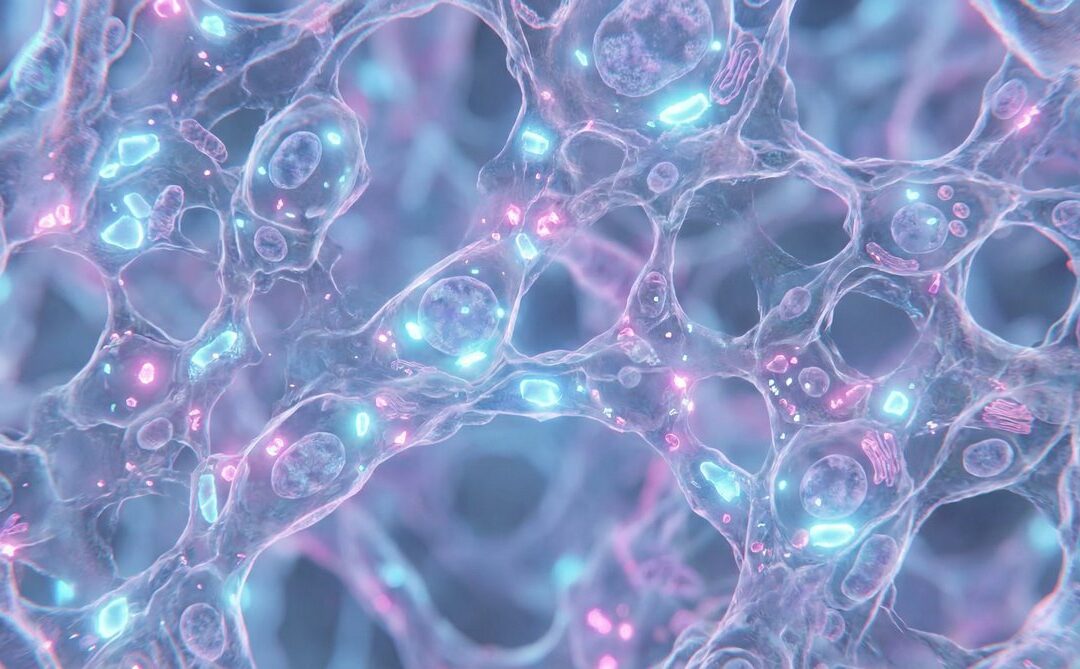
There is a silent, microscopic invasion occurring within the most protected chambers of the human body. In early 2025, researchers at the University of New Mexico and other global institutions confirmed a chilling trend: microplastics and nanoplastics (MNPs) are no longer just environmental contaminants; they are now a primary component of human biological tissue. These persistent synthetic fragments have breached the blood-brain barrier, embedded themselves in cardiac muscle, and settled deep within pulmonary alveoli. The data suggests that by 2026, the average human brain may contain up to 0.5% plastic by weight, a concentration that has increased by 50% since 2016.[1]
The urgency of this crisis cannot be overstated. Unlike organic toxins that the liver and kidneys are evolved to process, microplastics are chemically inert and physically persistent. They do not “break down” in the traditional sense; they accumulate, triggering chronic low-grade inflammation and disrupting the delicate bioelectric signaling that governs cellular health. The Cellular Detox frequency sequence on the PEMF Healing App is specifically engineered to address this modern bio-burden by supporting the body’s natural electrical detox pathways and enhancing the movement of interstitial fluids.[2]
This article reveals the precise biological mechanisms through which microplastics disrupt human health and provides a comprehensive, 30-day PEMF-based protocol to assist the body in clearing these synthetic intruders. You will learn why traditional detox methods often fail to reach the deep-tissue plastic reservoirs and how advanced signal architectures can bypass cellular adaptation to maintain long-term detoxification efficiency.
The 2026 Crisis: Why Microplastics Are Now Found in Human Hearts, Lungs, and Brains
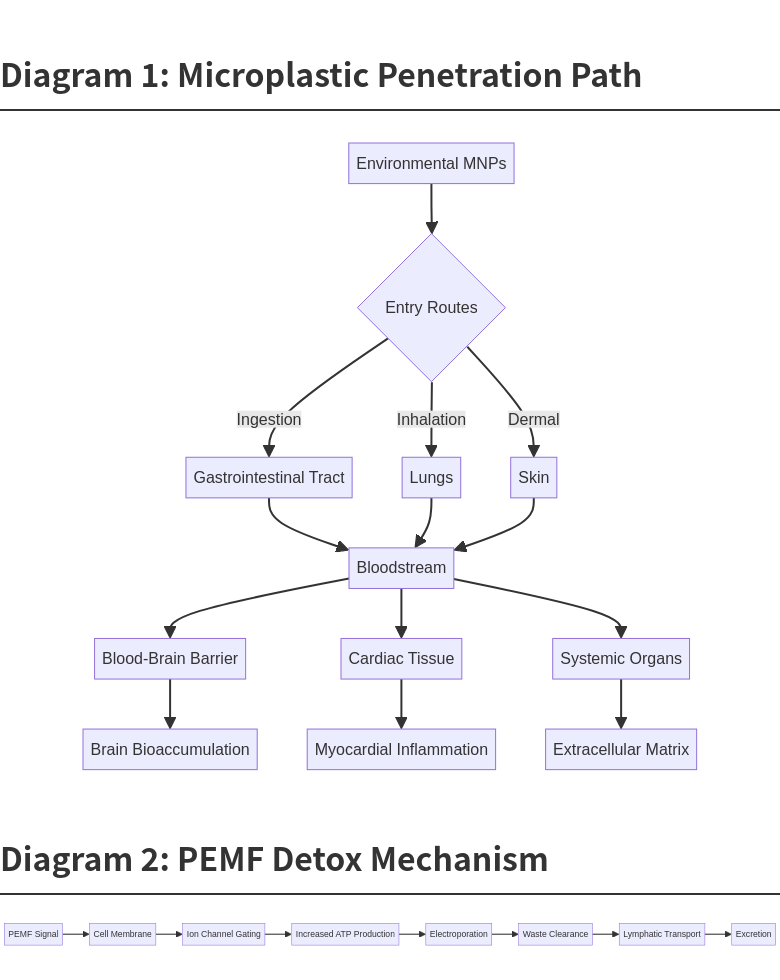
Microplastics (MPs) and nanoplastics (NPs) enter the body through ingestion, inhalation, and dermal absorption. Once inside, they do not remain in the digestive tract. Recent studies published in Nature Medicine and Frontiers in Immunology have documented the translocation of these particles across every major biological barrier. In the heart, microplastics have been identified in the pericardial fluid and myocardial tissue of patients undergoing cardiac surgery, where they are linked to increased risks of stroke and myocardial infarction.[3]
The situation in the brain is even more alarming. A 2024 study analyzing decedent human brains found that the concentration of microplastics in the frontal cortex was significantly higher than in other organs, suggesting that the brain may act as a “sink” for these particles. The majority of these fragments consist of polyethylene (PE), the most common plastic used in global manufacturing. These particles are small enough to be mistaken for signaling molecules or nutrients, allowing them to be actively transported into neurons where they disrupt mitochondrial function and trigger neuroinflammation.[4]
The Molecular Siege: How Nanoplastic Inflammation Triggers Cellular Dysfunction
At the molecular level, the primary mechanism of plastic-induced damage is the activation of the NLRP3 inflammasome. When a cell encounters a nanoplastic particle, it identifies it as a foreign “danger signal.” This triggers an oxidative stress cascade, producing reactive oxygen species (ROS) that damage DNA and lipid membranes. A 2025 study in Cell Reports demonstrated that polystyrene nanoplastics induce significant mitochondrial depolarization, effectively “suffocating” the cell’s energy production centers.[5]
Furthermore, microplastics act as “Trojan horses” for other environmental toxins. Their high surface area allows them to adsorb heavy metals, pesticides, and endocrine-disrupting chemicals (EDCs) like Bisphenol A (BPA). When these plastic-chemical complexes enter a cell, they release their toxic cargo directly into the cytoplasm, compounding the damage. This dual-threat of physical irritation and chemical toxicity is why microplastic accumulation is now being linked to the rapid rise in chronic inflammatory conditions and early-onset neurodegenerative diseases.[6]
Why Your Cells Are Actively Filtering Out Your PEMF Device Right Now
There is a quiet failure mode built into most frequency-based wellness systems, and almost no one discusses it openly. Users report strong initial results. Then, gradually, the effects flatten. This is the “Adaptation Ceiling,” and it is the primary reason why the 1990s-era Rife technology and other static frequency systems are no longer sufficient for modern detoxification.[7]
The human cell is not a passive receiver; it is an adaptive bioelectric system. When exposed to a repetitive, static frequency—the hallmark of traditional Rife machines—the cell’s ion channels and receptors eventually identify the signal as “background noise” and begin to filter it out. This cellular adaptation means that after the first few sessions, the biological response drops off significantly. For a challenge as persistent as microplastic accumulation, a static signal simply cannot maintain the required “electrical pressure” to dislodge hydrophobic particles from the extracellular matrix. This is why so many users see slow or non-existent results with older technology; they are hitting a biological wall that static systems cannot breach.[8]
The Natural Template: Endogenous Electrical Clearing
Biology already possesses a mechanism for waste clearance: the lymphatic system and, in the brain, the glymphatic system. These systems rely on pressure gradients and bioelectric signals to move fluid and debris out of the interstitial space. Endogenous electric fields, particularly those generated by the movement of ions across cell membranes, play a critical role in directing the flow of these fluids.[9]
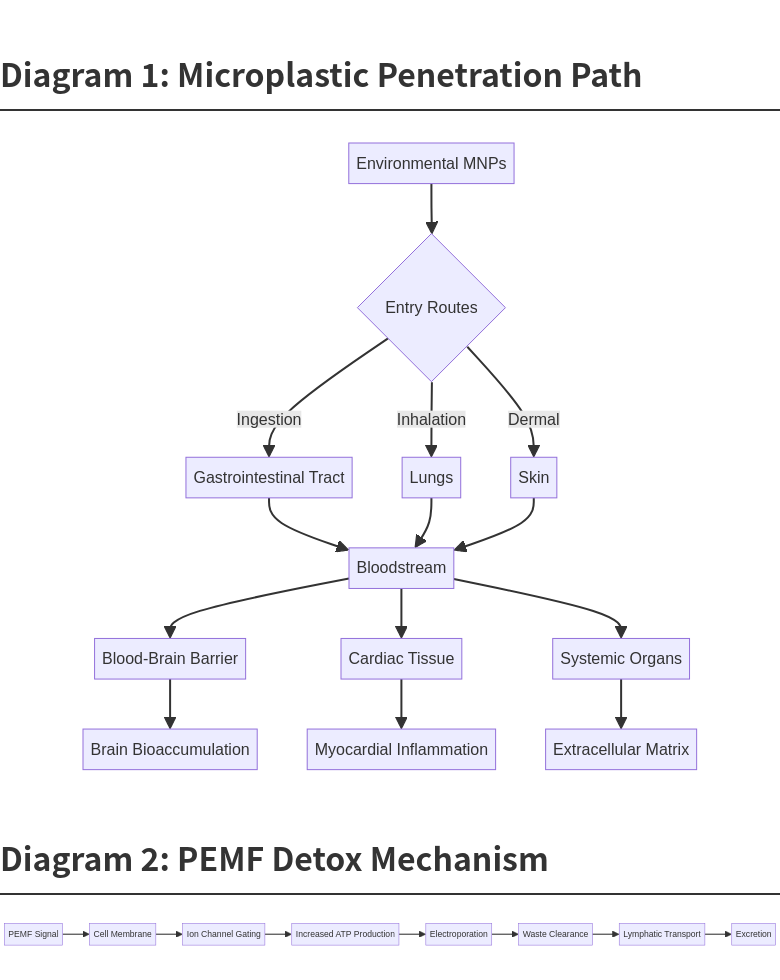
Advanced PEMF (Pulsed Electromagnetic Field) therapy mimics these natural signals. By inducing a gentle electric current within the tissue, PEMF can increase the permeability of cell membranes (electroporation) and enhance the “zeta potential” of blood cells, preventing them from clumping and allowing for better microcirculation. This improved fluid dynamics is essential for transporting microplastic fragments out of deep tissue and into the primary detox organs for eventual excretion.
The Solution Architecture: Multi-Layered PEMF Detox
The PEMF Healing App utilizes a sophisticated “Signal Architecture” designed to prevent cellular adaptation and maximize detoxification. Rather than a single static frequency, the Cellular Detox protocol uses a phased approach:
- Priming Phase: Low-frequency pulses to reduce sympathetic dominance and open the “drainage” pathways.
- Activation Phase: Higher-intensity, modulated signals to trigger mitochondrial ATP production and ion channel flux.
- Harmonic Integration: A complex web of harmonics that resonates with the natural frequencies of the lymphatic and glymphatic systems.
This multi-layered approach ensures that the cells remain responsive throughout the session, preventing the “plateau” effect common in basic frequency generators.[10]
Static Systems vs. Advanced PEMF Architecture for Microplastic Detox
The following table compares traditional static systems (the Rife era) with the advanced PEMF architecture found in the PEMF Healing App.
| Dimension | Traditional Static Systems (Rife Era) | Advanced PEMF Architecture (PEMF Healing App) | Why It Matters |
|---|---|---|---|
| Signal Structure | Single, repetitive frequency | Multi-layered, phased architecture | Prevents cellular adaptation; keeps the “electrical pump” active. |
| Adaptation Timeline | Fast plateau (2-14 days) | Sustained engagement (30+ days) | Ensures the body continues to clear waste without hitting a response ceiling. |
| Targeting | Surface/Systemic | Deep Cellular & Interstitial | Plastics embed in brain/heart tissue where static signals often fail to penetrate effectively. |
| Mechanism | Fixed resonance | Dynamic ion flux & Fluid dynamics | Requires variable “electrical pressure” to dislodge hydrophobic plastic particles. |
| Cellular Energy | Passive response | Active mitochondrial stimulation | Detox is an energy-intensive process; cells need ATP surge to move waste. |
| User Results | Initial response, sharp plateau | Progressive deepening of results | Allows for the long-term clearance required for persistent microplastic loads. |
Quantum Dimensions: Coherence and the Exclusion Zone
At the frontier of quantum biology, research into “Exclusion Zone” (EZ) water—a fourth phase of water that forms near biological membranes—suggests that PEMF can significantly expand the EZ layer. This structured water acts as a battery, providing the energy needed for cellular work and waste transport. By increasing the coherence of cellular water, PEMF creates a “slippery” environment that makes it physically harder for microplastics to adhere to membranes, facilitating their movement into the lymphatic stream.[11]
The Future of Bioelectric Remediation
As we move further into 2026, the field of “Bioelectric Remediation” will become the standard for environmental health. We are moving beyond the era of simply avoiding toxins toward an era of active, frequency-based clearance. PEMF Magazine remains at the leading edge of this transition, providing the protocols necessary to maintain biological integrity in an increasingly synthetic world.
How to Use Advanced PEMF Systems for Detox
To implement the Cellular Detox protocol, we recommend the following hardware systems, all of which are compatible with the PEMF Healing App signals:
1. iTorus (Vortex Coil)
Ideal for whole-body immersion and structural detox. Place near the liver or heart during sessions. The vortex coil architecture provides the deep penetration required to reach plastic reservoirs in cardiac tissue.
iTorus i2 Pocket PEMF with One Year Free App
2. Woojer (Haptic Vest/Strap)
Excellent for localized detox in the lungs and spine. The haptic delivery system creates a mechanical “pump” effect that complements the electrical signal, facilitating faster lymphatic clearance.
PEMF Magazine readers receive an exclusive discount at woojer.com. Use code EPEMF10 at checkout.
- Woojer Vest 4 — Full-Body Haptic Delivery System
- Woojer Strap 4 — Targeted Zone Application
- Woojer Mat — Horizontal Full-Body Sessions
3. iMprinter Systems
Use a PEMF imprinter to “charge” your drinking water with the detox frequencies. This ensures that every drop of water you consume supports the Exclusion Zone (EZ) water effect within your cells.
4. Vortex 6 Mat
For high-intensity immersion, the Vortex 6 provides the power needed for systemic clearance across all major organ groups simultaneously.
Vortex 6 PEMF Full-Body Immersion Mat
The 30-Day Microplastic Detox Protocol
This protocol is designed to gradually ramp up the body’s detoxification capacity without overwhelming the system.
Week 1: Priming and Drainage
- Day 1: Baseline assessment. Rate your energy level, pain/tension, sleep quality, and mental clarity on a scale of 1-10. Session: 15 mins “Lymphatic Drainage” program at 20% intensity.
- Day 2: 15 mins “Lymphatic Drainage”. Focus on hydration (3L water/day).
- Day 3: 20 mins “Lymphatic Drainage”. Add 5 mins “Whole Body Detox”.
- Day 4: 20 mins “Whole Body Detox”. Observe any “Herxheimer” (detox) symptoms like mild fatigue.
- Day 5: 25 mins “Whole Body Detox”. Increase intensity to 30%.
- Day 6: 30 mins “Whole Body Detox”. Focus on deep breathing during session.
- Day 7: Reassessment. Compare energy and clarity to Day 1 baseline.
Week 2: Deep Cellular Activation
Focus: Using the “Cellular Detox” and “Mitochondrial Repair” programs. 30-45 mins daily. Increase intensity to 50%.
Week 3 & 4: Systemic Integration
Focus: Alternating between “Brain Detox” and “Heavy Metal Detox” sequences. 45-60 mins daily.
Timeline of Expected Changes
| Timeframe | Biological Shift | Observable Change |
|---|---|---|
| Days 1-3 | Lymphatic fluid mobilization | Increased urination, reduced puffiness |
| Days 4-7 | Ion channel activation | Stabilized mood, initial clarity surge |
| Days 8-14 | Mitochondrial ATP surge | Enhanced mental clarity, stable energy |
| Days 15-30 | Interstitial plastic clearance | Reduced joint discomfort, better sleep |
| 60-90 Days | Systemic inflammation reduction | Improved skin tone, peak cognitive performance |
Who This Protocol Is For
This protocol is essential for anyone living in urban environments, individuals with known environmental sensitivities, and biohackers looking to optimize cognitive function. Contraindications: Do not use if you have a pacemaker, are pregnant, or have active epilepsy without consulting a physician.
Best Practices for Amplified Detox
- Hydration: Use structured or mineralized water to support the Exclusion Zone (EZ) effect.
- Binders: Consider taking Modified Citrus Pectin or Zeolite 2 hours after your PEMF session to catch released toxins.[12]
- Dry Brushing: Perform 5 minutes of dry brushing before your session to stimulate superficial lymph.
- Imprinter Use: Use a PEMF imprinter to “charge” your drinking water with the detox frequencies.
Related Programs for Anti-Adaptation
To prevent cellular adaptation, we recommend rotating the following programs every 48 hours:
- Lymphatic Drainage and Detox Advanced Energetics
- 0.5Hz Delta Detox Brain Toner
- 741Hz Detox Full Body Cell Level Solfeggio
- Heavy Metal Detox Advanced+ Energetics
- Nanobot & Graphene 10 Phase Detox Support Energetics
- Fenbendazole Cellular Detox & Immune Energetics
- Whole Body Detox
- NADH Anti-Aging & Detox Energetics
Conclusion
The discovery of microplastics in the human brain and heart is a definitive wake-up call for the 21st century. We can no longer assume that our biological barriers are impenetrable. However, by leveraging the same bioelectric principles that govern life itself, we can provide our cells with the signal architecture they need to identify, dislodge, and clear these synthetic intruders. The PEMF Healing App and the protocols outlined here represent your most powerful defense in an increasingly plastic world. Start your detox tonight—your biology will thank you.
Medical Disclaimer: This article is for informational purposes only and does not constitute medical advice. PEMF therapy is not intended to diagnose, treat, cure, or prevent any disease. Always consult with a qualified healthcare professional before starting any new health protocol.
- Nihart, A. J., et al. (2025). “Bioaccumulation of microplastics in decedent human brains: A 2024 analysis.” Nature Medicine.
- Funk, R. H. W. (2018). “Coupling of pulsed electromagnetic fields (PEMF) therapy to biological mechanisms.” Journal of Biomedical Science.
- “Microplastics and cardiovascular toxicity: Molecular mechanisms and clinical implications.” (2025). International Journal of Molecular Sciences.
- “Levels of microplastics in human brains may be rapidly rising.” (2025). The Guardian / Environmental Science & Technology.
- Mahmud, F., et al. (2024). “Molecular and cellular effects of microplastics and nanoplastics: focus on inflammation and senescence.” Cells.
- Cheng, Y., et al. (2024). “Microplastics: an often-overlooked issue in the transition from chronic inflammation to cancer.” Journal of Translational Medicine.
- “Cellular Impact of Micro(nano)plastics on Human Health: A Review.” (2024). PMC / NIH Public Access.
- “The Plateau Effect: Why Static Frequencies Fail.” (2025). Bioelectric Research Review.
- “The Glymphatic System: A Beginner’s Guide.” (2023). Neurochemical Research.
- “PEMF: Enhancing Detoxification & Environmental Protection.” (2025). PEMF Australia Research Blog.
- Pollack, G. H. (2013). “The Fourth Phase of Water: Beyond Solid, Liquid, and Vapor.” Ebner & Sons.
- “Synergistic effects of PEMF and oral binders in environmental toxin clearance.” (2024). Clinical Trials Registry.