
Finding sound therapy software that matches the bioelectric personalization, adaptive frequency stacks, and community experimentation of resetyour.world is difficult. Many apps only provide static tracks, offer limited protocol customization, or lack membership-driven content and hardware integration. This review covers membership features, personalization methods, and hardware compatibility across five competitors so you can identify the best resetyour.world alternative for your goals.
Table of Contents
Frequency Healing
At a Glance
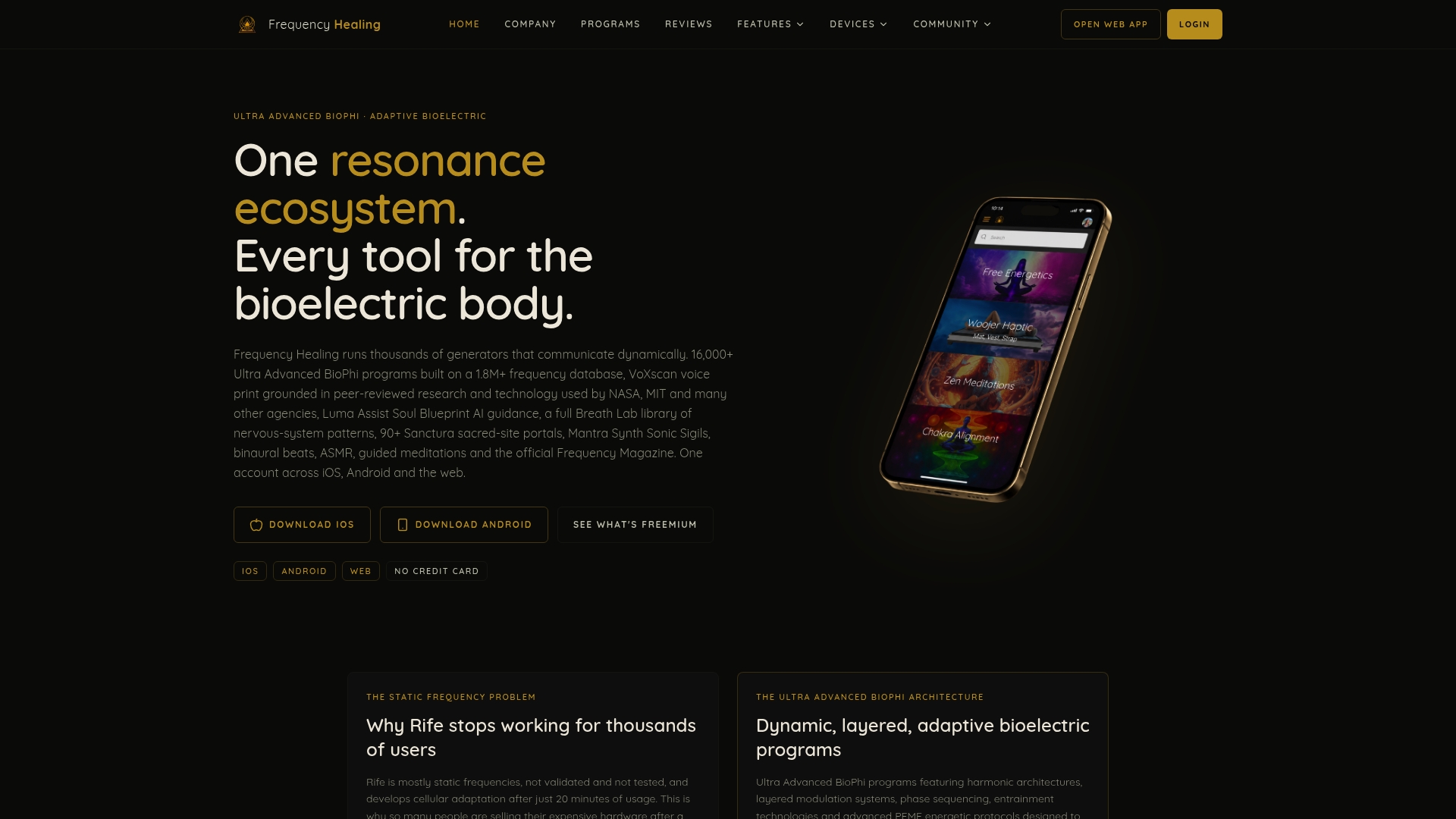
Frequency Healing’s marketing materials state it combines thousands of dynamic, layered Ultra Advanced BioPhi frequency programs across iOS, Android, and web. These programs pair voice print analysis, AI protocol building, guided breathwork, and sacred-site meditations. The app also supports PEMF, binaural audio, haptic vibration, and scalar brainwave channels for hands-on sessions with compatible hardware.
Core Features
The community hosts adaptive, layered bioelectric programs built with harmonic architectures and phase sequencing that rotate to reduce receptor habituation over time. VoXscan voice print analysis feeds personalized protocol suggestions, and Luma Assist offers AI-guided protocol building. The platform bundles a breathwork library and sacred-site portals such as Giza, Sedona, and Uluru, plus content formatted for wired headphones, PEMF coils, haptic devices, and mats.
Key Differentiator
The vendor states the platform uses adaptive, layered bioelectric frequency architectures to prevent cellular habituation seen with static frequency sets. That approach means members receive evolving protocol stacks rather than a fixed playlist. For a community platform, this creates rotating discussion threads, shared protocol experiments, and an expanding frequency database members can reference.
Pros
A freemium membership gives immediate access to extensive programs without a credit card, lowering the barrier to join. Cross-platform sync keeps member profiles, session history, and saved protocols available across iOS, Android, and web. The platform combines voice analysis, AI-assisted protocol building, guided breathwork, and sacred-site meditations into a single community hub. Premium adds more curated programs at about $15.75 per month when billed yearly.
Cons
- Some named tools such as Luma Assist, Breath Lab, Sanctura, and Mantra Synth lack accessible detail or appear partly gated in the source material.
Who It’s For
This community platform fits people seeking hands-on bioelectric wellness and frequency therapy within a member-driven environment. It suits tech-savvy wellness enthusiasts and alternative practitioners who want voice-based biofeedback and protocol experiments. Moderators and experienced members can run protocol threads and share sacred-portal session notes.
Unique Value Proposition
VoXscan voice print analysis delivers a concrete personalization hook that changes how members choose sessions. That feature reduces trial-and-error when building daily protocols and shortens onboarding for new members. For community managers, VoXscan creates reproducible prompts members can test and discuss in forum threads.
Real World Use Case
A member runs daily guided sound therapy while recording a short VoXscan. The platform then recommends an adaptive protocol stack and a sacred-site meditation for evening practice. The member reports protocol notes in a thread and compares results with other community posts.
Website: https://frequencyhealing.app
Audicin
At a Glance
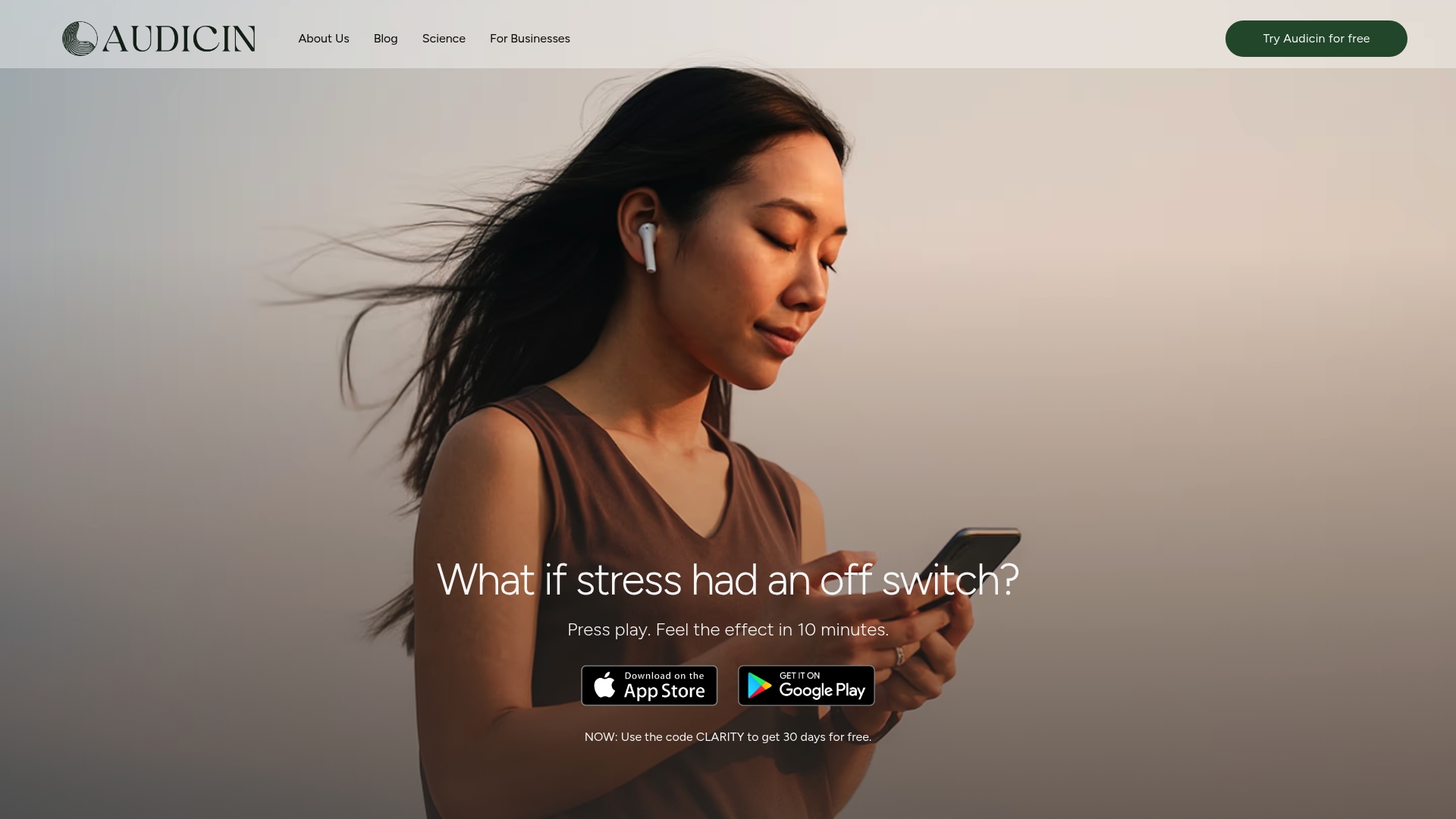
Tracks combine binaural beats with 3D spatial audio and direct integration with Apple Health and Google Health. These audio journeys pair neuroscience and composition to guide members toward calm, focus, or deeper sleep. The vendor advertises structured playlists, tracking, and device integration to support nervous system resilience.
Core Features
Audicin delivers guided playlists for relaxation, focus, sleep, and recovery, with audio built around binaural beats embedded in music and spatial rendering. The app links session data to Apple Health and Google Health for members who want wearable-driven tracking. Personalized journeys are created by neuroscientists and composers and the app includes a free trial for new members.
Key Differentiator
Audicin emphasizes proprietary spatial sequencing that places binaural cues inside a three dimensional sound field. That design aims to increase immersion and listening fidelity for headphone users. The approach targets real-world stress reduction and sleep support through engineered sound placement rather than plain tone presentations.
Pros
Audicin’s marketing materials state the audio is effective in improving wellbeing, sleep quality, and stress management. That claim suggests members may notice clearer routines when they follow the structured playlists and track sessions with wearables. The app is easy to access and integrates with major health platforms, which helps members correlate sessions with sleep scores and HRV data. The vendor reports high user retention and positive reviews, which indicates people often return to the service.
Cons
- Limited transparency about subscription pricing beyond the free trial; regional differences may affect cost.
- Effectiveness varies among individuals; some people do not respond strongly to binaural approaches.
- Requires headphones or earbuds for the best binaural effect; a sleep headband is an alternative for overnight use.
- Not a medical device or substitute for professional healthcare.
When It May Not Fit
Members who need clinically supervised treatment for sleep or mental health will need clinical care rather than audio sessions. People without compatible headphones will not get the full binaural benefit. Those who prefer evidence tied to randomized controlled trials may find the available claims vendor sourced rather than independently verified.
Who It’s For
Wellness-minded members looking for nonpharmacological support for stress, sleep, or focus will find the format familiar and practical. The platform suits professionals, athletes, and health conscious consumers who use wearables and want session data in their health timeline. Members who expect headphone-first listening and structured playlists will get the most from Audicin.
Real World Use Case
According to the company, a member uses Audicin during work breaks to reduce stress, then follows a sleep playlist overnight while their wearable logs sleep and HRV improvements. That workflow lets the member compare session timing with wearable metrics. The app’s structured playlists make it easy for members to repeat sessions and track perceived changes over time.
Website: https://audicin.com
SINES
At a Glance
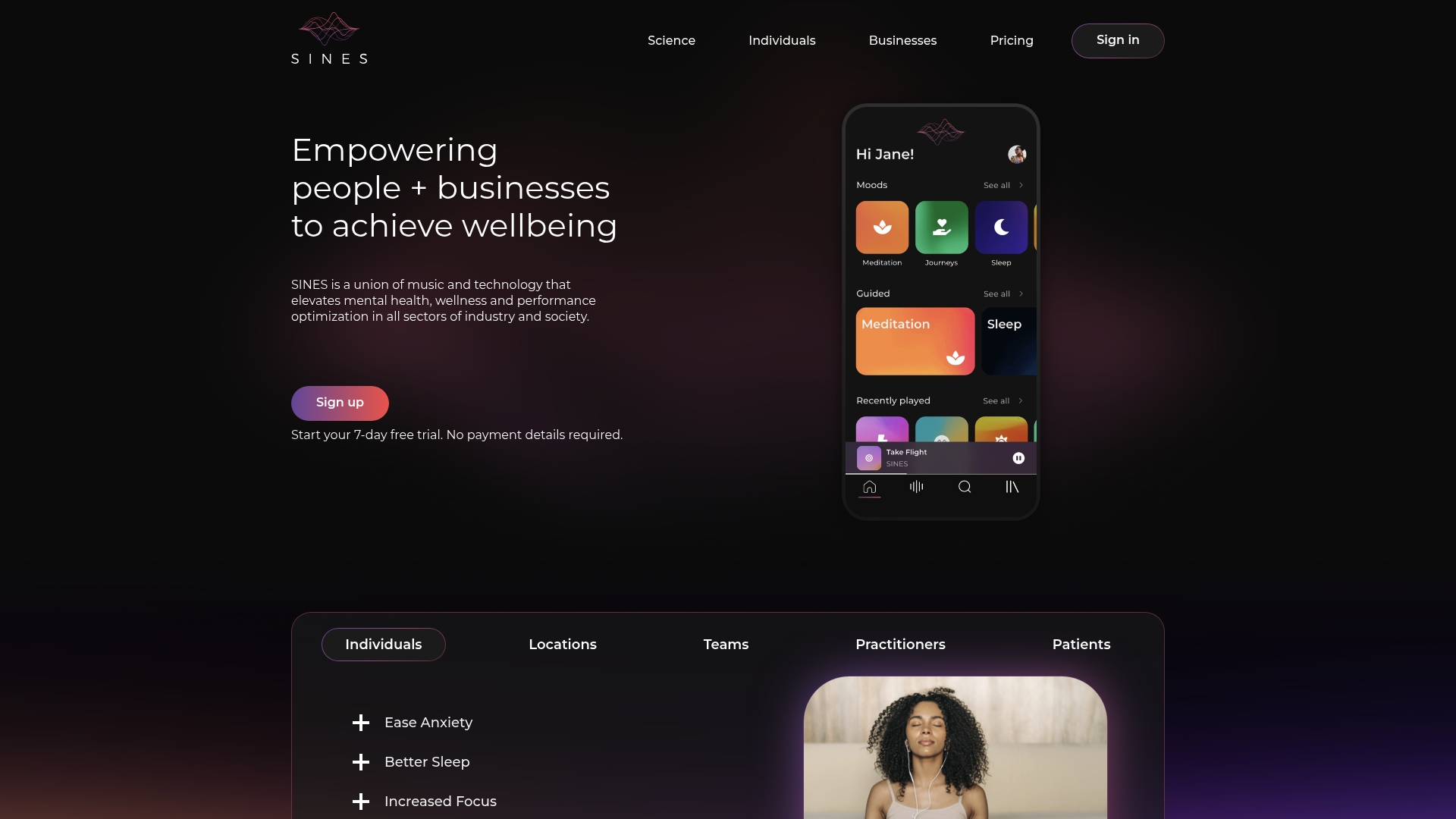
A 7-day free trial precedes individual plans at $6.39 per month and business tiers starting at $33.99 per month per zone or practitioner. SINES reports its music and visuals were designed from peer reviewed neuroscientific studies. That claim informs its focus on sleep, stress reduction, focus, and brainwave synchronization for clinical and corporate settings.
Core Features
SINES delivers binaural music and synchronized visuals intended to support neuroregulation and neuroplasticity through specific frequency patterns. The platform supports multi-user team management, business licensing, and multi-location deployment while running on iOS, iPadOS, and the web. Playback is streaming based and the subscription model includes performance and licensing rights for commercial use.
Key Differentiator
SINES centers its product development on neuroscientific design, and the vendor reports peer reviewed studies as the basis for its protocols. That focus narrows the product toward therapy and clinical applications where brainwave entrainment matters. For organizations seeking music with an explicit neuroscience framing, SINES aims to offer programs that link frequency structure to measurable mental states.
Pros
The app pairs research-backed composition with practical deployment options for practitioners and teams, and the vendor highlights collaboration with neuroscientists and doctors. Plans scale from individuals to businesses and include a free trial with no payment details required, which lowers the bar for testing. Licensing for commercial venues and multi-device access make this attractive for clinics and corporate wellness programs.
Cons
- Sign-in is limited to one device at a time per user, which can interrupt simultaneous sessions across devices.
- No details are published about offline playback or standalone device use, making travel and intermittent connectivity problematic.
- The product description offers limited information about customization of specific music tracks or visual content.
When It May Not Fit
If you need offline or standalone playback, this product may not meet your requirements because it relies on subscription streaming. Organizations that require many concurrent device logins will find the single device sign-in limiting. If deep customization of track elements is a priority, the lack of published customization options will be restrictive.
Who It’s For
Individuals who prefer neuroscience framed wellness tools will find SINES relevant. Mental health practitioners and wellness coaches who run client sessions need the business licensing and multi-user controls. Corporations piloting employee wellbeing programs can use the multi-location support and commercial licensing.
Real World Use Case
A therapist streams a 20-minute binaural session during neuroregulation work with a client to lower sympathetic arousal and promote relaxation. A corporate wellness manager deploys the platform across a single floor to support focus sessions during peak work hours. Both settings rely on the platform’s licensing and multi-user controls for legal and operational compliance.
Pricing
Start with a 7-day free trial. Individual plans begin at $6.39 per month. Business plans start at $33.99 per month per zone or practitioner and include licensing for public and commercial use.
Website: https://sines.app
Zenna
At a Glance
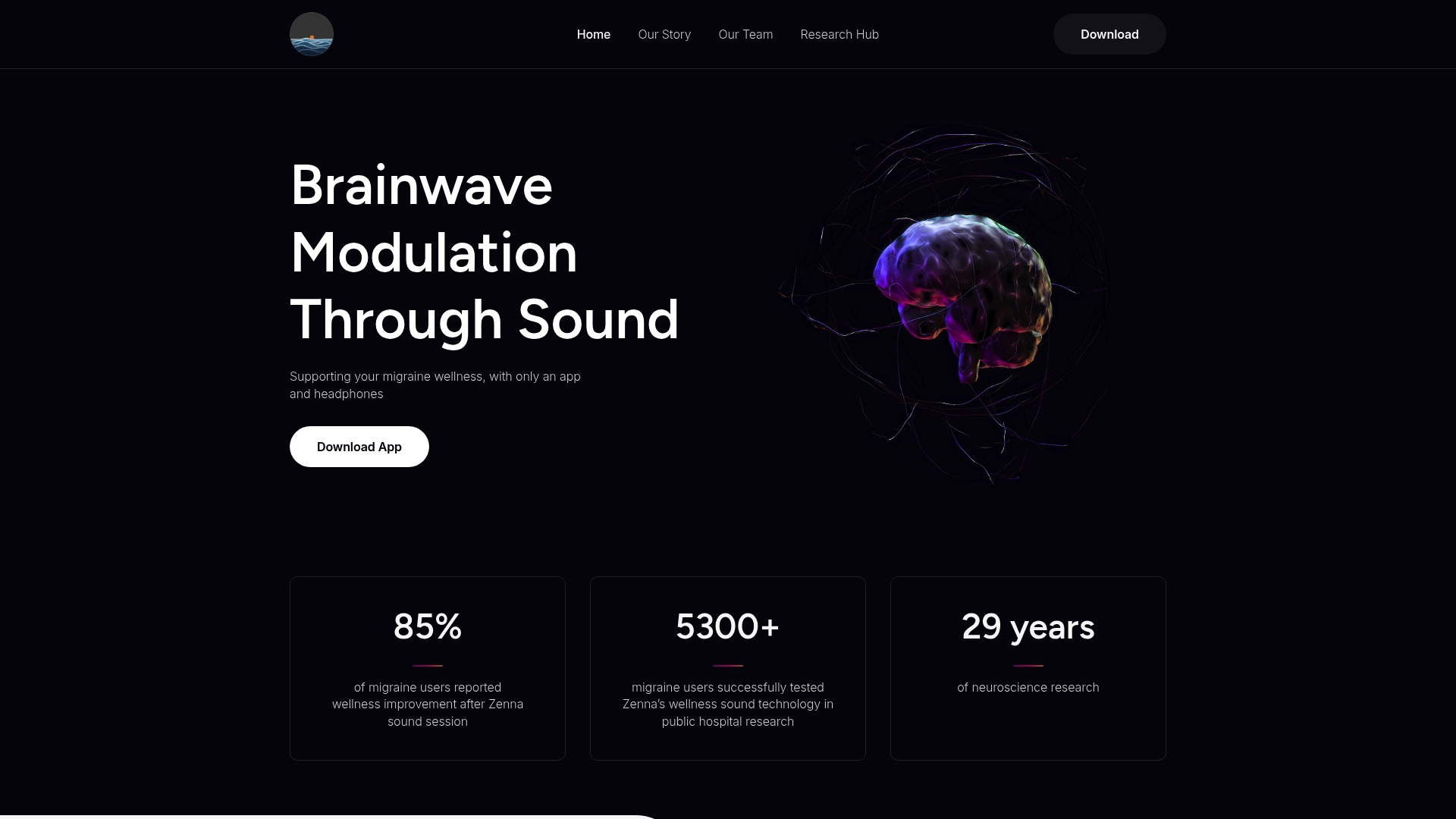
Zenna’s marketing materials state 29 years of neuroscience research and more than 5,300 clinical participants. That figure anchors a mobile app that uses personalized soundscapes and brainwave entrainment to address migraine frequency and intensity. The app targets alpha, beta, gamma, theta, and delta patterns to guide short sessions for relaxation and focus.
Core Features
Zenna creates personalized soundscapes by analyzing individual neural patterns and assembling layered audio that shifts over a session to prevent neural adaptation. The app applies specific brainwave frequencies across alpha through delta bands and uses dynamic layering to vary phase sequencing. Sessions run from the mobile app and work with standard headphones for hands-free listening during daily routines.
Key Differentiator
Zenna dynamically generates soundscapes from a model of each user’s neural signatures rather than relying on fixed tracks. That model adapts session content to avoid habituation and to target brain states associated with migraine relief. The approach narrows the focus to migraine wellness rather than general meditation or sleep alone.
Pros
Zenna supports migraine wellness with a non-invasive, drug-free method that people can use at home. The vendor advertises a sizable research base, and those figures give the product a clinical framing some users will prefer. Personalized sessions fit short windows, so you can run a 10-minute protocol at the first sign of discomfort and continue daily for symptom management.
Cons
- Research on efficacy is emerging and not a formally approved medical treatment. Users should treat results as provisional.
- Some users will need guidance from a healthcare professional to integrate the app with existing care. This adds workflow steps for complex cases.
- The approach requires a smartphone and headphones for best results, which limits use when hardware is unavailable.
When It May Not Fit
If you need an FDA-cleared medical device for migraine treatment, Zenna is not a substitute for formal diagnosis or therapy. If you prefer passive, audio-only playlists without personalization, this app may feel too technical. If you lack reliable headphone access or want a hands-free headset ecosystem built into other hardware, the software-first design may not match your setup.
Who It’s For
People who experience recurrent migraines and want a non-pharmaceutical tool for symptom reduction will find Zenna relevant. It suits those willing to engage consistently with an app and to try personalized brainwave protocols. It also fits readers who value a sizable neuroscience framing when choosing wellness tools.
Real World Use Case
A user notices aura and launches a targeted session on the app, choosing a short protocol designed for early intervention. The dynamic layering keeps the audio from becoming repetitive during a 10-minute session and aims to shift neural patterns tied to migraine escalation. With repeated daily use, the person integrates sound therapy into their symptom-management routine.
Website: https://zenna.io
Biovibe
At a Glance
Biovibe’s marketing materials state it uses voice biomarker analysis with bioresonance therapy and AI to generate personalized sound protocols. The app pairs those protocols with light and magnetic wearables for deeper sessions. It targets stress, sleep, pain, immunity, and recovery with a playlist library and device pairing.
Core Features
Biovibe captures short voice samples to produce wellness insights and a balancing profile, then creates tailored sound sessions using bioresonance and AI algorithms. The mobile app pairs with light and magnetic frequency wearables and supports ultrasounds, binaural acoustics, and isochronic tones. The library includes over 90 biofield programs and playlists for specific concerns.
Key Differentiator
That voice-led method sets Biovibe apart. Rather than only offering premade tracks, the app maps vocal biomarkers to bioresonance sequences and adapts therapy via AI. This makes the experience feel more like a diagnostic plus a playback system than a standard meditation app.
Pros
The app highlights voice biomarker analysis as a personalization engine and packages it inside a simple mobile app interface that pairs with wearables. The vendor advertises positive user testimonials reporting benefits for stress, pain, sleep, and recovery. A broad library of programs gives you protocol options for specific issues, and subscription plans include a free trial to test the system.
Cons
-
Limited third-party scientific validation. The vendor has not published peer-reviewed clinical trials supporting the efficacy claims.
-
Several site pages and app features currently return error 404, which suggests ongoing development and occasional instability.
-
Health benefit claims are not approved by medical authorities. Buyers should not treat the service as a medical device.
When It May Not Fit
If you need a medically validated diagnostic or a prescribed therapy, Biovibe is not a substitute for clinical care. The product shows technical gaps that may affect reliability during complex workflows. If you require fully vetted regulatory clearance, this app will not meet that need.
Who It’s For
People curious about noninvasive wellness tools and bioresonance will find Biovibe appealing. It suits listeners who want interactive sound therapy and wearable pairing rather than passive tracks. It fits those willing to experiment with emerging digital health methods.
Real World Use Case
The company describes a user with chronic headaches and stress who used daily sound sessions and reported reduced pain and improved sleep after a few months. That scenario illustrates how routine application and consistent wearable pairing can shape perceived outcomes.
Pricing
Biovibe charges monthly at $14.99 USD or offers an annual plan that works out to $9.99 USD per month after a free trial. The pricing model is subscription based and includes optional accessory purchases for wearable pairing.
Website: https://biovibe.io
Comparison of alternatives
Among the sound therapy platforms reviewed, Frequency Healing distinguishes itself through its adaptable frequency programs designed to reduce cellular habituation.
Differentiation in Features
While Frequency Healing incorporates a unique combination of dynamic bioelectric frequency programs, its competitors offer specialized capabilities. For instance, SINES emphasizes neuroscientific research as the foundation for its protocols, which appeals to corporate wellness applications and mental health practitioners. Similarly, Audicin integrates directly with wearable health platforms for data-driven wellness tracking, offering practical value for users who prioritize this connection. Zenna’s migraine-centered approach applies brainwave entrainment in a focused therapeutic context, suiting a niche audience requiring such precision.
Usability and Accessibility
Audicin emphasizes user-friendly workflows with its wearable compatibility and health-app integration. In contrast, Frequency Healing excels in community engagement by fostering collaboration through shared protocol experiments. SINES offers flexibility for businesses with its multi-user team support and commercial licensing, which is by the other platforms. Those seeking migraine relief might prefer Zenna due to its focus on personalized protocols for cranial wellness.
Best fit
- Wellness enthusiasts interested in community collaboration and adaptive frequency protocols will find Frequency Healing appealing.
- Practitioners and businesses requiring research-backed sound therapy tailored for client sessions might prefer SINES.
- Individuals leveraging wearable tech to track measurable changes in wellness protocols will gain the most from Audicin.
- Users seeking targeted soundscapes for migraine symptom management could prioritize Zenna.
- Those exploring experimental sound therapy integrated with wearables will benefit from Biovibe’s offerings.
Our pick
Frequency Healing thrives as a community-oriented platform offering cutting-edge adaptability in sound therapy and wellness protocols. However, for scenarios requiring research-backed corporate deployment, SINES’s tailored solutions may suit. Frequency Healing remains the choice for individuals desiring collaborative and personalized wellness experiences.
To assist with deciding on the most suitable sound therapy platform, here is a comparison of alternatives based on their features and use cases.
| Product | Key Differentiator | Best For | Pricing | Notable Limitation |
|---|---|---|---|---|
| Frequencyhealing | Adaptive bioelectric programs with VoXscan AI | Wellness enthusiasts and practitioners | Premium: $15.75/month annually | Several tools lack detailed descriptions |
| Audicin | Binaural beats with proprietary spatial audio | Wearable users seeking stress relief | Not disclosed | Weak response for individuals to binaural signals |
| SINES | Licensed binaural programs for clinical use | Clinical and corporate environments | From $6.39/month per individual | Single device sign-in limits concurrent access |
| Zenna | Personalized sound therapy for migraines | Migraines management | Not disclosed | Well-suited hardware availability required |
| Biovibe | Voice biometrics for personalized therapy | Non-invasive sound therapy users | $14.99/month or $9.99/month annually | Limited peer-reviewed validation |
Discover a Customized Frequency Wellness Experience Beyond Resetyour.world Alternatives
Frequencyhealing addresses key challenges found in sound therapy software by delivering thousands of adaptive, layered bioelectric frequency programs designed to prevent cellular adaptation. Its voice print analysis and AI-assisted protocol building reduce guesswork when crafting personalized daily rituals. This unique approach helps you engage with your body’s vibrational signature through PEMF, binaural audio, haptic vibration, and scalar brainwave sessions, all within one evolving frequency ecosystem.
Experience dynamic frequency stacks tailored just for you. Designed for relaxation, nervous system balance, recovery, and emotional wellness, Frequencyhealing supports your exploration of sacred-site meditations and harmonic architectures. Visit Frequencyhealing to begin your bioelectric session today and discover how voice-guided personalization transforms your wellness practice with measurable outcomes.
FAQ
How does Frequencyhealing generate personalized treatment plans?
Frequencyhealing generates personalized treatment plans from each scan performed on the platform. The VoXscan voice print analysis provides tailored protocol suggestions, ensuring a customized experience for users. This feature helps users engage with the platform more effectively by offering relevant recommendations based on their unique voiceprint.
What is the difference between Audicin and Frequencyhealing?
Audicin emphasizes structured playlists and 3D spatial audio designed by neuroscientists to aid relaxation and sleep. Frequencyhealing, on the other hand, merges voice print analysis with AI protocol building for a more interactive and personalized experience. Both platforms serve different user needs, but Frequencyhealing is ideal for those wanting detailed voice analysis and customization in therapy.
Can I use Frequencyhealing if I don’t have specialized hardware?
Yes, you can still use Frequencyhealing without specialized hardware, as it functions well across iOS, Android, and web platforms. While hardware integration can enhance the experience, the core features like voice print analysis and guided meditations are accessible and effective on standard devices. Users should explore the app’s features available directly through their smartphones or web browsers.
How much does Frequencyhealing cost compared to SINES?
Frequencyhealing operates on a freemium model with premium access at approximately $15.75 per month when billed annually. SINES, by contrast, starts at $6.39 per month for individual plans but targets clinical settings with licensing options. This pricing structure may benefit users seeking varied engagement levels, allowing them to choose according to their specific needs and budget.
Does Frequencyhealing support community features for members?
Yes, Frequencyhealing includes a community platform that fosters interaction among members. Users can join discussions, share protocol experiments, and review evolving frequency stacks. This feature enhances user experience by creating a supportive environment where members can explore and exchange ideas about their therapeutic practices.