
Sound Therapy for Balance: a 2026 Guide
Balance is not just about standing on one leg. In 2026, a growing number of wellness seekers understand balance as a whole-body phenomenon — the coordination of the nervous system, the inner ear, the breath, and the body’s own electrical signaling. Sound therapy has emerged as one of the most accessible and intriguing tools in this space. From tuning forks and singing bowls to AI-guided bioelectric platforms, sound-based approaches aim to help the body find its natural equilibrium.
This guide explores how sound therapy may support balance, what the science does and does not say, and how modern frequency technology has evolved beyond static playlists into adaptive, personalized resonance sessions.
What Is Sound Therapy?
Sound therapy is the intentional use of vibration, tone, rhythm, and frequency to influence the body and mind. Practitioners use instruments such as Himalayan singing bowls, gongs, tuning forks, and monochord tables, while digital tools deliver binaural beats, isochronic tones, and sacred soundscapes through headphones or speakers. The premise is simple: sound is vibration, the body is largely water and tissue that conducts vibration, and certain frequencies may influence relaxation, focus, and physiological rhythms. To see how this practice fits within a wider landscape of alternative health solutions in 2026, it helps to understand that sound is one of many complementary routes to wellbeing.

A 2026 understanding of sound therapy treats it as a complementary practice — something used alongside, not instead of, medical care. Its most researched benefits relate to stress reduction, relaxation, and sleep quality, all of which indirectly influence balance and coordination. When the nervous system shifts out of a chronic stress state, posture, gait, and reaction time often improve as a downstream effect.
How Sound and Frequency May Influence Balance
Balance is governed by three main systems: the vestibular system in the inner ear, proprioception (sensory feedback from muscles and joints), and vision. The brain integrates these inputs, and the autonomic nervous system sets the background tone. Sound therapy may touch this system in several ways.

Nervous system regulation
Slow, rhythmic sound — around 40 to 60 beats per minute, or low-frequency drones — tends to encourage a parasympathetic (“rest and digest”) state. Lower arousal can reduce muscle tension in the neck and jaw, which in turn affects head position and postural stability.
Vestibular and auditory coupling
The inner ear houses both hearing and balance organs, and they share fluid-filled spaces and neural pathways. Some practitioners use specific tones and vibrotactile devices near the ears or sternum to stimulate these structures gently. This remains an emerging area, and anyone with a diagnosed vestibular disorder should consult a clinician before trying it.
Bioelectric and cellular signaling
The body generates electrical potentials — the heart, brain, and muscles all produce measurable electrical activity. Frequency-based wellness platforms work from the idea that cells respond to rhythmic electromagnetic and acoustic input, and that the body’s electrical environment can be supported through resonance. This is a wellness concept rather than an established medical treatment, but it has driven significant innovation in personalization — much like the ideas explored in Bioelectric Current Therapy: a 2026 Guide.
The adaptation problem
One limitation of traditional sound therapy is habituation. Play the same frequency every day and the body may stop responding. Modern platforms address this by rotating and layering frequencies dynamically, a concept sometimes called counter-adaptation. PeMF Healing LLC’s Frequency Healing platform, for example, describes over 16,000 dynamic BioPhi programs and more than 1.8 million frequencies, with AI guidance, voice scanning, and breathwork designed to keep sessions responsive rather than static.
Types of Sound Therapy Used for Balance Support
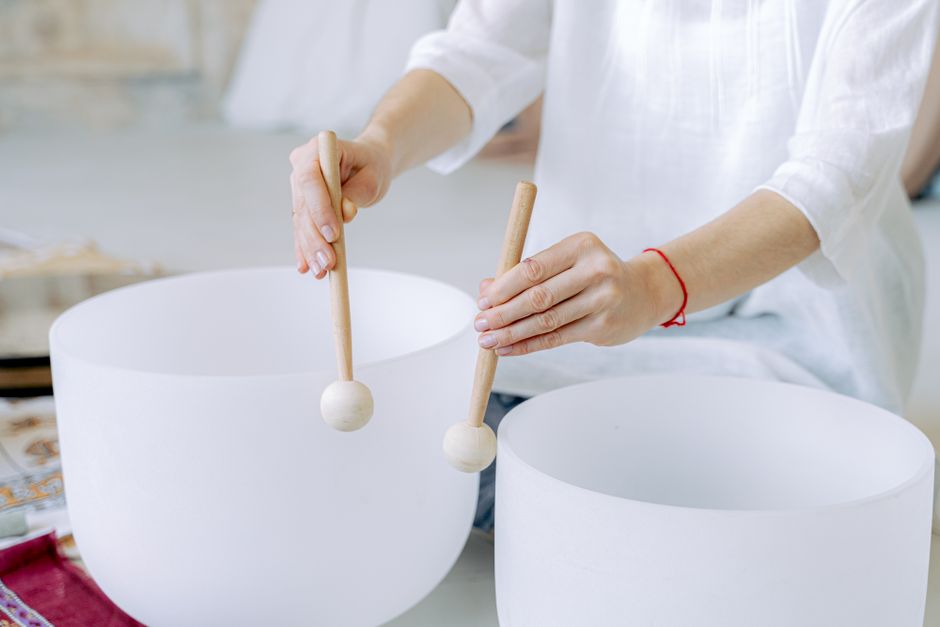
- Singing bowl and gong sessions: Rich overtones and low vibrations used for deep relaxation and body awareness.
- Tuning fork therapy: Precise frequencies applied to or near the body, often on acupressure points.
- Binaural beats: Two slightly different tones delivered to each ear, intended to entrain brainwave rhythms.
- Vibroacoustic therapy: Low-frequency vibration delivered through chairs, mats, or cushions.
- Nature and sacred soundscapes: Layered ambient audio used in meditation and breathwork.
- Adaptive bioelectric platforms: AI-guided systems that scan the voice, select frequencies, and combine sound with breathwork for personalized sessions.
Building a Practical Sound Therapy Routine
Consistency matters more than intensity. A simple routine can be built around a few short sessions per week, ideally at the same time of day so the nervous system begins to associate that cue with calm. Those exploring related approaches often pair sound with other natural healing modalities: a 2026 guide covering movement, breathwork, and energy practices.

- Start with breathwork. Five minutes of slow nasal breathing — roughly a four-count in, six-count out — primes the body before sound begins.
- Choose a modality. Headphones for binaural audio, a speaker for soundscapes, or a vibroacoustic mat for physical vibration.
- Keep sessions short. Ten to twenty minutes is often enough. Longer is not automatically better.
- Rotate your frequencies. Vary tones and programs week to week to reduce adaptation.
- Track subjective effects. Note sleep quality, steadiness, mood, and tension after each session for two to four weeks.
- Pair with movement. Balance improves fastest when sound-based relaxation is combined with physical practice.
Complementing Sound Therapy With Movement and Sleep
Sound therapy works best as part of a broader balance strategy. Physical activity is the strongest known lever for improving balance, coordination, and fall risk. The CDC physical activity guidelines recommend regular aerobic movement plus muscle-strengthening activity at least twice weekly, and balance training is specifically valuable for adults over 65. The NHS exercise guidance offers practical, beginner-friendly options for building strength and stability at home.
Sleep is equally important. Fatigue degrades proprioception and reaction time, making balance feel less reliable. Relaxing soundscapes can be a useful part of a wind-down routine; the Sleep Foundation provides evidence-informed guidance on sleep hygiene and environment. Combining sound-based relaxation, consistent movement, and good sleep creates the conditions in which balance tends to improve most reliably.
Safety, Evidence, and Realistic Expectations
Sound therapy is generally low-risk for healthy adults. Some cautions apply: people with epilepsy should be thoughtful about strong rhythmic audio and flashing-light combinations; those with cochlear implants, pacemakers, or other implanted devices should consult their clinician before using vibroacoustic or bioelectric equipment; and anyone with vertigo, Ménière’s disease, or recent concussion should seek medical advice rather than self-treating.
On evidence, be clear-eyed. Research on sound and music for relaxation and anxiety is reasonably encouraging. Research specifically measuring sound therapy as a treatment for balance disorders is much thinner. The honest framing for 2026 is that sound therapy is a supportive wellness practice — valuable for stress, sleep, and body awareness, and plausibly helpful for balance through those channels — but not a substitute for vestibular rehabilitation, physical therapy, or medical evaluation. A 2026 platform such as PeMF Healing’s adaptive bioelectric system reflects the direction the field is moving toward: personalized, dynamic, and combined with breathwork, rather than one-size-fits-all frequency playlists.
Conclusion
Sound therapy for balance sits at the intersection of ancient practice and modern technology. Singing bowls and tuning forks still have a place, and so do AI-guided bioelectric platforms that adapt to the individual rather than repeating the same static tone. The most sensible approach in 2026 is integrative: use sound to calm the nervous system and deepen body awareness, support it with regular movement and quality sleep, and be honest about what the evidence currently shows. Used this way, sound becomes a genuine ally in the pursuit of steadiness — physical, mental, and electrical.