

What if the next leap in human evolution wasn’t biological, but electromagnetic? What if your body wasn’t just a collection of cells, but a sophisticated bio-antenna, constantly receiving and transmitting information on a quantum level? The world of bioelectromagnetic modulation is no longer science fiction; it’s the next frontier in medicine. This article delves into the groundbreaking convergence of phytochemistry and Pulsed Electromagnetic Field (PEMF) therapy, exploring how this synergy is poised to revolutionize our understanding of health and healing. We’ll also examine the Brazilian perspective on this expanding field, the ethical considerations of this frontier research, and why legacy technologies like Rife frequencies have fallen short. Prepare to discover how modern advancements like the PEMF Healing App and iTorus technology are unlocking a new paradigm of wellness, one that acknowledges the body’s innate intelligence and its profound connection to the electromagnetic symphony of the universe.
The Science of Bioelectromagnetic Modulation: Your Body as a Quantum Receiver
For decades, mainstream science has viewed the body as a purely biochemical machine, a collection of molecules and chemical reactions. However, a growing body of research from the frontiers of biophysics and quantum biology reveals a deeper, more profound truth: we are fundamentally electromagnetic beings. Every cell in your body operates within a complex bioelectromagnetic field, a dynamic web of energy and information that governs everything from the rhythm of your heartbeat to the firing of your neurons. The concept of bioelectromagnetic modulation is the key to unlocking this new paradigm. It is the science of using external, precisely-tuned electromagnetic fields to influence and optimize the body’s own electrical signaling, creating a state of coherence and activating the body’s innate self-healing mechanisms.[1]
From Ancient Wisdom to Modern Science
The idea that energy is fundamental to life is not new. Ancient healing traditions from around the world, such as Traditional Chinese Medicine (with its concept of Qi) and Ayurveda (with its concept of Prana), have long recognized the existence of a vital life force energy that flows through the body. Modern bioelectromagnetics can be seen as the scientific validation of this ancient wisdom, providing a new language and a new set of tools for understanding and interacting with the body’s energetic systems.
The Principle of Resonant Convergence and the Calcium-Calmodulin Pathway
At the heart of this interaction is the principle of resonant convergence. As proposed by Alessandro Greco in his integrative model, various external electromagnetic frequencies don’t just bombard the body indiscriminately; they converge on specific biological pathways, most notably the Calcium-calmodulin (Ca2+-calmodulin) signaling pathway.[1] This pathway acts as a universal transduction node, a master switch that translates electromagnetic signals into a cascade of physiological responses. This explains the well-documented “window” effect, first observed by pioneers like W. Ross Adey and Carl Blackman, where only specific frequencies and intensities produce biological effects.[1] This is the essence of resonance: the body responds to frequencies that match its own natural frequencies, much like a tuning fork vibrates only when it encounters a sound wave of the same pitch.
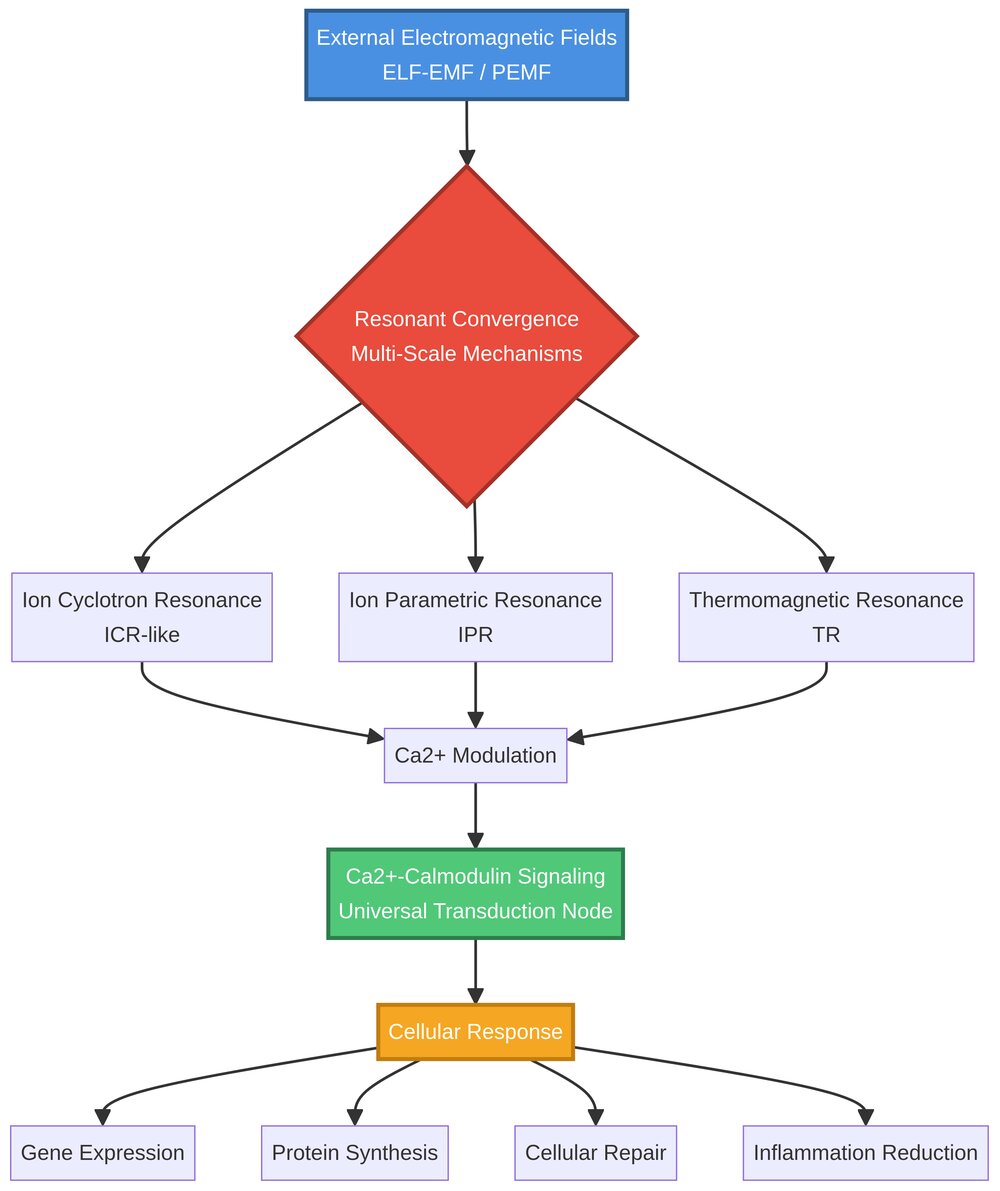
Figure 1: The Resonant Convergence Model showing how external electromagnetic fields converge on the Ca2+-Calmodulin signaling pathway to produce cellular responses.
Phytochemistry and PEMF: A Deep Dive into the Ultimate Synergy
What is Phytochemistry?
Phytochemistry is the study of phytochemicals, which are bioactive chemical compounds produced by plants. These are not essential nutrients for survival, but they have profound effects on health and are instrumental in protecting plants from environmental stressors like insects, pathogens, and UV radiation. When we consume plants, we ingest these powerful compounds, which include well-known classes like polyphenols, flavonoids, terpenes, and alkaloids. In the human body, they act as antioxidants, anti-inflammatory agents, and modulators of cellular signaling pathways, playing a crucial role in preventing and treating chronic diseases.
The PEMF-Phytochemical Connection: A Two-Way Street
The relationship between PEMF and phytochemistry is a powerful, two-way street. It’s not simply that one supports the other; they are engaged in a dynamic, synergistic dance at the cellular level. PEMF therapy acts as a ‘cellular conditioner,’ preparing the body to receive and utilize phytochemicals more effectively, while phytochemicals create a resilient and protected internal environment, allowing the full therapeutic potential of PEMF to be realized without the risk of cellular damage from oxidative stress.
The convergence of phytochemistry and PEMF is not merely a complementary relationship; it is a profound synergy that operates at the intersection of quantum biology and biochemistry. While PEMF provides the informational and energetic instructions for cellular optimization, phytochemicals—the bioactive compounds in plants—provide the raw materials and crucial antioxidant support necessary for those instructions to be carried out effectively and safely. This section delves deeper into the mechanisms of this powerful alliance.
The Double-Edged Sword of EMF and the Role of Phytochemicals
Electromagnetic field exposure, while therapeutic in controlled PEMF applications, is a double-edged sword. Unregulated or high-intensity EMFs can induce oxidative stress by increasing the production of reactive oxygen species (ROS), such as superoxide radicals and hydrogen peroxide.[2] These highly reactive molecules can damage cellular components, including DNA, proteins, and lipids, leading to inflammation, accelerated aging, and a host of chronic diseases. This is where phytochemicals play a critical protective role. Plant compounds, particularly polyphenols and flavonoids found in fruits, vegetables, and herbs, are potent antioxidants that act as powerful ROS scavengers.[2] They neutralize free radicals, effectively mitigating the potential for EMF-induced cellular damage and creating a safe internal environment for the therapeutic effects of PEMF to unfold.
Mechanisms of Synergy: Beyond Antioxidant Support
The synergy between PEMF and phytochemistry extends far beyond simple antioxidant protection. PEMF therapy has been shown to modulate cellular function in several key ways that enhance the bioavailability and efficacy of phytochemicals:
- Enhanced Cellular Permeability: PEMF has been shown to temporarily increase the permeability of cell membranes, a process known as electroporation. This allows for more efficient transport of nutrients and phytochemicals into the cell, where they can exert their therapeutic effects.
- Improved Microcirculation: PEMF therapy improves blood flow and microcirculation, ensuring that phytochemicals are delivered more effectively to tissues throughout the body.
- Modulation of Signaling Pathways: Both PEMF and phytochemicals can influence key cellular signaling pathways, such as the Nrf2 pathway, which regulates the expression of antioxidant proteins. When used together, they can create a more powerful and coordinated response to oxidative stress and inflammation.
This creates a powerful, bidirectional synergistic effect: PEMF therapy modulates cellular function, opening up ion channels and enhancing nutrient uptake, while phytochemicals provide the essential nutrients and antioxidant protection to fuel the healing process. This combination allows for a more profound and sustainable therapeutic outcome than either modality could achieve alone. It’s a holistic approach that honors the body’s innate intelligence, providing both the energetic blueprint and the biochemical building blocks for optimal health.
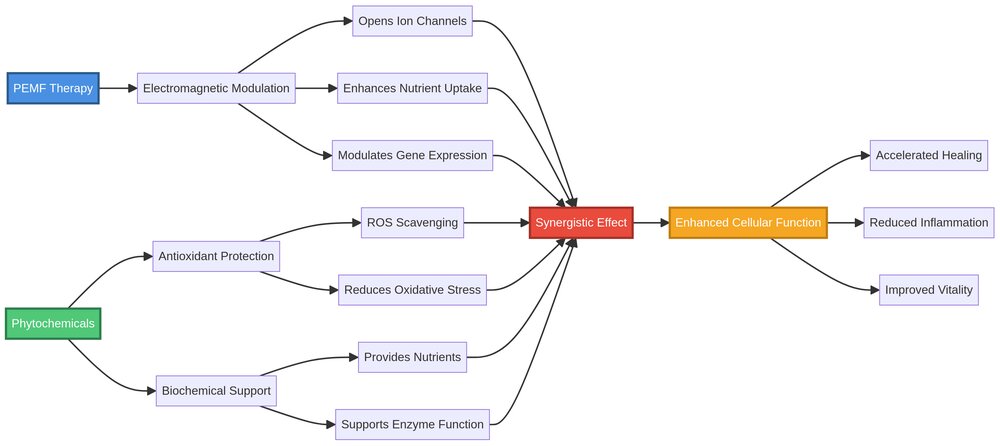
Figure 2: The synergistic relationship between PEMF therapy and phytochemical support, showing how they work together to enhance cellular function.
The Brazilian Perspective: A Powerhouse of Bioelectromagnetic Innovation
Brazil has quietly emerged as a global powerhouse in the advancement of bioelectromagnetic research, moving beyond theoretical exploration to a strong focus on practical clinical applications and innovative device manufacturing. The country is the undisputed leader in Latin America for PEMF research and production, with a strong emphasis on tissue regeneration, pain management, and osseointegration.[3] This leadership is not accidental; it is the result of a robust research infrastructure, a focus on real-world clinical outcomes, and a favorable regulatory environment that has allowed for the rapid translation of research into practice.
A World-Class Research Infrastructure
At the heart of Brazil’s success is a world-class research infrastructure, exemplified by the **Brazilian Center for Research in Energy and Materials (CNPEM)**. This cutting-edge, multidisciplinary scientific institution is home to **Sirius**, the largest and most complex scientific infrastructure ever built in Brazil and one of the world’s most advanced synchrotron light sources. This fourth-generation particle accelerator allows researchers to study the intricate interactions between electromagnetic fields and biological systems at an unprecedented level of detail, paving the way for new discoveries and therapeutic applications.
From the Lab to the Clinic: A Focus on Real-World Applications
What truly sets Brazil apart is its focus on translating laboratory research into tangible clinical benefits. A prime example of this is the development of the **Miniaturized Electromagnetic Device (MED)** for dental implantology, which has shown significant success in enhancing implant stability and reducing inflammation.[3] This emphasis on practical applications has led to the widespread adoption of PEMF therapy in Brazilian clinics, particularly in the fields of dentistry, orthopedics, and physical therapy. This clinical experience, in turn, provides valuable data that informs further research and development, creating a virtuous cycle of innovation.
Leading the Global Expansion
Brazil’s leadership extends beyond its borders. The country is a major manufacturing hub for PEMF devices in Latin America, exporting its technology and clinical expertise to neighboring countries. This has positioned Brazil as a key player in the global expansion of the bioelectromagnetics field, acting as a bridge between the research-intensive markets of North America and Europe and the rapidly growing healthcare markets of the developing world. As the global demand for non-invasive, non-pharmaceutical therapies continues to grow, Brazil is poised to play an even more significant role in shaping the future of medicine.
The Ghost in the Machine: Why 1990s Rife Frequencies Are a Relic of the Past
The allure of a simple, one-size-fits-all cure is powerful, and this is the promise that has kept the legacy of Royal Raymond Rife alive for nearly a century. However, the reality is that Rife machines, and the simplistic frequency protocols of the 1990s that they inspired, are based on an outdated and incomplete understanding of biology. The primary reason for the disappointing results and slow progress seen with these legacy technologies is their reliance on a single-frequency approach.[4] The idea that a single “magic frequency” can cure a complex disease fails to account for the dynamic and multi-faceted nature of biological systems.
Modern science has revealed that the body is not a simple machine that can be fixed with a single wrench. It is a complex, interconnected system that operates on multiple levels simultaneously. The limitations of Rife technology are numerous and significant:
- Oversimplification: Rife’s work predates our understanding of DNA, cellular signaling, and the intricate dance of the microbiome. His theories were revolutionary for the 1920s, but they are woefully inadequate for the complexities of 21st-century medicine.
- Lack of Standardization: There is no single, standardized “Rife machine.” The market is flooded with a vast array of devices, all using different frequencies and waveforms, with no consistent methodology or scientific validation.
- Static vs. Dynamic: Rife protocols are static, using fixed frequencies that do not adapt to the body’s ever-changing needs. True healing requires a dynamic approach that can respond to the body’s feedback in real-time.
- No Scientific Evidence: Despite decades of claims, there is no reliable, peer-reviewed scientific evidence to support the efficacy of Rife machines for treating cancer or any other disease. Reputable cancer research organizations do not endorse their use.[4]

Figure 3: Comparison of Legacy Rife Technology (1920s-1990s) versus Modern PEMF Technology (2020s+), highlighting the revolutionary advancements.
Ethical and Scientific Positioning in Frontier Research: A Dual-Perspective Analysis
The rapid advancements in bioelectromagnetic modulation are forcing a critical conversation about the ethical and legal frameworks needed to govern this powerful technology. As we venture into this new frontier, it is essential to consider the ethical implications from both the user/patient perspective and the research/scientific perspective to ensure that these innovations serve humanity in a just and responsible manner.[5]
The User/Patient Perspective: A Call for Empowerment and Protection
From the user’s standpoint, the primary ethical concerns revolve around autonomy, privacy, safety, and equitable access. The history of frequency medicine is rife with unsubstantiated claims and a lack of transparency, which has created a climate of distrust. To move forward ethically, the following principles must be upheld:
- Radical Transparency and Informed Consent: Users have an absolute right to know what electromagnetic frequencies are being applied to their bodies, the scientific rationale behind the chosen protocols, and any potential short-term or long-term risks. The era of proprietary, “secret” frequencies must end. Informed consent in this new paradigm requires a much deeper level of education and understanding, moving beyond a simple signature on a form.
- Neuro-Privacy and Cognitive Liberty: As technologies like brain-computer interfaces (BCIs) and advanced wearable sensors become more commonplace, the concept of “neuro-privacy” becomes critically important. Our neural data—the very essence of our thoughts and emotions—is the most sensitive personal information imaginable. Robust legal and technological safeguards are needed to protect this data from surveillance, unauthorized access, and commercial exploitation. The right to cognitive liberty, or the freedom to control one’s own mental processes, must be established as a fundamental human right.
- Equitable Access and the Digital Divide: The high cost of advanced PEMF technology creates a significant risk of a new form of digital divide, where the benefits of bioelectromagnetic healing are available only to the wealthy. Ethical innovation requires a commitment to developing affordable and accessible solutions that can benefit all of humanity, not just a privileged few.
The Research/Scientific Perspective: A Mandate for Rigor and Responsibility
The scientific community bears a heavy responsibility to ensure that bioelectromagnetic research is conducted with the highest degree of rigor and integrity. The pressure to commercialize new technologies must be balanced with a commitment to patient safety and long-term efficacy. Key ethical mandates for researchers include:
- Rigorous, Placebo-Controlled Clinical Trials: The gold standard of medical research must be applied to all new PEMF protocols and devices. This is the only way to separate true therapeutic effects from the placebo effect and to build a solid foundation of scientific evidence.
- Transparent Reporting and Open Science: All research findings, both positive and negative, must be published in peer-reviewed journals and made publicly available. This commitment to open science is essential for building trust and accelerating progress in the field.
- Long-Term Safety Studies: The long-term effects of chronic exposure to specific electromagnetic frequencies are still largely unknown. The scientific community has a duty to conduct longitudinal studies to identify any potential risks and to establish safe exposure limits.
- A Precautionary Approach to Innovation: While innovation is essential, it must be guided by the precautionary principle, which states that if an action or policy has a suspected risk of causing harm to the public or to the environment, in the absence of scientific consensus that the action or policy is not harmful, the burden of proof that it is not harmful falls on those taking an action.
The Quantum Leap: How Modern PEMF is Redefining Healing
The disappointment and frustration experienced by many who have tried legacy frequency devices have paved the way for a new generation of PEMF technology that is light-years ahead of the simplistic Rife model. The PEMF Healing App, in conjunction with the iTorus device, represents the pinnacle of this quantum leap in healing technology. This is not just an incremental improvement; it is a fundamental shift in our understanding of how to interact with the body’s bioelectromagnetic field.
Here’s what sets this modern approach apart:
- Complex Waveforms and Multi-Frequency Protocols: Instead of a single, static frequency, the PEMF Healing App utilizes a vast library of 1.8 million frequencies, delivered in complex waveforms and multi-frequency protocols. This allows for a much more nuanced and sophisticated interaction with the body’s biofield, addressing multiple biological pathways simultaneously.
- AI-Powered Coherence Mapping: The app employs artificial intelligence to map the user’s unique bio-signature and create personalized frequency protocols that adapt in real-time. This is the essence of dynamic healing, a far cry from the one-size-fits-all approach of the past.
- Toroidal Field Geometry: The iTorus device utilizes a toroidal coil to generate a coherent, three-dimensional electromagnetic field that surrounds the body in a unified field of energy. This is a significant departure from the linear, directional fields of older devices, creating a more immersive and effective therapeutic experience.
- NASA-Inspired Technology: The frequency technology at the core of the PEMF Healing App is inspired by the pioneering research of NASA, which has long understood the critical role of electromagnetic fields in maintaining human health in space.
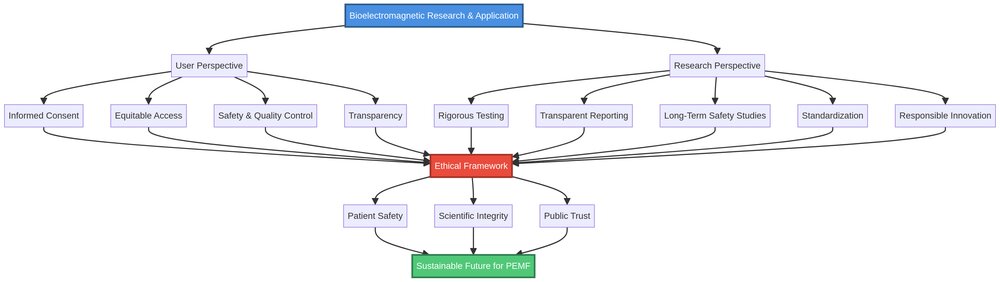
Figure 4: The ethical framework for bioelectromagnetic research and application, balancing user rights with scientific responsibility.
How to Use: Integrating Phytochemistry and PEMF into Your Daily Routine
The synergy of phytochemistry and PEMF is most effective when integrated into a consistent daily routine. Here’s how you can get started:
With iMprinter:
The program can be imprinted onto water or other substances using the iMprinter for continuous, subtle exposure throughout the day. This is an excellent way to infuse your body with the resonant frequencies of both the PEMF programs and your chosen phytochemicals.
Links:
With iTorus i2 Coil:
Use the iTorus i2 Coil to generate a powerful, localized PEMF field for targeted application or to create an ambient neuro-spinal support field in your environment. This is ideal for focused sessions and for creating a healing sanctuary in your home or office.
Link:
With Woojer Haptic Systems:
Woojer devices translate the program’s low-frequency architecture into gentle tactile vibration, allowing you to experience rhythmic neuromuscular and circulatory support without headphones. This is a unique way to feel the frequencies and enhance the mind-body connection.
Links:
With Vortex 6 Mat:
The Vortex 6 Mat provides a full-body experience, immersing you in a coherent energetic field for deep systemic entrainment. This is the ultimate tool for a complete bioelectromagnetic reset.
Link:
Best Practices & Protocols
To maximize the benefits of this powerful synergy, it’s important to follow a consistent protocol and adopt best practices that support your body’s healing journey.
Daily Protocol:
- Morning (7am-9am): Start your day with a 20-30 minute session using the iTorus i2 Coil or Vortex 6 Mat. Focus on programs related to cellular rejuvenation, energy, and focus. This is also an ideal time to take your morning phytochemical supplements or enjoy a nutrient-rich smoothie.
- Afternoon (1pm-3pm): Combat the afternoon slump with a 15-20 minute session focused on mental clarity, stress reduction, and grounding. Use the iTorus i2 or a Woojer device for a quick and effective reset.
- Evening (8pm-10pm): Wind down for the day with a 30-40 minute session dedicated to relaxation, sleep optimization, and deep tissue regeneration. The Vortex 6 Mat is particularly effective for this purpose.
Weekly Protocol:
- Deep Dive (1-2 times per week): Dedicate one or two evenings a week to a longer, more intensive session (60-90 minutes). This is an opportunity to explore different programs and focus on specific areas of concern.
- Rest and Integration (1 day per week): Take one day a week to rest and allow your body to integrate the energetic and biochemical shifts. This is a crucial part of the healing process.
What to Expect:
The effects of this combined approach are cumulative. While some users report immediate benefits, such as reduced pain and improved sleep, the most profound changes occur over time. Expect a gradual increase in energy, mental clarity, and overall well-being. It’s important to be patient and consistent with your practice.
Who is this for:
This approach is for anyone who is ready to take a proactive and empowered approach to their health. It is particularly beneficial for those who are struggling with chronic health issues, seeking to optimize their performance, or simply wanting to experience a new level of vitality and well-being.
How can this help:
By combining the informational and energetic input of PEMF with the biochemical support of phytochemistry, this approach can help to:
- Reduce inflammation and pain
- Improve sleep quality
- Enhance mental clarity and focus
- Boost energy and vitality
- Accelerate healing and recovery
- Promote cellular rejuvenation and anti-aging
- Strengthen the immune system
Related PEMF Programs
- Cellular communication – Rejuvenation
- Overall cellular health and function
- Youthing Anti-Aging Reverse Cellular Aging
- Bone Growth & Regeneration
- Nerve Regeneration System Health
- Deep Tissue Regeneration, Recovery Tesla 3 6 9 Energetics
- SERPINA5 Gamma Coherence Activation
- Mother-Baby Bonding – Heart Sync Coherence Infant Energetics
- 528Hz Sacred 5-Phase Full Spectrum Energetics
- Star Child Ultimate, Neural, Gut, Heart, Coherence Field Energetics
- Simian SV40 Disruption & DNA Support Advanced Energetics
- Metastatic Cancer, 7 Phases, Coherence, Transmutation, Cellular Renewal, Energetics
Ethical and Scientific Positioning in Frontier Research
As we stand on the precipice of this new frontier in medicine, it is crucial to navigate the ethical and scientific landscape with integrity and foresight. The power to influence the body’s fundamental operating system carries with it a profound responsibility, both for the researchers developing these technologies and for the users who embrace them.
The User Perspective: A Call for Transparency and Empowerment
From the user’s perspective, the ethical considerations are deeply personal. The right to informed consent is paramount. Users have a right to know what frequencies are being used, the scientific basis for their application, and any potential risks or side effects.[5] This requires a level of transparency that has been sorely lacking in the world of frequency medicine, which has often been shrouded in secrecy and unsubstantiated claims.
Furthermore, the principle of equitable access must be upheld. These groundbreaking technologies should not be the exclusive domain of the wealthy or well-connected. As this field expands, it is essential to ensure that these tools are accessible to all who can benefit from them, without predatory pricing or exploitation. Finally, users have a right to safety and quality control. Devices must be rigorously tested and manufactured to the highest standards, with clear and transparent reporting of any adverse events.
The USA Perspective: A Focus on Clinical Validation and FDA Leadership
The United States has taken a distinctively clinical and regulatory-driven approach to the field of bioelectromagnetics. The U.S. Food and Drug Administration (FDA) has played a pivotal role in shaping the American landscape, with a strong emphasis on evidence-based medicine and rigorous clinical trials. This has led to a more cautious but ultimately more credible adoption of PEMF technology in mainstream medicine. The FDA has granted approval for PEMF therapy in a growing number of specific clinical applications, including the treatment of non-union bone fractures, post-surgical pain and edema, and even certain types of brain cancer. This regulatory oversight has fostered a climate of scientific rigor, with leading research institutions like Stanford University, Johns Hopkins University, and the Hackensack University Medical Center conducting high-quality clinical trials to validate the efficacy of PEMF for a range of conditions, from post-operative pain to Alzheimer’s disease.
This focus on clinical validation has been instrumental in building trust with both medical professionals and the public, and it has paved the way for the integration of PEMF therapy into standard medical practice. The recent FDA approval of the TheraBionic P1 device for the treatment of cancer is a landmark achievement that signals a new era of acceptance for bioelectromagnetic therapies in the United States. As the body of evidence continues to grow, we can expect to see an acceleration of PEMF adoption in the U.S., with a continued emphasis on safety, efficacy, and the development of targeted therapies for specific medical conditions.
The Global Landscape: A World of Innovation
The field of bioelectromagnetics is a truly global phenomenon, with research and innovation hubs emerging in countries around the world. While the United States and Brazil are key players, several other nations are making significant contributions to the advancement of this frontier science.
Germany has long been a leader in precision engineering and high-quality manufacturing, and this is reflected in its contributions to the PEMF field. The development of the Quantum Resonance System (QRS) is a testament to Germany’s commitment to cutting-edge research and development. Japan has taken a leading role in researching the safety of electromagnetic fields and establishing international standards for human exposure, contributing significantly to the work of the World Health Organization (WHO) and the International Commission on Non-Ionizing Radiation Protection (ICNIRP). In China, there is a growing interest in integrating PEMF therapy with Traditional Chinese Medicine, creating a unique synergy between ancient wisdom and modern technology. Other notable research and development hubs include the Czech Republic, with its strong manufacturing base, and Russia, with its long history of magnetotherapy research.
This global distribution of research and innovation is a testament to the universal appeal of bioelectromagnetic medicine. As different countries bring their unique perspectives and strengths to the table, we can expect to see a rapid acceleration of progress in the years to come, with new discoveries and therapeutic applications emerging from all corners of the globe.
The Research Perspective: A Commitment to Rigor and Responsibility
For scientists and researchers, the ethical imperative is to pursue this frontier with a commitment to rigor and responsibility. The history of frequency medicine is littered with the wreckage of premature commercialization and unsubstantiated claims. To avoid repeating the mistakes of the past, the research community must adhere to the highest standards of scientific inquiry.
This includes:
- Rigorous, placebo-controlled clinical trials to validate the efficacy and safety of new technologies.
- Transparent reporting of all results, both positive and negative, in peer-reviewed scientific journals.
- Long-term safety studies to assess the potential for any unforeseen consequences of prolonged use.
- Standardization of protocols and methodologies to ensure that research is replicable and reliable.
- A commitment to responsible innovation, prioritizing patient safety and well-being above all else.
Conclusion: The Future is Frequency
The convergence of phytochemistry and modern PEMF technology represents a paradigm shift in our understanding of health and healing. We are moving beyond the outdated, mechanistic view of the body and embracing a more holistic and accurate model of the human being as a dynamic, interconnected system of energy and information. The limitations of legacy technologies like Rife frequencies have highlighted the need for a more sophisticated and nuanced approach, one that is grounded in rigorous scientific research and a deep respect for the body’s innate intelligence.
The journey into the world of bioelectromagnetic modulation is just beginning, but the potential is limitless. As we continue to explore this frontier, it is essential that we do so with a commitment to ethical principles, scientific integrity, and a shared vision of a future where everyone has the power to unlock their own healing potential. The resonance revolution is here, and it is calling on us to tune in, listen to the wisdom of our bodies, and embrace the transformative power of frequency.
Medical Disclaimer: The information provided in this article is for educational purposes only and is not intended as a substitute for professional medical advice, diagnosis, or treatment. Always seek the advice of your physician or other qualified health provider with any questions you may have regarding a medical condition.
References
- Greco, A. (2025). Resonant Convergence: An Integrative Model for Electromagnetic Interactions in Biological Systems. Int J Mol Sci, 27(1), 423. https://pmc.ncbi.nlm.nih.gov/articles/PMC12785707/
- Kıvrak, E. G., Yurt, K. K., Kaplan, A. A., Alkan, I., & Altun, G. (2017). Effects of electromagnetic fields exposure on the antioxidant defense system. Journal of microscopy and ultrastructure, 5(4), 167. https://pmc.ncbi.nlm.nih.gov/articles/PMC6025786/
- Mayer, Y., et al. (2024). Pulsed Electromagnetic Therapy: Literature Review and Current Update. Brazilian Dental Journal, 35. https://www.scielo.br/j/bdj/a/DHxMfk8svmNnXwzM5bJdS5Q/
- Cancer Research UK. (2022). Rife machines. https://www.cancerresearchuk.org/about-cancer/treatment/complementary-alternative-therapies/individual-therapies/rife-machine-and-cancer
- Abbas, Q., & Parveen, S. (2024). Exploring the Bioelectromagnetic Field: Ethical and Legal Considerations. ResearchGate. https://www.researchgate.net/publication/389030741_Exploring_the_Bioelectromagnetic_Field_Ethical_and_Legal_Considerations