

Resonance in bioenergetic healing is defined as the process by which frequency-specific vibrations interact with the body’s natural energy systems to restore balance, promote cellular repair, and support neurological wellness. The role of resonance in bioenergetic healing spans techniques as varied as resonant breathing, PEMF therapy, binaural beats, and sound baths, each targeting the body’s vibrational signatures at different scales. Researchers at the Niels Bohr Institute now explore whether resonance can communicate directly with genetic networks, signaling that this field sits at the frontier of both science and wellness practice. Tools like PEMF coils and heart rate variability monitors give practitioners measurable ways to track resonance effects in real time.
How resonance operates at the cellular and systemic level
Resonance produces measurable biological effects by matching external frequencies to the natural oscillation rates of specific tissues. Biological tissues respond to specific frequencies between 1 and 150 Hz through mechanisms called Ion Cyclotron Resonance and Thermomagnetic Resonance, which optimize cellular metabolism when the applied frequency matches the tissue’s own rate. That matching effect is what separates resonance from generic vibration: precision of frequency determines whether a tissue responds or ignores the signal entirely.
At the cellular level, low-frequency vibration deforms cell membranes, activating mechanosensitive ion channels that trigger cascades for cell proliferation, differentiation, and migration. Systematic reviews show this mechanism enhances osteogenic differentiation, meaning bone-building cells respond directly to acoustic input at the right frequency. The implication is significant: frequency is not metaphor here, it is a physical force acting on membrane architecture.

The nervous system adds another layer. Sound vibrations stimulate the vagus nerve directly, triggering parasympathetic responses including lowered heart rate and reduced cortisol. The vagus nerve acts as the body’s primary brake on the stress response, so acoustic resonance that activates it produces measurable physiological calm, not just subjective relaxation.
Brainwave entrainment follows the same logic. A stimulus at 40 Hz stimulates gamma brain waves linked to cognition and focus. Mechanoreceptors in the skin and fascia detect vibrations up to 1,000 Hz, which means the body receives frequency information through multiple sensory channels simultaneously, not just through hearing.
| Frequency Range | Primary Mechanism | Documented Effect |
|---|---|---|
| 1–40 Hz | Ion Cyclotron Resonance, PEMF | Cellular metabolism, tissue repair, relaxation |
| 40 Hz | Gamma brainwave entrainment | Cognitive function, focus, memory support |
| 30–120 Hz | Vibroacoustic mechanoreceptor activation | Somatic shifts, pain modulation, nervous system regulation |
| Up to 1,000 Hz | Mechanoreceptor detection | Sensory integration, fascial response |
Pro Tip: Pair a 40 Hz binaural beat session with a PEMF coil program in the same frequency range to layer brainwave entrainment and cellular stimulation simultaneously.
How do resonance-based healing approaches compare?
Resonance-based healing is not a single modality. It is a category containing several distinct tools, each targeting different tissues, depths, and biological systems.
Binaural beats deliver two slightly different audio frequencies to each ear. The brain perceives the mathematical difference as a third frequency and entrains to it. 14 Hz binaural beats improve sleep quality and reduce anxiety in elderly people and women with specific health needs, making them one of the most accessible entry points into frequency medicine.
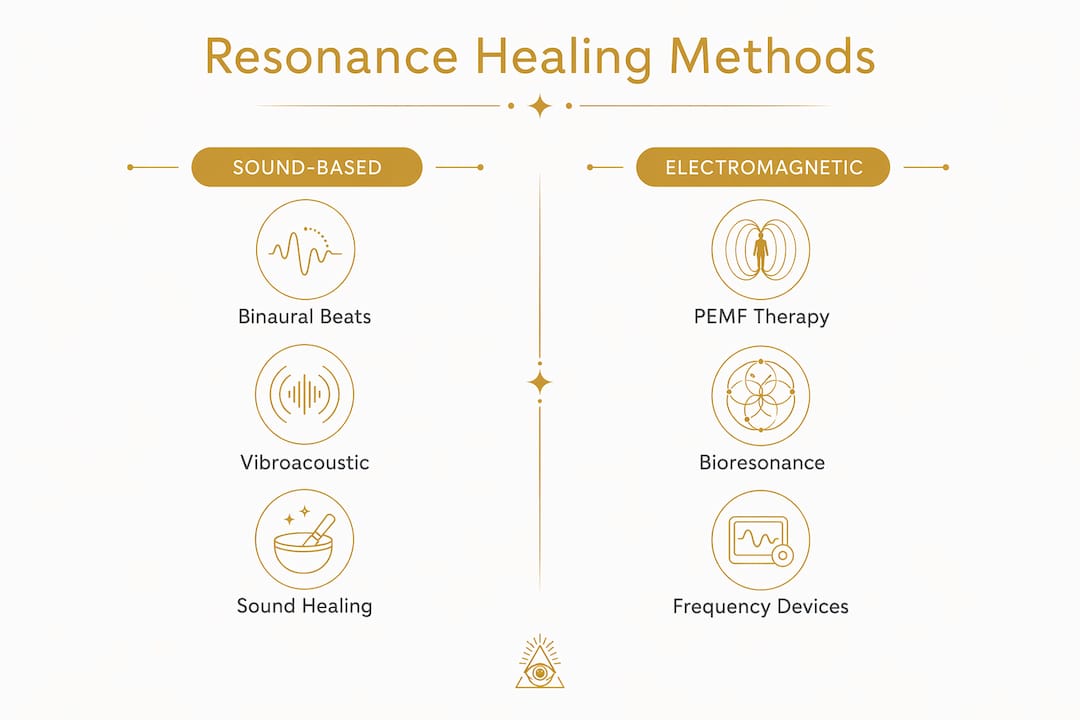
PEMF therapy uses pulsed electromagnetic fields to deliver frequencies directly into tissue, bypassing the auditory system entirely. It targets bone, muscle, and connective tissue at the cellular level, with clinical applications in pain management and recovery support.
Vibroacoustic therapy targets mechanoreceptors directly, bypassing the auditory cortex and producing potent somatic shifts within the 30–120 Hz range. Practitioners embed transducers in mats or chairs so the body receives vibration as a full-body tactile experience, not just sound.
Bioresonance testing uses biological proxies to detect resonant or dissonant responses in the body, then guides balancing protocols based on those readings.
| Modality | Primary Target | Delivery Method | Evidence Level | Best Use Case |
|---|---|---|---|---|
| Binaural beats | Brainwave states | Audio via headphones | Moderate clinical support | Sleep, anxiety, focus |
| PEMF therapy | Bone, muscle, tissue | Electromagnetic coils | Strong early-stage clinical | Recovery, pain relief |
| Vibroacoustic therapy | Fascia, mechanoreceptors | Vibrating mat or chair | Growing research base | Somatic stress release |
| Bioresonance testing | Systemic bioelectric patterns | Diagnostic scan + protocol | Hypothesis-driven, adjunct | Wellness monitoring |
| Sound baths | Vagus nerve, nervous system | Acoustic instruments | Physiological mechanism confirmed | Relaxation, trauma support |
Key distinctions worth noting:
- Binaural beats require headphones and work through auditory processing; vibroacoustic therapy works through touch and bypasses hearing entirely.
- PEMF coils penetrate tissue electromagnetically, reaching deeper structures than surface sound.
- Bioresonance protocols require weeks of consistent practice to retrain body control circuits, not a single session.
- Sound baths produce confirmed vagal stimulation but are less frequency-precise than PEMF or binaural programs.
Practical applications: resonance for stress relief and wellness
Resonant breathing is the most accessible resonance tool available, requiring no device. Slow-paced breathing at 4.5 to 7 breaths per minute shifts the body into a parasympathetic state. A regular 20-minute daily practice reduces perceived stress, lowers blood pressure, and improves cognitive function. The mechanism is direct: breathing at this pace synchronizes heart rate variability oscillations, creating a coherent bioelectric rhythm that signals safety to the nervous system.
Sound healing works through a parallel pathway. Acoustic vagal stimulation reduces heart rate and cortisol, activating the body’s healing systems and explaining why even a 20-minute sound bath produces measurable physiological change. Frequencies like 432 Hz and 528 Hz appear in recovery-focused protocols, though the research on specific Hz values remains early-stage.
Practical resonance applications for daily wellness include:
- Resonant breathing sessions: Practice 4.5–7 breaths per minute for 20 minutes each morning using a guided app like Frequencyhealing’s BreathLab program to maintain precise pacing and enter coherence reliably.
- Binaural beat listening: Use wired headphones for a 20-minute session targeting your goal state, whether sleep, focus, or anxiety reduction, selecting the corresponding frequency band.
- PEMF coil sessions: Apply a PEMF coil to a target area for 20–30 minutes using a program matched to tissue type and therapeutic goal.
- Vibroacoustic mat sessions: Lie on a vibrating mat in the 30–120 Hz range for full-body somatic release, particularly effective after high-stress periods.
- Sound bath immersion: Attend or stream a live sound bath using Tibetan singing bowls or crystal bowls to stimulate vagal tone through acoustic resonance.
Resonance acts as a safety cue for the nervous system, signaling through natural frequency mimicking that the threat response can deactivate. This mechanism makes resonance particularly effective for trauma recovery and chronic stress, where the nervous system is stuck in a prolonged alert state.
Pro Tip: Stack resonant breathing with a binaural beat session at 10 Hz (alpha range) to simultaneously train heart rate variability and brainwave coherence. Twenty minutes of this combination produces a compounding effect on parasympathetic activation.
What are the limits and future directions of resonance healing?
Resonance-based healing is scientifically plausible and physiologically grounded, but clinical translation remains in early stages. Frequency healing is hypothesis-driven, meaning the mechanisms are understood but large-scale randomized controlled trials are still limited. Evidence levels vary widely across modalities, and practitioners should treat these tools as adjuncts to standard care, not replacements for diagnosis or medical treatment.
Current challenges include:
- Frequency specificity: Knowing which exact frequency targets which tissue in which person requires more personalized research than currently exists.
- Protocol standardization: Session length, intensity, and frequency selection vary between practitioners, making outcome comparison difficult.
- Placebo separation: Some reported benefits may reflect relaxation response rather than frequency-specific cellular effects, and separating these requires rigorous blinding in trials.
- Bioresonance validation: Bioenergetic testing protocols require weeks of consistent practice to show lasting change, which complicates short-term study designs.
The most compelling frontier is genetic resonance. Researchers at the Niels Bohr Institute found that the p53 gene oscillates at a natural resonance frequency of approximately 5 hours. Stimulating it at that frequency increases signal amplitude, potentially supporting the body’s own self-repair mechanisms. This suggests resonance communication with genetic networks is not speculative fiction but an active research direction with measurable parameters.
The field rewards cautious optimism. The physiological mechanisms are real, the safety profile of most modalities is favorable, and the research base is growing. Approaching resonance healing as a complement to medical care, rather than a cure, positions you to benefit from what the science already supports while remaining open to what emerges next.
Key Takeaways
Resonance in bioenergetic healing works because specific frequencies match the natural oscillation rates of body tissues, triggering measurable cellular, neurological, and nervous system responses that support recovery and stress relief.
| Point | Details |
|---|---|
| Cellular resonance is physical | Frequencies between 1 and 150 Hz activate mechanosensitive ion channels and optimize cellular metabolism. |
| Vagal stimulation explains calm | Sound vibrations directly stimulate the vagus nerve, lowering cortisol and heart rate through acoustic resonance. |
| Resonant breathing is the simplest entry point | Breathing at 4.5–7 breaths per minute for 20 minutes daily reduces stress and improves heart rate variability. |
| Modalities target different depths | PEMF reaches deep tissue electromagnetically; vibroacoustic therapy targets fascia; binaural beats work through auditory entrainment. |
| Clinical evidence is growing but early-stage | Resonance healing works best as an adjunct to standard care, with genetic resonance research representing the most promising frontier. |
Why resonance is the most underrated tool in nervous system work
Most wellness conversations focus on what you consume or how you move. Resonance asks a different question: what frequency is your nervous system running at right now, and can you shift it deliberately? That reframe changed how I think about recovery entirely.
What I have observed, both in research and in practice, is that resonance works fastest when the nervous system already feels safe. People who approach sound baths or PEMF sessions with skepticism but genuine curiosity tend to show better outcomes than those who approach with either blind faith or rigid resistance. The body responds to frequency input more readily when the threat response is already lowered, which is why stacking resonant breathing before a PEMF or binaural session amplifies results.
The genetic resonance research from the Niels Bohr Institute is the finding I keep returning to. The idea that the p53 gene has a measurable oscillation frequency, and that stimulating it at that rate increases its own signaling, suggests the body is not a passive recipient of frequency input. It is a living bioelectric conversation. That framing shifts the entire practice from “receiving treatment” to “participating in your own regulation.”
My honest position: the clinical evidence base needs more rigor, and anyone selling resonance as a cure for specific diseases is outrunning the science. But the physiological mechanisms are real, the safety profile is strong, and the experiential outcomes for stress, sleep, and emotional regulation are consistent enough to take seriously. Start with resonant breathing. Add binaural beats. Build from there.
— Art
Frequencyhealing programs for resonance-based wellness
Frequencyhealing brings together the full spectrum of resonance tools in one platform, from PEMF coil programs and binaural audio to haptic vibration and scalar brainwave sessions.
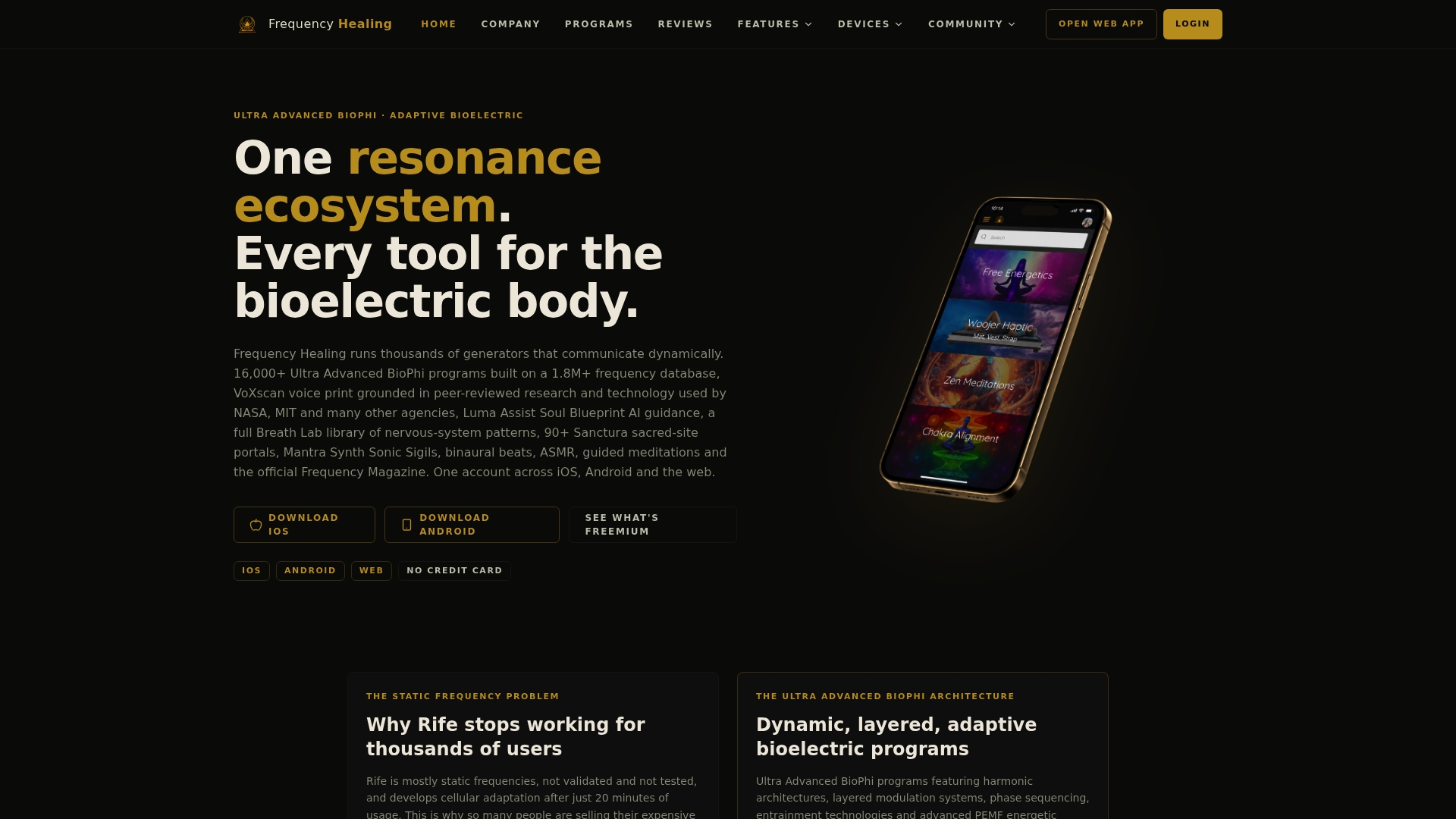
The BreathLab program guides you through resonant breathing with precision pacing, making it easy to hit the 4.5–7 breaths per minute range that activates heart rate variability coherence. For deeper tissue work, PEMF coils deliver targeted electromagnetic frequencies to bone, muscle, and connective tissue. The iMprinters extend frequency delivery into water, objects, and personal wellness tools. Every program on the Frequencyhealing platform is sequenced to support nervous system regulation, recovery, and vibrational exploration as part of a daily wellness practice.
FAQ
What is the role of resonance in bioenergetic healing?
Resonance in bioenergetic healing is the mechanism by which external frequencies match the natural oscillation rates of body tissues, triggering cellular, neurological, and nervous system responses that support repair and balance. It operates through confirmed pathways including vagal stimulation, mechanosensitive ion channel activation, and brainwave entrainment.
How does resonant breathing improve health?
Resonant breathing at 4.5–7 breaths per minute synchronizes heart rate variability and shifts the body into a parasympathetic state. A daily 20-minute practice reduces perceived stress, lowers blood pressure, and improves cognitive function.
What is the difference between PEMF therapy and sound healing?
PEMF therapy delivers pulsed electromagnetic frequencies directly into tissue through coils, targeting deep structures like bone and muscle. Sound healing works primarily through acoustic vagal stimulation and auditory entrainment, producing nervous system regulation through a different sensory pathway.
Is frequency healing scientifically validated?
The physiological mechanisms behind frequency healing, including vagal stimulation, cellular mechanoreception, and brainwave entrainment, are confirmed by research. Large-scale clinical trials are still limited, so frequency healing is best used as an adjunct to standard medical care rather than a standalone treatment.
How long does it take to see results from resonance-based therapy?
Bioresonance and PEMF protocols typically require consistent practice over several weeks to retrain the body’s control circuits for lasting effects. Acute responses like reduced heart rate and improved relaxation can occur within a single session through vagal stimulation.