
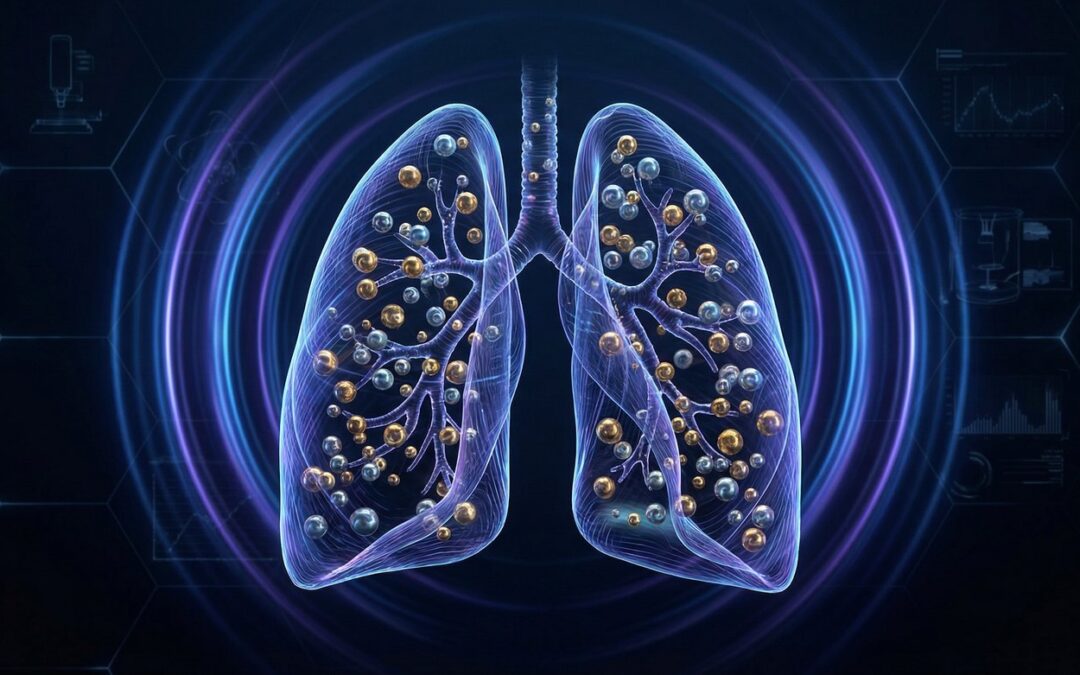
What if the very air we breathe contains invisible antagonists, turning therapeutic technologies against us? A growing body of evidence suggests that aerosolized nanoparticles of heavy metals like barium, strontium, and mercury are no longer a fringe conspiracy theory but an environmental reality. This report exposes the critical, un-researched danger of how these metallic particles could interact with Pulsed Electromagnetic Fields (PEMF), potentially turning a healing frequency into a harmful one. We are facing an unprecedented public health question, and the time for answers is now. The flagship frequency program designed to address this specific threat, Heavy Metal Detox Advanced+ Energetics, may be the first line of defense.
# The Unseen Interaction: PEMF, Inhaled Nanomaterials, and the Urgent Need for Third-Party Research
Date: February 21, 2026
Abstract
Pulsed Electromagnetic Field (PEMF) therapy has emerged as a promising non-invasive modality for promoting healing, reducing inflammation, and treating neurological disorders. Its mechanisms, primarily involving the activation of Voltage-Gated Calcium Channels (VGCCs) and downstream pathways like nitric oxide signaling, are increasingly well-understood. However, a critical and unexamined variable threatens the safety and predictability of these therapeutic outcomes: the growing environmental presence of aerosolized, electromagnetically active nanoparticles, including strontium, barium, and mercury. These materials, dispersed through industrial emissions and proposed geoengineering programs (Stratospheric Aerosol Injection), are inhaled and accumulate in biological tissues. This report synthesizes the existing research on PEMF’s biological effects, the known toxicity of these specific heavy metal nanoparticles, and the physics of their interaction with electromagnetic fields. We present evidence that these nanoparticles, particularly ferroelectric materials like barium titanate (BaTiO₃), can act as metamaterials within the body, potentially leading to resonant energy absorption, localized tissue heating, and amplification of oxidative stress via Fenton-type reactions when exposed to EMF, including therapeutic PEMF. This synergistic interaction represents a significant, unquantified public health risk. Drawing a parallel to the historical precedent of tobacco, where industry-funded research obscured negative health effects for decades, this report argues for the urgent application of the precautionary principle. We conclude with a call for immediate, independent, third-party research to investigate the combined effects of PEMF and inhaled nanomaterials before widespread, long-term exposure creates another public health crisis.
1. Introduction: A Tale of Two Converging Technologies
The 21st century is defined by the rapid, parallel advancement of technologies operating at scales both vast and infinitesimal. On one hand, therapeutic modalities like Pulsed Electromagnetic Field (PEMF) therapy are harnessing the subtle energies of the electromagnetic spectrum to influence cellular behavior, offering non-invasive solutions for a range of debilitating conditions [1]. On the other, the atmospheric environment is being increasingly saturated with engineered and industrial nanoparticles—microscopic materials with unique physical properties, some of which are being intentionally dispersed for climate modification purposes [2].
This report stands at the intersection of these two domains. While PEMF therapy holds immense promise, its safety and efficacy are predicated on a baseline understanding of human physiology. That baseline is now changing. The daily inhalation of electromagnetically active nanoparticles, such as barium, strontium, and mercury, introduces a novel and unpredictable variable into the equation. These are not inert dust particles; they are materials that can, and do, interact with electromagnetic fields in complex ways.
This document synthesizes the disparate fields of research necessary to understand this emerging threat. It will first detail the established therapeutic mechanisms of PEMF, then introduce the sources and toxicological profiles of the specific aerosolized nanoparticles in question. Crucially, it will then explore the physics of how these materials can function as metamaterials within the body, potentially amplifying the effects of ambient and therapeutic EMF in uncontrolled ways. Finally, by comparing high and low-intensity PEMF and invoking the precautionary principle, this report will make the case that the potential for a synergistic, negative health outcome is too great to ignore. We are, in essence, conducting an uncontrolled experiment on a global scale, and just as with tobacco and asbestos, the true cost may not be known for decades. This report is a call to action for independent, third-party research to avert a potential public health crisis hiding in plain sight.
2. The Therapeutic Mechanisms of Low-Intensity PEMF
To understand the potential risks of interaction, we must first establish the baseline of how therapeutic, low-intensity PEMF is understood to function. Decades of research have illuminated a consistent and primary mechanism of action: the activation of Voltage-Gated Calcium Channels (VGCCs) in the cell membrane [3]. These channels are exquisitely sensitive to electrical forces, and the weak electric fields induced by low-intensity PEMF are sufficient to trigger their opening.
This event initiates a cascade of downstream signaling, as illustrated in the diagram below.
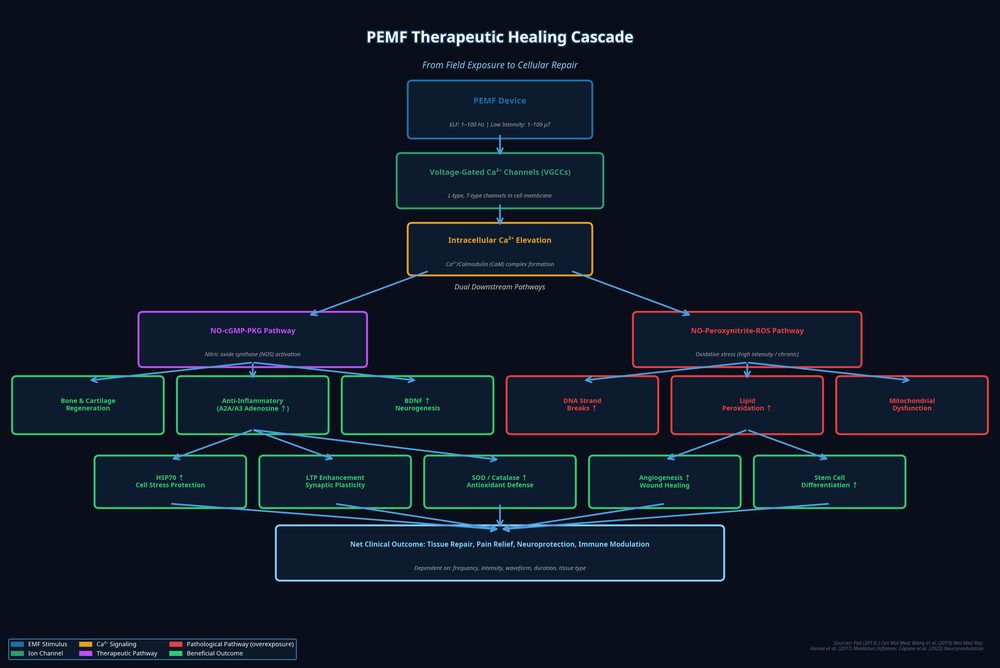
*Figure 1: A summary of the primary therapeutic pathway initiated by low-intensity PEMF, from the initial electromagnetic stimulus to the diverse cellular repair and anti-inflammatory outcomes. The model highlights the central role of VGCC activation and the subsequent bifurcation of nitric oxide signaling.
- #
2.1. The Calcium/Calmodulin to Nitric Oxide Pathway
The influx of calcium ions (Ca²⁺) following VGCC activation leads to a rapid increase in intracellular Ca²⁺ concentration. This Ca²⁺ binds to the protein calmodulin (CaM), forming a Ca²⁺/CaM complex. This complex, in turn, activates nitric oxide synthase (NOS), the enzyme responsible for producing nitric oxide (NO) [3]. It is at this point that the biological effects can bifurcate based on the level of stimulation:
- Therapeutic Pathway (NO-cGMP-PKG): Under normal therapeutic conditions, NO activates guanylate cyclase, which produces cyclic guanosine monophosphate (cGMP). cGMP then activates Protein Kinase G (PKG), a pathway known to be fundamental in processes like bone healing (osteogenesis), vasodilation, and reduction of inflammation [4].
- Pathological Pathway (Peroxynitrite): However, excessive production of NO, which can occur with high-intensity fields or potentially through amplified stimulation, can lead to the formation of peroxynitrite (ONOO⁻). Peroxynitrite is a potent oxidant that causes significant cellular damage, including DNA single-strand breaks, lipid peroxidation, and mitochondrial dysfunction [3].
#
2.2. Key Downstream Beneficial Effects
The activation of these primary pathways leads to a host of well-documented therapeutic effects, which form the basis of PEMF therapy’s clinical applications:
EffectMechanismKey References:—:—:—
| Anti-Inflammatory | Upregulation of A2A and A3 adenosine receptors, which have potent anti-inflammatory properties. Reduction of pro-inflammatory cytokines like TNF-α and IL-1β. | [5], [6] |
| Bone & Cartilage Repair | Stimulation of the NO-cGMP-PKG pathway promotes osteoblast activity and cartilage matrix production. FDA-cleared for bone non-unions since 1979. | [4], [7] |
| Neurogenesis & Neuroprotection | Increased expression of Brain-Derived Neurotrophic Factor (BDNF), which supports neuron survival, growth, and synaptic plasticity (Long-Term Potentiation). | [8] |
| Cellular Stress Protection | Enhanced expression of Heat Shock Protein 70 (HSP70), which helps protect cells from stress-induced damage and apoptosis. | [9] |
| Oxidative Stress Reduction | Upregulation of endogenous antioxidant enzymes like superoxide dismutase (SOD) and catalase. | [9] |
These effects demonstrate that low-intensity PEMF acts as a subtle biological trigger, nudging cells towards a state of repair and homeostasis. The entire therapeutic model, however, rests on the assumption that this trigger is well-controlled and that the cellular response is proportional to the applied dose. The introduction of foreign, electromagnetically active nanomaterials fundamentally challenges this assumption.
3. The Trojan Horse: Inhaled Nanomaterials as Internal Antennas
The human body has evolved in an environment with a natural background level of atmospheric particles. However, the Anthropocene epoch has introduced a novel and dangerous class of airborne pollutants: metallic and metalloid nanoparticles. These are not merely inert dust; their nanoscale size and unique electromagnetic properties allow them to bypass biological barriers and, as we propose, act as internal antennas, fundamentally altering the body’s interaction with ambient and therapeutic electromagnetic fields.
#
3.1. Sources and Composition
The primary nanoparticles of concern—barium, strontium, and mercury—are dispersed into the atmosphere from two main categories of sources:
1. Industrial and Combustion Byproducts: A wide range of industrial activities, including mining, smelting, coal combustion (fly ash), and cement production, release these heavy metals into the atmosphere in nanoparticle form [10]. Mercury, in particular, is a well-known global pollutant from coal-fired power plants.
2. Stratospheric Aerosol Injection (SAI): More recently, and more concerningly, is the proposed use of these particles in geoengineering programs, also known as Solar Radiation Management (SRM). These programs propose the deliberate, large-scale injection of aerosols into the stratosphere to reflect sunlight and counteract global warming. While sulfates have been widely discussed, proposals explicitly name engineered nanoparticles, including metallic aluminum, aluminum oxide, and barium titanate, as highly effective candidates due to their ability to self-levitate using photophoretic forces [2].
Once dispersed, these sub-micron particles can remain suspended for long periods and travel vast distances, leading to global exposure through inhalation. They are small enough to penetrate deep into the lungs, cross the alveolar-capillary barrier, enter the bloodstream, and subsequently accumulate in various tissues, including bone, the central nervous system, and the heart [11].
#
3.2. The Metamaterial Hypothesis: From Particle to Antenna
The core of our concern lies in the electromagnetic properties of these specific materials. Once distributed within the conductive, saline environment of the human body, they do not behave as inert particulates. They have the potential to organize into structures that function as metamaterials—artificial structures engineered to have properties not found in naturally occurring materials. They can absorb, concentrate, and re-radiate electromagnetic energy.
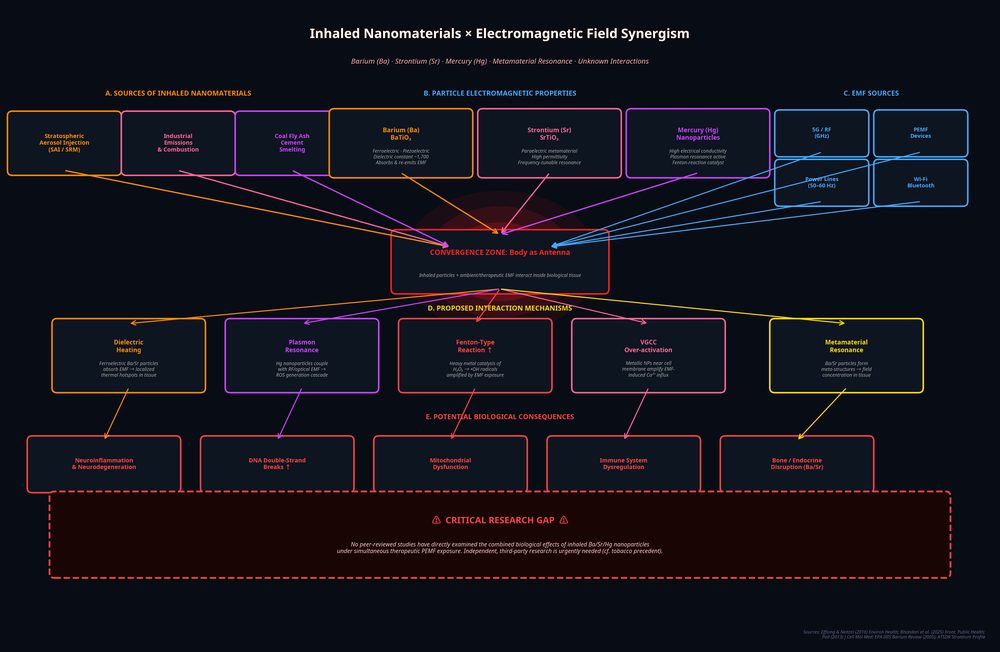
Figure 2: A conceptual model illustrating the convergence of aerosolized nanoparticles and ambient/therapeutic EMF within the human body. The diagram outlines the proposed interaction mechanisms that could lead to amplified biological damage, highlighting the critical and un-researched nature of this synergistic threat.
*Figure 2: A conceptual model illustrating the convergence of aerosolized nanoparticles and ambient/therapeutic EMF within the human body. The diagram outlines the proposed interaction mechanisms that could lead to amplified biological damage, highlighting the critical and un-researched nature of this synergistic threat.
- As detailed in Figure 2, each material presents a unique interaction mechanism:
- Barium Titanate (BaTiO₃): This is a well-known ferroelectric material with an extremely high dielectric constant. This property allows it to absorb and store energy from electromagnetic fields, leading to localized dielectric heating. It is also piezoelectric, meaning it can convert mechanical pressure into electrical voltage and vice-versa, a property with unknown consequences in pulsating biological tissues.
- Strontium Titanate (SrTiO₃): A related material, often found in conjunction with barium, which acts as a high-permittivity paraelectric. Its properties make it a tunable component in microwave devices, suggesting it can resonate at specific EMF frequencies, including those used in telecommunications and potentially PEMF.
- Mercury (Hg): As a conductive metal, mercury nanoparticles exhibit plasmon resonance, a phenomenon where the electrons in the metal oscillate in response to an external EMF, leading to strong energy absorption and localized heating. Furthermore, mercury is a known catalyst for the Fenton-type reaction, which generates highly destructive hydroxyl radicals, a process that could be amplified by EMF-induced energy absorption [12].
This convergence of inhaled, electromagnetically active particles and the ever-increasing flux of man-made EMF creates a scenario where the human body itself becomes part of an unintended electronic circuit. The carefully calibrated dose of a therapeutic PEMF device may be unpredictably amplified in tissues laden with these nanoparticles, turning a healing signal into a harmful one.
4. The Dose Makes the Poison: High vs. Low-Intensity PEMF
The distinction between therapeutic and harmful biological effects of PEMF is critically dependent on intensity. The concerns raised in this report are not a condemnation of all PEMF technology, but rather a warning that the presence of internal nanomaterials may effectively shift a low-intensity, therapeutic dose into a high-intensity, harmful one at the cellular level. Understanding the established differences between these two regimes is therefore essential.
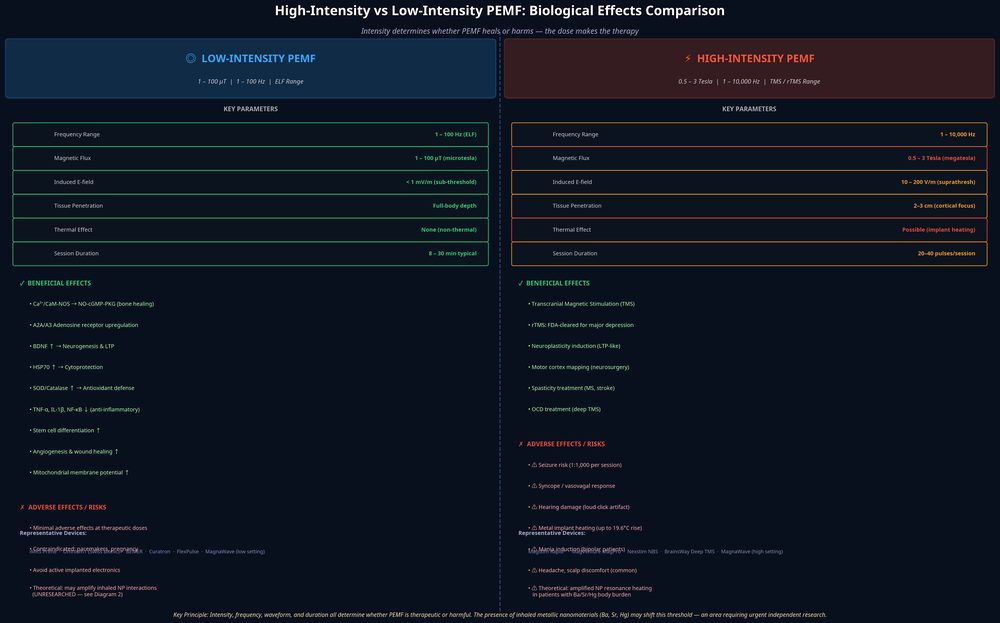
Figure 3: A comparative analysis of Low-Intensity and High-Intensity PEMF, detailing their respective parameters, primary biological effects, and established clinical applications and risks. The diagram highlights how the same technology can produce vastly different outcomes based on the applied dose.
*Figure 3: A comparative analysis of Low-Intensity and High-Intensity PEMF, detailing their respective parameters, primary biological effects, and established clinical applications and risks. The diagram highlights how the same technology can produce vastly different outcomes based on the applied dose.
- #
4.1. Low-Intensity PEMF: The Gentle Nudge
As detailed in Section 2 and Figure 3, low-intensity PEMF operates at the subtle end of the energy spectrum. Its characteristics are:
- Magnetic Flux Density: 1 – 100 microteslas (µT)
- Induced Electric Field: < 1 mV/m (millivolt per meter)
- Mechanism: Non-thermal, acting via signaling cascades (VGCC activation).
This low energy level is insufficient to cause direct cellular damage or significant heating. It acts as a signaling mechanism, gently nudging the cell’s own repair and regulatory systems into action. It is considered extremely safe, with the primary contraindications being for patients with pacemakers or other active electronic implants, due to the risk of electromagnetic interference [7].
#
4.2. High-Intensity PEMF: The Powerful Jolt
High-intensity PEMF, which includes technologies like Transcranial Magnetic Stimulation (TMS) and high-power pulsed RF, operates at a completely different scale:
- Magnetic Flux Density: 0.5 – 3 Tesla (T) — millions of times stronger than low-intensity PEMF.
- Induced Electric Field: 10 – 200 V/m — strong enough to directly trigger neuronal action potentials.
- Mechanism: Suprathreshold stimulation, capable of direct nerve depolarization and, potentially, thermal effects.
This power is harnessed for specific medical applications, such as treating major depression by directly stimulating cortical neurons (rTMS) [13]. However, this power comes with significant risks, as shown in Figure 3. These include:
- Seizure Induction: The most serious risk, occurring from uncontrolled neuronal firing.
- Metallic Implant Heating: The powerful magnetic fields can induce strong currents in any metallic implants (e.g., dental work, surgical clips, joint replacements), causing dangerous localized tissue heating [14].
- Scalp Pain and Headaches: Common side effects from the intense stimulation.
#
4.3. The Nanomaterial Bridge: Low-Intensity Acting Like High-Intensity
The critical question this report raises is: Can inhaled ferroelectric or metallic nanoparticles concentrate a low-intensity field to create high-intensity effects at a microscopic level?
The physics of metamaterials and resonant energy absorption suggest this is not only possible, but likely. A low-intensity, full-body PEMF signal, intended to be therapeutic, could be absorbed and concentrated by clusters of barium titanate nanoparticles lodged in the brain or heart. At the micrometer scale surrounding these particles, the local field intensity could spike to levels analogous to high-intensity PEMF, potentially causing localized dielectric heating, VGCC over-activation, peroxynitrite formation, and other effects associated with high-intensity fields. A person with a significant body burden of these materials may therefore experience the risks of high-intensity PEMF while undergoing a supposedly safe, low-intensity therapy.
5. Conclusion: The Precautionary Principle and the Call for Independent Research
The convergence of therapeutic electromagnetic fields and environmental metallic nanoparticles presents a classic case for the application of the precautionary principle. The principle states that when an activity raises threats of harm to human health or the environment, precautionary measures should be taken even if some cause-and-effect relationships are not fully established scientifically. The evidence synthesized in this report, while not yet a direct causal chain, constitutes a significant and credible threat.
We have established that:
1. Low-intensity PEMF therapy works by subtly activating cellular signaling pathways.
2. High-intensity PEMF, while therapeutic in some contexts, carries known risks like seizures and tissue heating.
3. Humans are inhaling and accumulating electromagnetically active nanoparticles (Ba, Sr, Hg) from industrial and potentially geoengineering-related sources.
4. The physics of these materials suggest they can act as internal metamaterials, concentrating EMF and creating localized high-intensity hotspots.
This creates a plausible, dangerous synergy where a therapeutic modality could be rendered harmful by an environmental factor that is both invisible and largely unregulated. The situation is hauntingly reminiscent of the early history of tobacco, where the industry successfully obscured the product’s devastating health effects for decades through biased research and public relations campaigns. We cannot afford to repeat that mistake.
The potential for harm is not limited to PEMF therapy. The entire population is now bathed in an unprecedented spectrum of man-made electromagnetic radiation, from power lines to 5G networks. If these ambient fields can also interact with an increasing body burden of inhaled metallic particles, the potential long-term public health consequences are staggering.
Therefore, this report concludes with an urgent call to action:
An immediate moratorium should be placed on any and all Stratospheric Aerosol Injection (SAI) or Solar Radiation Management (SRM) programs that involve the dispersal of metallic or ferroelectric nanoparticles until their long-term health effects, including their interaction with EMF, are fully understood through independent, third-party research.
Funding must be allocated for independent, non-corporate, non-governmental research to specifically investigate the synergistic effects of combined exposure to low and high-frequency EMF and nanoparticles of barium, strontium, mercury, and aluminum.
The medical community and PEMF device manufacturers must acknowledge this potential risk, screen patients for heavy metal body burden, and contribute to research efforts to ensure their technologies remain safe in our changing internal environment.
To proceed without this research is to gamble with public health on a global scale. The red flags are waving; we must not wait for the smoking gun.
How to Use Detoxification and Protection Frequencies
To address the potential threat of heavy metal and EMF toxicity, a multi-faceted approach using specialized frequency devices is recommended.
With iMprinter:
The program can be imprinted onto water or other substances using the iMprinter for continuous, subtle exposure throughout the day, creating a systemic resonance field to support detoxification pathways.
With iTorus i2 Coil:
Use the iTorus i2 Coil to generate a powerful, localized PEMF field. This can be used for targeted application over the liver and kidneys to support detoxification, or to create an ambient field in your environment to help neutralize EMF stress.
With Woojer Haptic Systems:
Woojer devices translate the program’s low-frequency architecture into gentle tactile vibration, allowing the body to experience rhythmic neuromuscular and circulatory support, which is crucial for effective lymphatic drainage and detoxification.
With Vortex 6 Mat:
The Vortex 6 Mat provides a full-body experience, immersing you in a coherent energetic field to support deep, systemic entrainment and cellular detoxification.
Best Practices & Detox Protocols
When using frequencies for detoxification, consistency and a holistic approach are key. The main program, Heavy Metal Detox Advanced+ Energetics, should be a cornerstone of your protocol.
Daily Protocol:
- Morning (8-10am): Run a 30-minute session with the iTorus coil over the abdomen to stimulate digestive and detoxification organs.
- Throughout the Day: Drink water imprinted with a detoxification frequency using the iMprinter. Aim for at least 2 liters.
- Evening (7-9pm): Use the Vortex 6 Mat for a 60-minute full-body session to support systemic cellular repair and reduce inflammation.
Weekly Protocol:
- Engage in this daily protocol for 5 consecutive days, followed by 2 days of rest to allow the body to process and eliminate toxins.
- Incorporate a session with the Woojer Strap on the lower back during one of the weekend days to support the kidneys.
What to Expect:
Initial effects may include increased urination or bowel movements as the body begins to flush toxins. Within 1-2 weeks, users often report increased energy, mental clarity, and reduced inflammation. Long-term (1-3 months), benefits can include improved immune function and a reduction in chronic symptoms.
Related PEMF Programs for Detox & Protection
To create a comprehensive detoxification and protection protocol, consider incorporating these specialized frequencies:
- Heavy Metal Detox Advanced+ Energetics
- Detox From Heavy Metal Advanced Energetics
- Heavy Metals Detox Basic Energetics
- Radiation Detox
- 5G Emissions EMF Protection
- 741Hz Detox Full Body Cell Level Solfeggio
- 963Hz + 741Hz + 432Hz EMF Protect & Detox Solfeggio
- Mitochondrial Energy – Respiration & Oxidative Phosphorylation Energetics
- Super Schumann Earth: Sacred 9 Phi Spiral Quantum Energetics
- 528Hz Full Body Healing, DNA Repair, Cell Regeneration
- Lymphatic Drainage and Detox Advanced Energetics
- Mercury Upper Lip Detox, Emotions, Conflict Resolution
References
-
- Flatscher, J., et al. (2023). Pulsed Electromagnetic Fields (PEMF)—Physiological Response and Its Potential in Trauma Treatment. *International Journal of Molecular Sciences*, 24(14), 11239. [Online]. Available: https://pmc.ncbi.nlm.nih.gov/articles/PMC10379303/
- Effiong, U., & Neitzel, R. L. (2016). Assessing the direct occupational and public health impacts of solar radiation management with stratospheric aerosols. *Environmental Health*, 15(1), 7. [Online]. Available: https://pmc.ncbi.nlm.nih.gov/articles/PMC4717532/
- Pall, M. L. (2013). Electromagnetic fields act via activation of voltage-gated calcium channels to produce beneficial or adverse effects. *Journal of Cellular and Molecular Medicine*, 17(8), 958-965. [Online]. Available: https://pmc.ncbi.nlm.nih.gov/articles/PMC3780531/
- Wang, A., et al. (2024). Signalling pathways underlying pulsed electromagnetic fields in bone repair. *Frontiers in Bioengineering and Biotechnology*, 12, 1333566. [Online]. Available: https://www.frontiersin.org/journals/bioengineering-and-biotechnology/articles/10.3389/fbioe.2024.1333566/full
- Varani, K., et al. (2017). Adenosine Receptors as a Biological Pathway for the Anti-Inflammatory and Beneficial Effects of Low Frequency Low Energy Pulsed Electromagnetic Fields. *Mediators of Inflammation*, 2017, 2740963. [Online]. Available: https://pmc.ncbi.nlm.nih.gov/articles/PMC5309410/
- Vincenzi, F., et al. (2013). Pulsed Electromagnetic Fields Increased the Anti-Inflammatory Effect of A2A and A3 Adenosine Receptor Agonists in Human T/C-28a2 Chondrocytes and hFOB 1.19 Osteoblasts. *PLoS ONE*, 8(5), e65561. [Online]. Available: https://journals.plos.org/plosone/article?id=10.1371/journal.pone.0065561
- Cadossi, R., Massari, L., & Racine-Avila, J. (2020). Pulsed Electromagnetic Field Stimulation of Bone Healing and Joint Preservation: Cellular Mechanisms of Skeletal Response. *JAAOS Global Research & Reviews*, 4(5), e19.00155. [Online]. Available: https://journals.lww.com/jaaosglobal/fulltext/2020/05000/Pulsed_Electromagnetic_Field_Stimulation_of_Bone.12.aspx
- Li, Y., et al. (2014). Pulsed electromagnetic field enhances brain-derived neurotrophic factor expression through L-type voltage-gated calcium channel-and Erk-dependent signaling pathways in neonatal rat dorsal root ganglion neurons. *Neuroscience Letters*, 578, 149-154. [Online]. Available: https://www.sciencedirect.com/science/article/pii/S0197018614001430
- Wang, C., et al. (2019). Low-frequency pulsed electromagnetic field promotes functional recovery, reduces inflammation and oxidative stress, and enhances HSP70 expression following spinal cord injury. *Molecular Medicine Reports*, 19(3), 1687-1693. [Online]. Available: https://pmc.ncbi.nlm.nih.gov/articles/PMC6390012/
- U.S. Environmental Protection Agency. (2005). *Toxicological Review of Barium and Compounds*. [Online]. Available: https://iris.epa.gov/static/pdfs/0010tr.pdf
- Agency for Toxic Substances and Disease Registry (ATSDR). (2004). *Toxicological Profile for Strontium*. [Online]. Available: https://www.atsdr.cdc.gov/toxprofiles/tp159.pdf
- Bhandari, M., et al. (2025). Nanoparticle–EMF synergism: a study on the combined effects on developmental and behavioral endpoints in Drosophila melanogaster. *Frontiers in Public Health*, 13. [Online]. Available: https://www.frontiersin.org/journals/public-health/articles/10.3389/fpubh.2025.1645108/full
- Kim, W. S., & Paik, N. J. (2021). Safety review for clinical application of repetitive transcranial magnetic stimulation. *Brain & Neurorehabilitation*, 14(1), e5. [Online]. Available: https://pmc.ncbi.nlm.nih.gov/articles/PMC9879417/
[14] Lottner, T., et al. (2022). Radio-frequency induced heating of intra-cranial EEG electrodes in 3 and 7 Tesla MRI. *NeuroImage*, 264, 119708. [Online]. Available: https://www.sciencedirect.com/science/article/pii/S1053811922008126
Medical Disclaimer: The information provided in this article is for educational purposes only and is not intended as a substitute for professional medical advice, diagnosis, or treatment. Always seek the advice of your physician or other qualified health provider with any questions you may have regarding a medical condition.