

A frequency healing daily ritual is a structured practice that uses specific sound frequencies, pulsed electromagnetic fields, and vibrational stimuli to support nervous system regulation, stress reduction, and emotional balance. The recognized clinical term for this field is vibroacoustic and bioelectromagnetic therapy, though “frequency healing” has become the widely used shorthand across wellness communities. This frequency healing daily ritual guide covers the essential tools, step-by-step protocols, and troubleshooting strategies you need to build a practice that actually sticks. Frequencyhealing combines PEMF technology, Solfeggio audio, binaural entrainment, and haptic vibration into guided programs designed for exactly this kind of daily use.
What tools and frequencies are essential for a daily frequency healing ritual?
The right tools determine whether your daily healing practice delivers results or fades into background noise. Three categories matter most: electromagnetic devices, audio delivery hardware, and frequency sources.
Electromagnetic devices
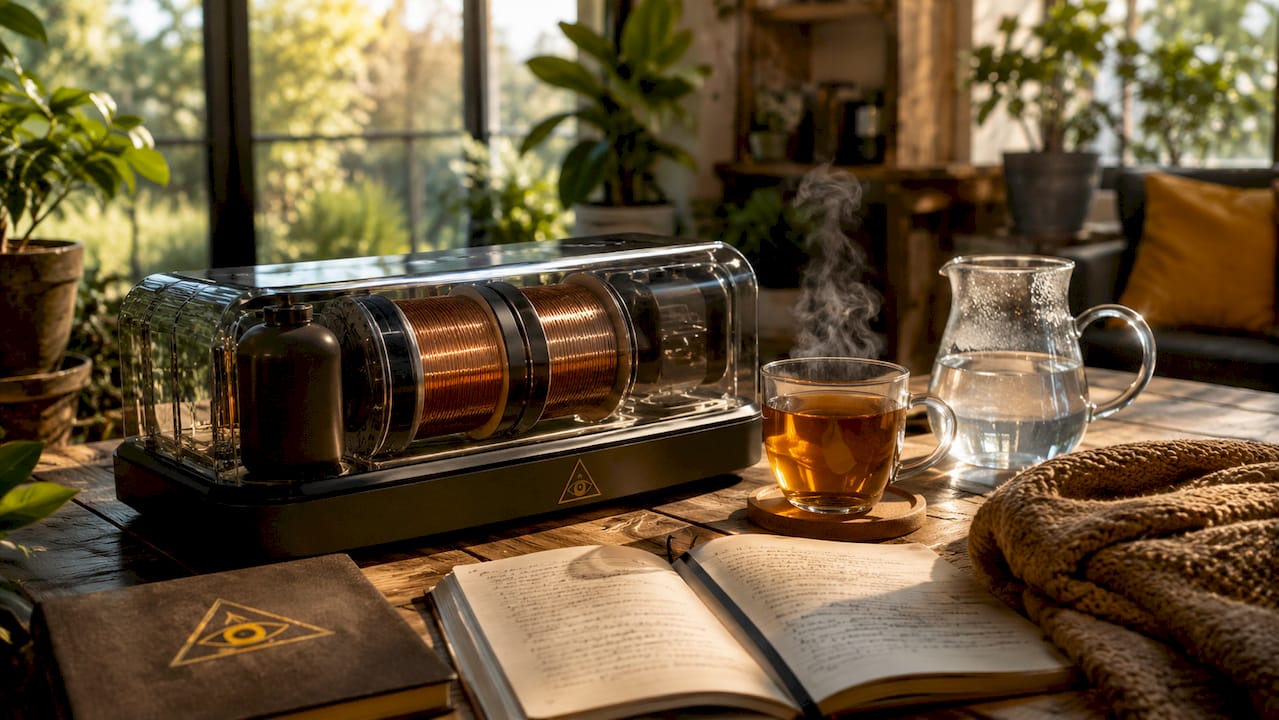
PEMF therapy uses pulsed electromagnetic fields to stimulate cellular adaptation and regulatory processes in the body. Clinical PEMF protocols use 1–10 Hz for sleep and chronic pain and 50–100 Hz for bone and tissue repair. Frequency selection is not interchangeable. A 1–4 Hz range produces deep grounding effects, while 50–75 Hz targets pain relief and physical repair. Using the wrong range for your goal reduces effectiveness significantly.
Audio delivery hardware
Binaural beats require wired headphones to maintain the interaural phase differences that drive brainwave entrainment. Speakers work better for ambient Solfeggio background listening. This distinction matters because wireless headphones introduce latency that disrupts phase accuracy. If you are using binaural programs for focus or sleep, always use wired headphones.
Key frequencies for daily practice
| Frequency | Primary Use | Recommended Duration |
|---|---|---|
| 417 Hz | Stress release, clearing past patterns | 10–15 minutes |
| 528 Hz | Cellular repair, positive shift | 15–20 minutes |
| 1–4 Hz (PEMF) | Deep grounding, sleep support | 10–20 minutes |
| 50–75 Hz (PEMF) | Pain relief, tissue repair | 10–20 minutes |
Pro Tip: Start every session at low volume and never exceed 85 decibels. Beginners should limit sessions to 10–20 minutes while the nervous system acclimates to vibrational stimuli.
Safety guidelines are straightforward. Keep audio volumes below 85 decibels. Limit PEMF sessions to 20 minutes when starting out. People with pacemakers, implanted devices, or active seizure conditions should consult a physician before beginning any electromagnetic frequency practice.
How to establish a step-by-step frequency healing daily ritual
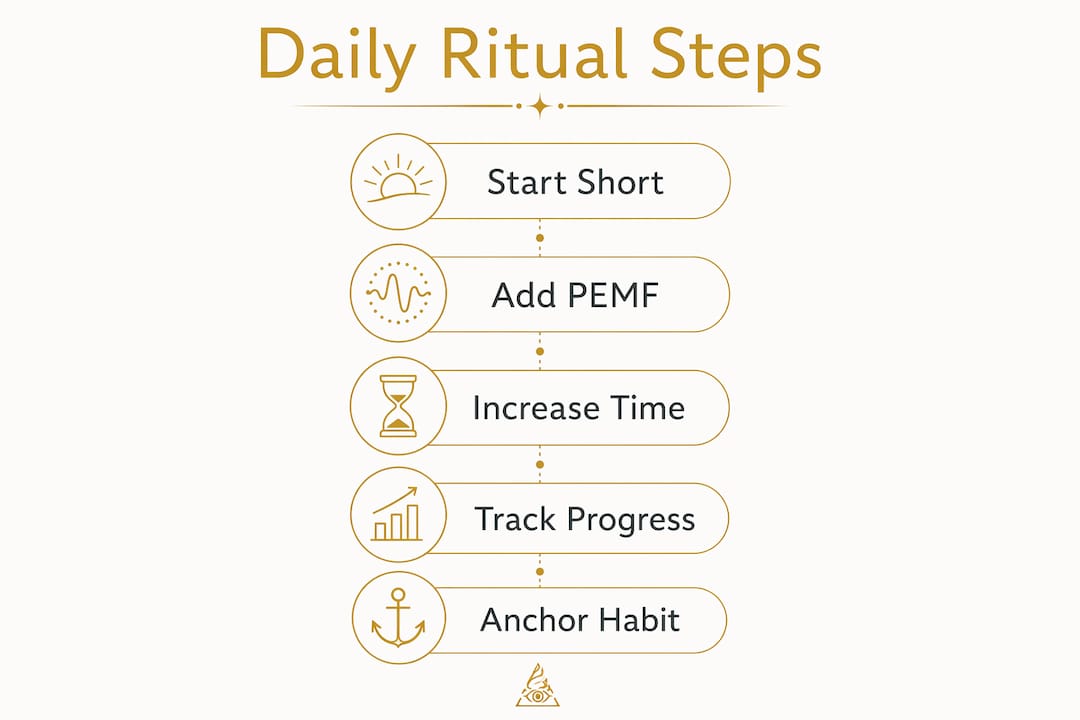
Consistency outperforms intensity in frequency healing. A 5-minute daily practice produces more lasting nervous system benefits than occasional long sessions. Build your ritual around a fixed morning window and layer in complexity only after the habit is solid.
The morning protocol
- Wake and hydrate. Drink a full glass of water before any frequency exposure. Hydration supports cellular conductivity, which affects how your body responds to electromagnetic and vibrational input.
- 417 Hz for 10–15 minutes. Play 417 Hz Solfeggio audio through speakers while you stretch or prepare your morning drink. This frequency is associated with releasing stress patterns and resetting your bioelectric state for the day.
- 528 Hz for 15–20 minutes. Transition to 528 Hz while journaling or sitting quietly. Standard morning reset protocols use this sequence to shift from past stress release into a receptive, forward-oriented state.
- PEMF session (optional, 10–20 minutes). If you use a PEMF coil or mat, run a 1–4 Hz grounding program during or after your journaling window. This is the phase where bioelectric and electromagnetic inputs work together.
- Close with breath or movement. Two to three minutes of conscious breathing or light movement signals the nervous system that the session is complete.
Progression and habit formation
Start with the 417 Hz and 528 Hz audio sequence only. Add PEMF after two weeks. Increase session length by five minutes per week until you reach your target duration. Pairing frequency audio with simple mindful actions like stretching, journaling, or a tea ritual deepens neurophysiological integration and improves adherence.
| Week | Protocol | Total Time |
|---|---|---|
| 1–2 | 417 Hz + 528 Hz audio only | 25–35 minutes |
| 3–4 | Add PEMF grounding session | 35–55 minutes |
| 5+ | Full sequence with breath close | 40–60 minutes |
Pro Tip: Anchor your ritual to an existing habit, such as your morning coffee or shower. Habit stacking is the fastest path to consistency in any daily wellness routine.
What are the common pitfalls in daily frequency healing practice?
Most people quit frequency healing rituals not because they stop believing in them, but because they push too hard too fast. Recognizing the warning signs early keeps your practice sustainable.
Signs you are overdoing it:
- Ringing or sensitivity in the ears after audio sessions
- Feeling wired or restless after a session meant to relax you
- Headaches within 30 minutes of PEMF use
- Emotional agitation that persists for more than an hour post-session
These are signals of overstimulation, not failure. Short, gentle treatments are often more effective than long, high-intensity sessions. Taking active breaks between sessions is a critical part of sustainable practice, not a sign of weakness.
“Frequency therapy effectiveness depends on matching stimuli to individual regulatory states. No single universal frequency fits all.” — Herbert Eder, M.D., frequency therapy practitioner
Troubleshooting checklist:
- Reduce session length by 5 minutes and observe for three days
- Lower audio volume by 10–15% before increasing duration
- Switch from binaural beats to ambient Solfeggio if headaches occur
- Keep a simple daily log: date, frequency used, duration, and how you felt afterward
Tracking your responses is the fastest way to build a personalized protocol. What works for one person’s nervous system may overstimulate another’s. Your log becomes your personal frequency healing daily ritual checklist over time.
Pro Tip: If you feel worse after two consecutive sessions, take a full rest day before resuming. The body’s regulatory capacity needs space to integrate vibrational input.
How does science support frequency healing daily rituals?
The scientific foundation for frequency healing rests on bioelectromagnetic research and randomized clinical trials. Binaural beats show relaxation and cognitive benefits across 22 randomized controlled trials. These results are meaningful, and they come with an important qualifier: binaural beats work best as part of a broader wellness routine, not as a standalone cure.
Frequency therapy views the body as an oscillating regulatory system influenced by resonance and vibrational information exchange beyond purely biochemical factors. This perspective reframes healing as a living bioelectric conversation between external stimuli and internal cellular states. The goal is not to force a mechanical outcome but to support the body’s own adaptive processes.
“Regularity and dosage matter more than intensity. The body integrates frequency information incrementally, not in single large doses.” — Herbert Eder, M.D.
Frequency healing methods work best when integrated with mindfulness and conscious lifestyle choices. A daily ritual that pairs PEMF or Solfeggio audio with intentional movement, breath, and reflection creates a frequency ecosystem where each element reinforces the others. The science supports the ritual structure, not just the frequencies in isolation.
Key takeaways
A structured daily frequency healing ritual built on consistent short sessions, correct tool use, and personal observation produces more lasting wellness benefits than any single high-intensity session.
| Point | Details |
|---|---|
| Start short and build slowly | Begin with 10–20 minute sessions and add 5 minutes per week to avoid overstimulation. |
| Match frequency to goal | Use 1–4 Hz PEMF for sleep and grounding; use 417 Hz and 528 Hz Solfeggio for morning emotional reset. |
| Use the right hardware | Wired headphones are required for binaural beats; speakers work for ambient Solfeggio listening. |
| Consistency beats intensity | A 5-minute daily practice outperforms occasional long sessions for nervous system regulation. |
| Track your responses | Keep a daily log of frequency, duration, and how you feel to build a personalized protocol. |
What I’ve learned after years of daily frequency practice
The biggest mistake I see people make is treating frequency healing like a supplement. They add it to an already packed morning, rush through a 417 Hz track while checking email, and then wonder why nothing shifts. Frequency work is not passive. It requires a window of genuine attention, even if that window is only ten minutes.
What actually changed things for me was pairing the audio with a single physical anchor. I chose a warm cup of tea. That small ritual created a neurological cue that told my nervous system: this time is different. Within two weeks, my body started relaxing before the audio even began. That is how habit and resonance work together.
I also want to be direct about what frequency healing is not. It is not a replacement for sleep, therapy, or medical care. The people I have seen get the most from it treat it as a daily maintenance practice, the way an athlete treats stretching. Not dramatic, not miraculous, just consistent and cumulative. The frequency science research backs this up: regularity and dosage matter far more than the intensity of any single session.
Start with five minutes. Do it every morning for two weeks. Then decide if you want more.
— Art
Frequencyhealing tools built for your daily ritual
Frequencyhealing offers a full ecosystem of devices and programs designed to support exactly the kind of structured daily practice described in this guide.
The platform’s PEMF coils deliver precise electromagnetic frequencies across clinical ranges, from deep grounding at 1–4 Hz to tissue repair at 50–75 Hz. The Haptic Synthesizer translates Solfeggio and scalar frequencies into physical vibration you feel through the body, not just hear. For breath-based coherence work, the BreathLab guides you through precision breathing protocols that amplify the effects of every frequency session. Each tool integrates with Frequencyhealing’s guided programs, so you always have a structured protocol ready, whether you have five minutes or fifty.
FAQ
What is a frequency healing daily ritual?
A frequency healing daily ritual is a structured practice using sound frequencies, PEMF, or binaural audio to support nervous system regulation and emotional balance. It typically runs 20–60 minutes and is most effective when practiced at the same time each morning.
How long should a beginner’s frequency healing session be?
Beginners should start with 10–20 minutes and increase by 5 minutes per week. Starting short prevents auditory fatigue and gives the nervous system time to acclimate.
Do I need special equipment to practice sound healing at home?
Wired headphones are required for binaural beat programs to maintain phase accuracy. Speakers work well for ambient Solfeggio frequencies like 417 Hz and 528 Hz.
What PEMF frequency is best for sleep?
Clinical PEMF protocols recommend 1–10 Hz for sleep and chronic pain support. The 1–4 Hz range produces the deepest grounding effect.
Can frequency healing replace medical treatment?
Frequency healing supports the body’s regulatory and adaptive processes but does not replace medical care. Binaural beats and PEMF are best used as complements to broader wellness routines, not standalone treatments.