
What if the cutting-edge wellness technology you trust is secretly built on a century-old, unproven model? In the booming, unregulated market of frequency medicine, a dangerous game of Russian Roulette is being played with your health and your wallet. This isn’t just speculation; it’s a verifiable reality. While companies like Infopathy and countless app developers offer a dizzying array of frequencies promising miraculous cures, they often operate on a wing and a prayer, lacking the rigorous scientific testing and validation necessary for safe and effective use. This is not just negligent; it’s a reckless gamble with your well-being.
This article will pull back the curtain on the frequency therapy industry. We will expose the hidden dangers of untested frequency therapies, the unsettling and often-misrepresented legacy of Royal Rife, and why most modern gadgets are little more than a shot in the dark, based on outdated 1990s technology. We will also explore the scientifically validated, safer alternative: low-intensity, phase-based Pulsed Electromagnetic Field (PEMF) therapy, and explain why it represents a new, more responsible paradigm in energetic medicine.
The Infopathy Incident: A Startling Confession of Negligence
A recent, and frankly shocking, exchange on Infopathy’s own public forum has laid bare the industry’s dirty little secret: a startling lack of scientific rigor and a cavalier attitude towards user safety. When a concerned user, Art Tawanghar, pressed for details on their testing protocols with the simple question “what tests you have done on this? how we do know this works?”, the response from a company representative was not one of reassurance, but of dismissive arrogance.

The suggestion to “just use it once a day and see if it works” is not a scientific protocol; it’s a blind gamble. The flippant offer to conduct a proper “double-blind placebo study” only in exchange for “hundreds of thousands of euros” is a stunning admission that they have not done their due diligence. It’s a confession that their users are, in fact, the guinea pigs in an uncontrolled, unmonitored experiment. As Art Tawanghar correctly responded: “Got it so we have no idea if this works or not! lol”
This cavalier attitude is emblematic of a widespread problem in the frequency therapy industry. The prevailing model seems to be “take as many pills as possible and see which one works for you,” a deadly and irresponsible approach when dealing with something as fundamental and delicate as the body’s energetic systems. It’s a model that prioritizes profit over people, marketing over medicine, and convenience over clinical validation.
The Ghost of Rife: Why an Old Name Should Make You Uneasy
The name “Rife” is often brandished as a seal of legitimacy in the world of frequency therapy. However, the truth is far more unsettling. Royal Raymond Rife was an inventor from the 1920s who claimed to have found a way to destroy pathogens using specific frequencies. While his work was innovative for its time, it was based on a simplistic, single-frequency model that has long been superseded by a more nuanced and complex understanding of biology.
Modern science has shown that biological systems are not simple machines that can be fixed with a single “magic bullet” frequency. They are complex, multi-layered, and interconnected networks that communicate through a rich symphony of frequencies, not a single, monotonous note. According to Cancer Research UK, there is no reliable evidence that Rife machines can treat cancer or any other disease [2]. WebMD [3] and Reuters fact-checking [5] have both confirmed this lack of scientific validation. A 2008 article in the Biomedical Imaging and Intervention Journal referred to Rife machines as an “unproven medical device” with “big claims but no evidence” [16].
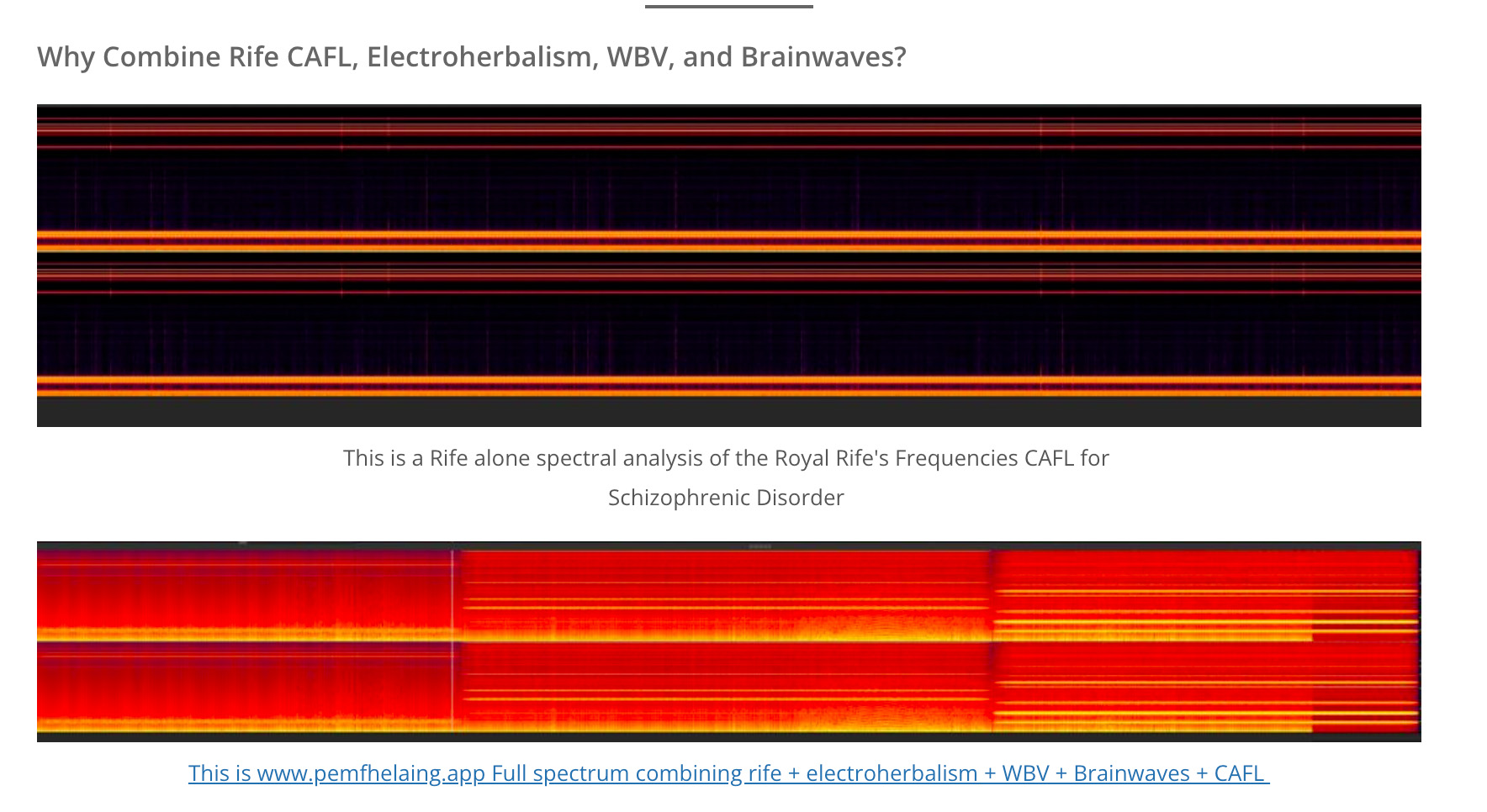
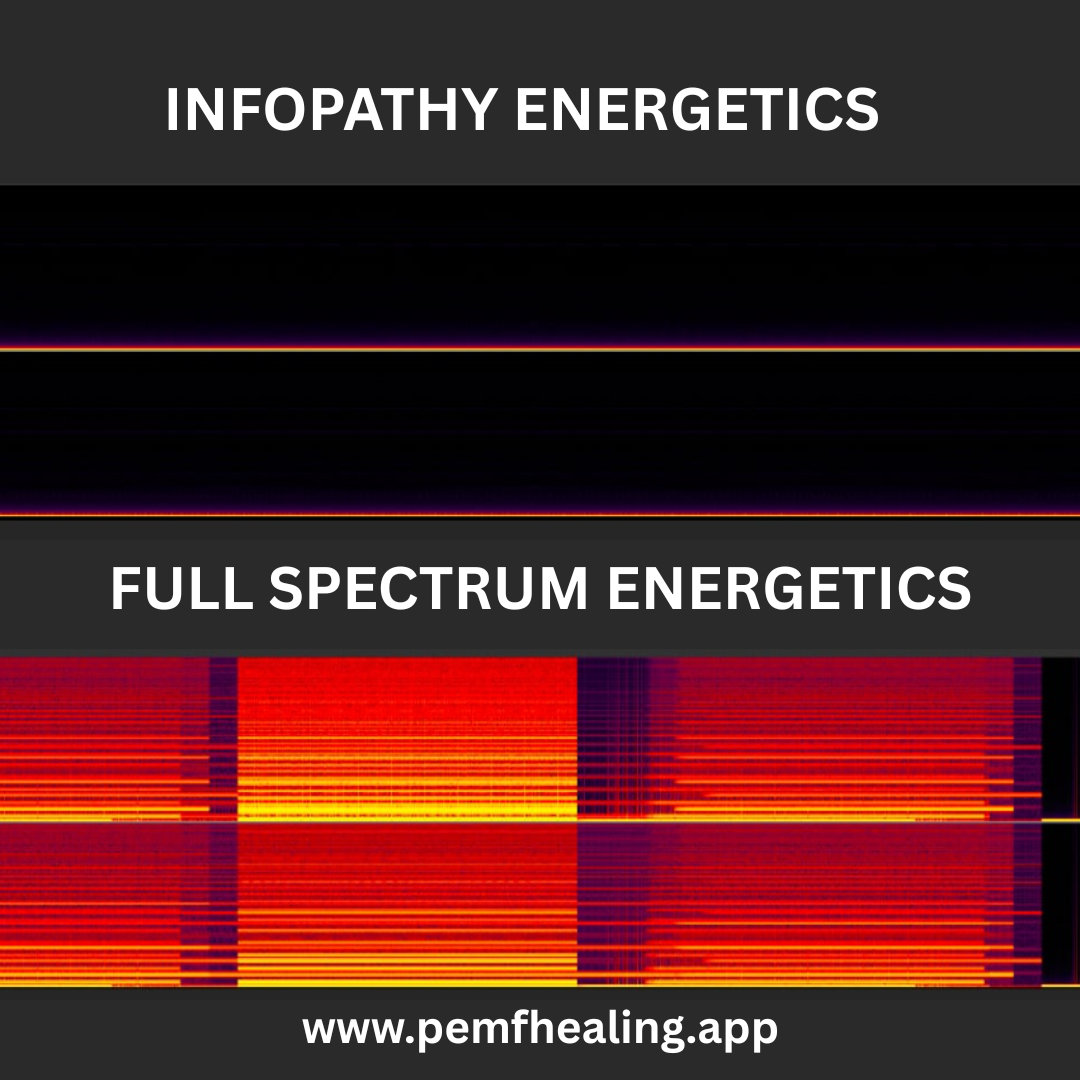
The fact that so many companies still cling to the Rife name is a major red flag. It’s a sign that they are more interested in marketing a story than in providing a scientifically sound product. They are selling a myth, a legend, not a validated therapy. The spectral analysis below tells the whole story:
Rife vs. Full Spectrum: A Deeper Dive
The fundamental flaw in the Rife approach is its reliance on a single, static frequency to address a complex biological problem. This is like trying to conduct a symphony with a single note. The human body is a complex, dynamic system with multiple, interconnected energetic pathways. A single frequency may, at best, have a limited effect on one of these pathways, while completely ignoring the others. At worst, it can create an imbalance, disrupting the body’s natural energetic harmony.
Full-spectrum PEMF, on the other hand, takes a more holistic and sophisticated approach. Instead of a single frequency, it delivers a rich, complex, and coherent field of frequencies that more closely mimics the body’s natural energetic language. This multi-layered approach engages multiple biological systems at once, fostering a more comprehensive balance and full-body coherence [17].
The PEMF Healing app is a game-changer in this regard. It moves beyond the outdated, single-frequency model of Rife and embraces a more modern, scientifically-informed approach. By combining multiple frequency sets and layering them in a dynamic, rhythmic sequence, it creates a powerful and synergistic effect that is far greater than the sum of its parts. This is not just a quantitative difference; it’s a qualitative leap forward in the field of energetic medicine.
1990s Tech in a 21st Century World: The PEMF Healing App Problem
The PEMF Healing app, while presenting itself as a modern, convenient solution, is a prime example of this outdated, dangerous thinking. Like many of its competitors, it relies on a library of pre-programmed, single-frequency sets—a digital version of Rife’s original, flawed concept. This approach is akin to using a 1990s dial-up modem in the age of fiber optics. It’s slow, inefficient, and fails to account for the dynamic, ever-changing nature of the human body.
The spectral analysis of these apps reveals a stark and damning difference when compared to true full-spectrum PEMF. While Rife-based apps produce a narrow, repetitive, and ultimately ineffective signal, full-spectrum PEMF creates a rich, complex, and coherent field that more closely mimics the body’s natural energetic language, allowing for true healing and regeneration.

High-Intensity PEMF and THz: The Dangers of Overusage They’re Not Telling You
In the quest for a quick fix, many have turned to high-intensity PEMF and Terahertz (THz) devices. While these technologies can have therapeutic applications in very specific, controlled medical settings, they also carry significant, and often undisclosed, risks, especially with overuse. High-intensity PEMF can create a powerful magnetic field that, while potentially beneficial in the short term for specific conditions, can also act as a co-carcinogen and cause significant cellular stress.
THz radiation, once thought to be harmless, has now been shown in peer-reviewed scientific studies to cause DNA damage and even cell death. A groundbreaking study published in iScience by Wang et al. (2023) found that THz radiation at power densities of 25-50 mW/cm² caused direct DNA damage in neural stem cells, increased apoptosis (programmed cell death), and created dose-dependent cytotoxic effects [11]. The nervous system is particularly vulnerable to THz radiation, making it a serious biohazard risk when used improperly or excessively.
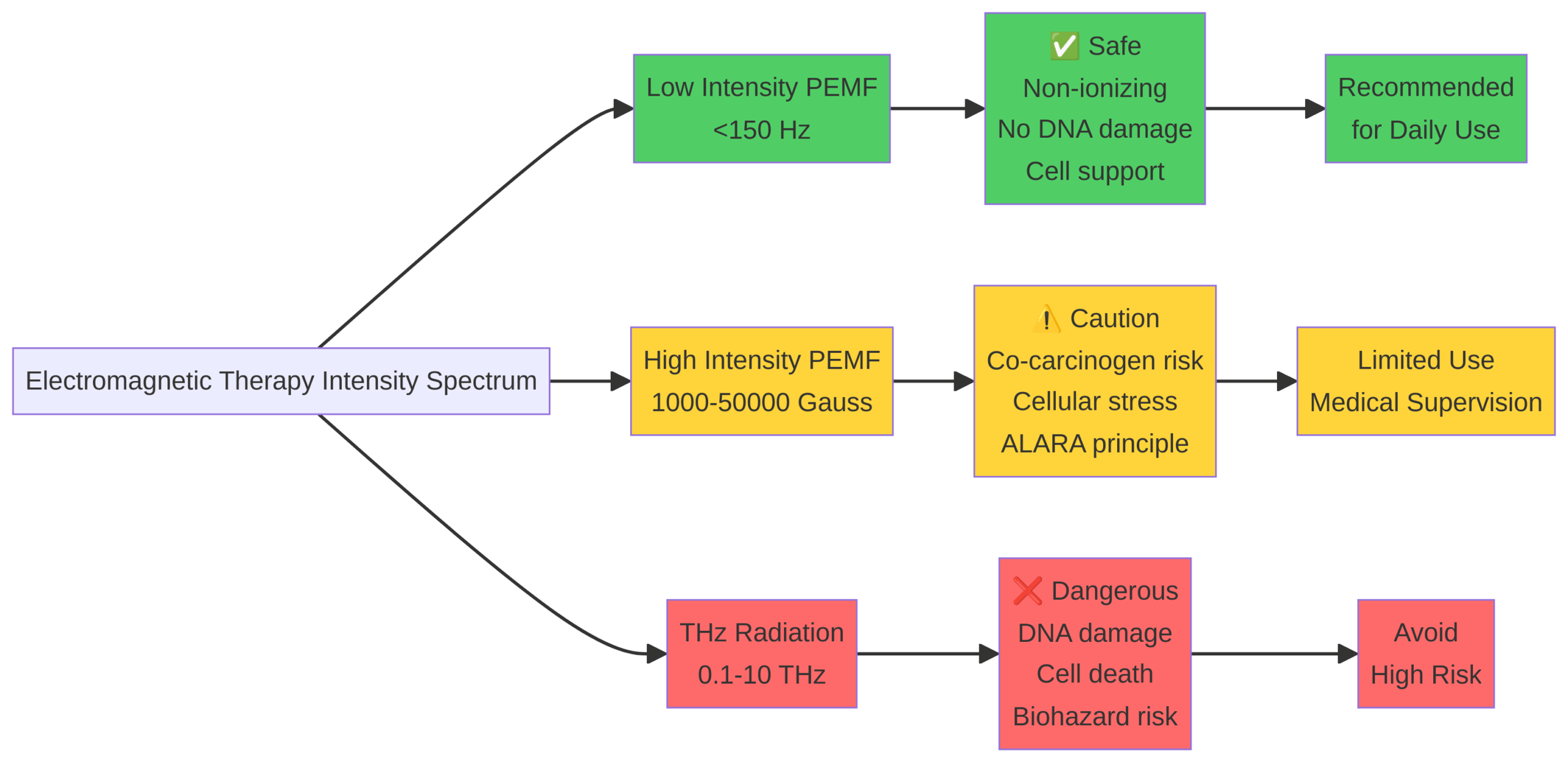
The following table, based on peer-reviewed research, illustrates the stark contrast between these high-intensity technologies and the gentle, restorative power of low-intensity PEMF:
| Parameter | THz Radiation | Low-Intensity PEMF |
|---|---|---|
| Frequency Range | 0.1-10 THz | <150 Hz (ELF range) |
| DNA Effects | Direct DNA damage documented (Wang et al., 2023) [11] | No DNA-damaging effects found (Flatscher et al., 2023) [1] |
| Cell Death | Increases apoptosis (programmed cell death) | Supports cell metabolism and regeneration |
| Safety Profile | Considered a biohazard risk at certain power densities | Generally safe, well-tolerated, with no known side effects |
| Regulation | Strict caution warranted; for professional use only | ALARA (As Low As Reasonably Achievable) principle sufficient |
| Biological Response | Disruption, damage, and cellular stress | Coherence, regulation, and cellular harmony |
| Nervous System | Highly sensitive and vulnerable to damage | Compatible, regulatory, and calming |
| Temperature Effects | Can cause thermal heating | Non-thermal, no temperature increase |
| Long-term Use | Not recommended; cumulative damage risk | Safe for daily, long-term use |
Low-Intensity PEMF and Microvoltage: The Safest, Most Effective Path to Healing
In stark contrast to the brute-force, high-risk approach of high-intensity devices and the outdated, ineffective model of Rife-based apps, low-intensity PEMF and microvoltage therapies offer a safe, gentle, and profoundly effective path to healing. These technologies work by providing the body with a subtle energetic cue, a gentle reminder of its own natural healing frequencies.
This approach is based on the well-established scientific principle of resonance, the idea that the body is more receptive to frequencies that are in harmony with its own. According to research published in the International Journal of Molecular Sciences (Flatscher et al., 2023), low-intensity PEMF activates beneficial calcium channels (L-type voltage-gated calcium channels), supports ATP production, enhances cell metabolism, and promotes tissue regeneration—all without causing DNA damage or cellular stress [1].
By providing a full spectrum of low-intensity frequencies, these devices create a coherent energetic field that supports the body’s innate, God-given ability to heal itself. This is not a quick fix, but a long-term strategy for building a more resilient, vibrant, and healthy you. The scientific consensus is clear: low-intensity PEMF is the safest option for daily wellness and long-term health optimization.
How to Use: Recommended Devices
The following devices are recommended for experiencing the proven benefits of low-intensity PEMF and microvoltage therapy. These products represent the cutting edge of safe, validated frequency medicine:
Frequency Imprinters & Pocket PEMF
- Archimedean Tesla Spiral Frequency Imprinter – Sacred geometry-based frequency imprinting for water and body
- Metatronic Flower of Life Frequency Imprinter – Advanced sacred geometry for energetic coherence
- C60 Shungite 5G EMF Shield iTorus i2 Pocket PEMF – Portable PEMF with EMF protection and one year free app access
Full-Body PEMF Mats
Woojer Haptic Frequency Devices
- Woojer Vest 4 – Wearable haptic vest for full-body frequency immersion and vibrational therapy
- Woojer Strap 4 – Compact haptic strap for targeted frequency delivery to upper body
- Woojer Mat – Haptic mat for seated or lying frequency therapy sessions
Related PEMF Programs
These validated, phase-based PEMF programs from www.epemf.app represent the future of frequency medicine—multi-phase, full-spectrum, and scientifically designed for maximum coherence and safety:
- Deep Tissue Regeneration, Recovery Tesla 3 6 9 Energetics – Advanced tissue repair using Tesla’s sacred number sequence
- Atrial Fibrillation, Heart Rhythm Disorder – Calm, Coherence, Balance – Heart-brain synchronization for cardiac coherence
- 528Hz Sacred 5-Phase Full Spectrum Energetics – DNA repair frequency with 5-phase protocol
- Star Child Ultimate, Neural, Gut, Heart, Coherence Field Energetics – Comprehensive nervous system regulation
- Metastatic Cancer, 7 Phases, Coherence, Transmutation, Cellular Renewal, Energetics – Advanced 7-phase cancer support protocol
- Morphea Skin Regulation Coherence 11 Stages Advanced Energetics – Multi-stage skin regeneration protocol
- Nipah Virus, 5 Phase Ultra Advanced Coherence Energetics – Viral defense with phase-based immune support
- 528Hz Full Body Healing, DNA Repair, Cell Regeneration – Comprehensive cellular restoration
- 9 Essential Amino Acids Crucial for Human Life Energetics – Nutritional frequency support
- Adrenal Fatigue Energetics – HPA axis regulation and stress recovery
Best Practices & Protocols
For optimal results with low-intensity PEMF and microvoltage therapy, follow these evidence-based protocols:
Daily Protocol
Use your chosen device for 30-60 minutes per day. It is best to use the devices in a quiet, relaxed environment where you can focus on your breathing and allow your body to receive the full benefits of the therapy. Morning sessions can energize and prepare the body for the day, while evening sessions promote deep relaxation and restorative sleep.
Weekly Cycling
For long-term use, it is recommended to cycle your use of the devices, using them for 5-6 days a week and taking 1-2 days off. This cycling protocol prevents your body from becoming habituated to the frequencies and ensures that you continue to receive the maximum benefit from this powerful healing technology. Think of it as giving your body’s energetic systems a chance to integrate and respond.
Hydration & Grounding
Always ensure proper hydration before and after PEMF sessions, as water is a key conductor of electromagnetic frequencies in the body. Grounding (earthing) practices can also enhance the effectiveness of PEMF therapy by normalizing the body’s electrical potential.
Contraindications
While low-intensity PEMF is generally safe, consult with a healthcare provider if you have a pacemaker, are pregnant, or have any electronic implants. Always follow the ALARA principle: As Low As Reasonably Achievable.
References
- Flatscher, J., Pavez Loriè, E., Mittermayr, R., Meznik, P., Slezak, P., Redl, H., & Slezak, C. (2023). Pulsed Electromagnetic Fields (PEMF)—Physiological Response and Its Potential in Trauma Treatment. International Journal of Molecular Sciences, 24(14), 11239. https://doi.org/10.3390/ijms241411239
- Cancer Research UK. (n.d.). Rife machines. Retrieved from https://www.cancerresearchuk.org/about-cancer/treatment/complementary-alternative-therapies/individual-therapies/rife-machine-and-cancer
- WebMD. (2024, June 11). Can Rife Machines Treat Cancer? Retrieved from https://www.webmd.com/cancer/cancer-rife-machine-evidence
- Medical News Today. (n.d.). Rife machine for cancer: Does it work, and are there any risks? Retrieved from https://www.medicalnewstoday.com/articles/325628
- Reuters. (2021, July 23). No reliable evidence that Rife machines cure cancer. Retrieved from https://www.reuters.com/article/fact-check/no-reliable-evidence-that-rife-machines-cure-cancer-idUSL1N2OZ166
- IEEE. (n.d.). Standard for Safety Levels with Respect to Human Exposure to Radio Frequency Electromagnetic Fields, 3 kHz to 300 GHz.
- International Commission on Non-Ionizing Radiation Protection. (2020). Guidelines for limiting exposure to time-varying electric, magnetic and electromagnetic fields (up to 300 GHz).
- Pilla, A. A. (2013). Pulsed electromagnetic fields for bone healing: a review of the clinical evidence and the scientific basis. Bioelectromagnetics, 34(4), 239–250. https://doi.org/10.1002/bem.21768
- Varani, K., Gessi, S., Merighi, S., Iannotta, V., Cattabriga, E., Spisani, S., & Borea, P. A. (2002). Effect of low frequency electromagnetic fields on A2A adenosine receptors in human neutrophils. British journal of pharmacology, 136(1), 57–66. https://doi.org/10.1038/sj.bjp.0704695
- Markov, M. S. (2007). Pulsed electromagnetic field therapy history, state of the art and future. The Environmentalist, 27(4), 465–475. https://doi.org/10.1007/s10669-007-9128-2
- Wang, Y., Xiong, Y., Chen, M., Liu, F., He, H., Ma, Q., Gao, P., Xiang, G., & Zhang, L. (2023). The biological effects of terahertz wave radiation-induced injury on neural stem cells. iScience, 26(10), 107418. https://doi.org/10.1016/j.isci.2023.107418
- Chen, L., & Chou, C. K. (2022). A Discussion on Associating THz Safety with 5G Safety. physica status solidi (a), 219(20), 2200263. https://doi.org/10.1002/pssa.202200263
- University of Alberta. (2020, June 5). Terahertz radiation can disrupt proteins in living cells. ScienceDaily. Retrieved from www.sciencedaily.com/releases/2020/06/200605182334.htm
- Liu, Y. C., Ke, L., Yang, S. W. Q., Nan, Z., Teo, E. P. W., Lwin, N. C., … & Mehta, J. S. (2021). Safety profiles of terahertz scanning in ophthalmology. Scientific reports, 11(1), 1-10. https://doi.org/10.1038/s41598-021-82103-9
- Mattsson, M. O., & Simkó, M. (2019). The interaction between electromagnetic fields at megahertz, gigahertz and terahertz frequencies with cells, tissues and organisms: risks and potential. Journal of the Royal Society Interface, 16(156), 20170585. https://doi.org/10.1098/rsif.2017.0585
- Mac Manus, M. P. (2008). Unproven medical devices and cancer therapy: big claims but no evidence. Biomedical Imaging and Intervention Journal, 4(3), e25. https://doi.org/10.2349/biij.4.3.e25
- HAELO. (n.d.). The Art of Layering: What Makes HAELO’s PEMF Device Different. Retrieved from https://www.haelo.com/blogs/blog-and-articles/the-art-of-layering-what-makes-haelo-s-pemf-device-different
Medical Disclaimer: The information provided in this article is for educational purposes only and is not intended as a substitute for professional medical advice, diagnosis, or treatment. Always seek the advice of your physician or other qualified health provider with any questions you may have regarding a medical condition.