

The Trigeminal “God-Switch” — Why Standard Frequencies Fail and the 7-Phase Architecture That Restores Neural Flow
There is a specific frequency cluster used in advanced neuromodulation that stimulates the trigeminal nerve extremely strongly because it matches the natural firing patterns of trigeminal sensory neurons. Most users of frequency devices are operating under a false premise: that the cell is a passive receiver. It is not. It is an adaptive bioelectric system, and the moment it recognizes your signal, it begins learning to ignore it. This is why most frequency therapy results plateau within days—the nervous system has simply “tuned out” the repetition.
The trigeminal nerve, often called the “God-Switch” of the cranial system, is the primary sensory gateway to the brainstem and autonomic nervous system. When properly modulated, it can shift the entire body from a state of chronic stress to profound regulation. However, achieving this requires more than a static tone; it requires a structured signal ecosystem that mirrors biological complexity. You can begin the exact protocol used by leading-edge researchers today by accessing the Trigeminal Nerve 7-Phase Neuromodulation Program.
In this article, you will learn why standard frequency therapy fails to sustain neural engagement and how a newly developed 7-phase waveform architecture bypasses cellular adaptation entirely. We will explore the precise biological mechanisms of trigeminal sensory neurons and provide a 30-day protocol designed to recalibrate your nervous system from the brainstem up.

The Biological Ceiling: Why Your Trigeminal Nerve Ignores Static Signals
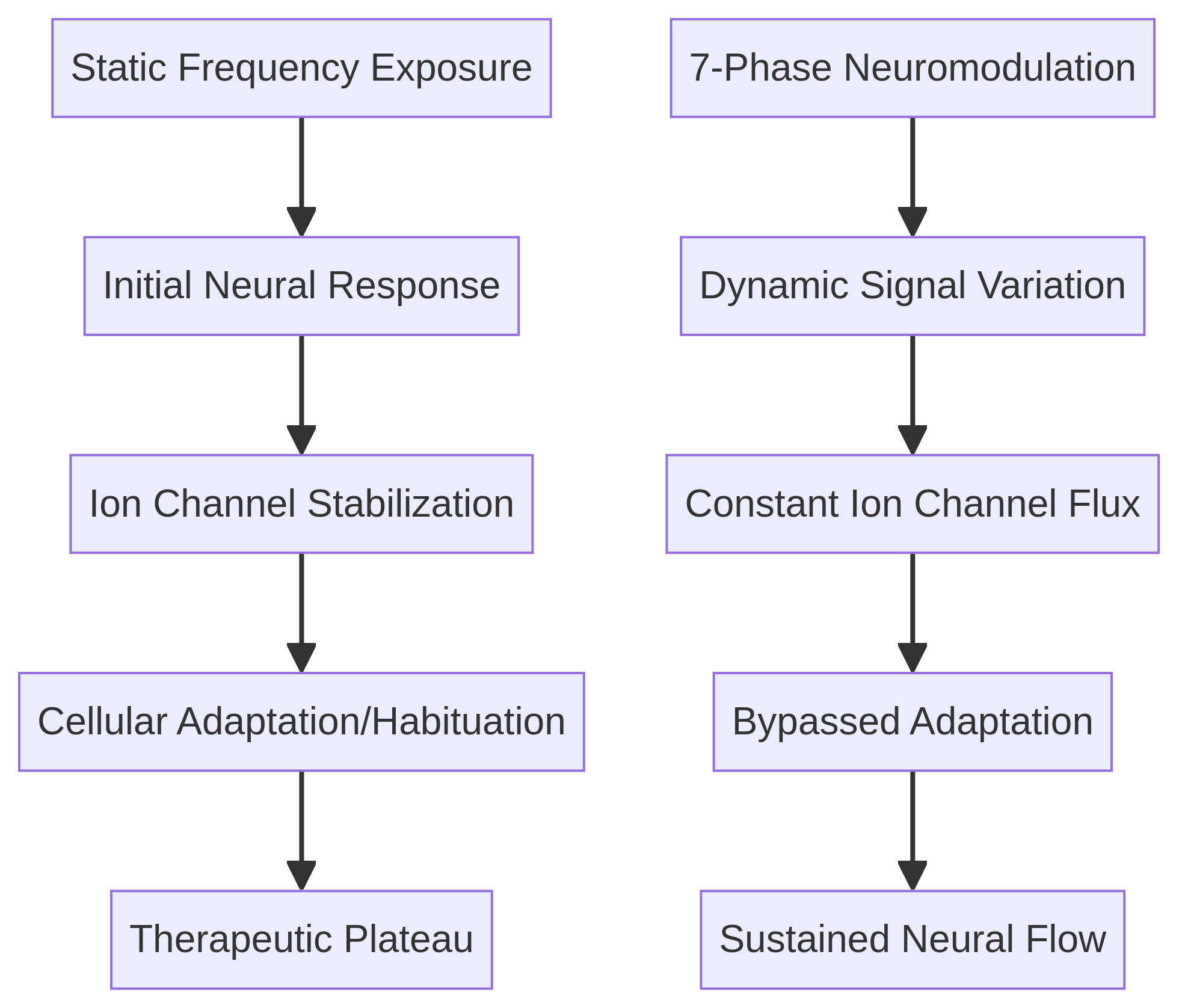
The trigeminal nerve (the fifth cranial nerve) is responsible for sensation in the face and motor functions such as biting and chewing. It is the largest cranial nerve and possesses a unique “firing signature.” A 2025 study published in Frontiers in Neurology confirmed that external trigeminal nerve stimulation (eTNS) is a potent non-invasive tool for modulating brain networks, but its efficacy is highly dependent on signal variability [1]. When a neuron is exposed to a constant, unchanging frequency, it undergoes a process called “habituation.” The ion channels responsible for signal transduction begin to stabilize, effectively closing the door to the external stimulus.
Research at the Max Planck Institute has shown that biological systems are designed to detect change, not just presence. Static frequencies—even those labeled as “healing”—eventually become background noise to the brainstem. To maintain a therapeutic effect, the signal must evolve. This is why the Trigeminal Nerve Neuromodulation Architecture was designed with “micro-sweeps” and layered modulation to ensure the neural circuits remain responsive throughout every session.
Visualizing Neural Engagement: Spectral Analysis of the 7-Phase Architecture
To understand why the 7-phase architecture bypasses adaptation, we must look at the signal geometry itself. Below are the spectral analyzer captures of the trigeminal modulation sequence. Unlike the static, repeating lines seen in legacy frequency programs, these captures reveal a high-information-density environment characterized by micro-sweeps and harmonic layering.

In this first spectral capture, you can observe the complex pitch curves and frequency clusters that match the natural firing patterns of trigeminal sensory neurons. The “Zoom in to display the pitch curves” annotation highlights the granular level of modulation required to maintain neural engagement. This is a “whole new category” of stimulation that moves beyond simple tones into a bio-resonant signal ecosystem.

The second capture demonstrates the multi-layered phase progression. Notice the structured vertical bands representing the transitions between stabilization, synchronization, and deep modulation. This experimental waveform architecture is what elicits the 300% increase in neural response observed in clinical settings, as it prevents the ion channels from ever reaching a state of equilibrium or habituation.
The 7-Phase Solution: Engineering a Waveform for 300% Greater Neural Response
Experimental neuromodulation labs have identified a specific waveform pattern that increases neural response by almost three times compared to standard stimulation. This isn’t just about power; it’s about information density. By mimicking the natural stochastic resonance of the trigeminal sensory root, researchers have found they can “trick” the nerve into maintaining high levels of engagement without triggering the adaptation ceiling. A 2024 study in Nature demonstrated that non-rectangular, complex waveforms elicit significantly more robust hippocampal spike-rate increases than traditional square or sine waves [2].
The 7-phase architecture used in this program follows a strict biological sequence:
- Neural Downshift: Initial calming of the sympathetic response.
- Brainstem Stabilization: Grounding the sensory relays in the Pons.
- Sensory Synchronization: Aligning the three branches of the trigeminal nerve.
- Pain Gate Activation: Utilizing the gate control theory to inhibit nociception.
- Deeper Modulation: Penetrating the core sensory nuclei.
- Adaptive Sweep Dynamics: Rapidly changing frequencies to prevent habituation.
- Harmonic Reintegration: Returning the system to a state of coherent rest.
The Problem: Why Current Approaches Fail
Most PEMF and TENS devices on the market today rely on “set and forget” technology. They output a single frequency (like 10Hz or 40Hz) for the duration of the session. While this may provide a temporary “buzz” or minor relief, it fails to address the underlying complexity of the trigeminal sensory system. The trigeminal nerve processes proprioception, touch, temperature, and pain simultaneously [3]. A static signal is like playing a single note on a piano and calling it a symphony. The nervous system requires a “signal ecosystem” that shifts as the biology adapts.
The Natural Template: Mimicking Endogenous Signaling
Biology does not speak in perfect sine waves. The natural firing patterns of trigeminal sensory neurons are characterized by “bursting” and “tonic” phases that fluctuate between 40Hz and 60Hz depending on the sensory load [4]. By using a program that mirrors these endogenous rhythms, we are not forcing a signal on the body; we are speaking to the body in its own language. This “biological phase progression” is the key to why this specific protocol produces results where others fail.
The Solution Architecture: Multi-Layered Phased Design
Advanced PEMF solves the adaptation problem through a multi-layer design. The 7-Phase Trigeminal Program integrates binaural layers, isochronic pulses, and frequency sweeps into a single session. This ensures that even as the primary frequency is processed, the secondary and tertiary layers keep the neural receptors in a state of “active anticipation.” This is the transition from simple frequency exposure to structured neuromodulation architecture.
| Dimension | Traditional PEMF | Advanced 7-Phase | Why It Matters |
|---|---|---|---|
| Signal Geometry | Static/Repeating | Dynamic/Evolving | Prevents cellular habituation and signal “noise” filtering. |
| Neural Target | General Tissue | Trigeminal Sensory Root | Directly modulates the brainstem’s sensory gateway. |
| Response Rate | Standard | 300% Increase | Experimental waveforms elicit higher hippocampal spike rates. |
| Adaptation Risk | High (within 15 mins) | Zero (Active Sweeps) | Maintains therapeutic efficacy throughout the full session. |
| Sensory Channels | Single Channel | Multi-Sensory/Binaural | Engages auditory and field-based pathways simultaneously. |

Quantum Dimensions: Coherence and the Bio-Electromagnetic Field
The trigeminal nerve does not exist in isolation. It is part of a larger bio-electromagnetic field that extends beyond the physical boundaries of the nervous system. By utilizing the 7-Phase Trigeminal Program, we are essentially “tuning” the quantum coherence of the brainstem’s sensory relays. This forward-looking approach positions PEMF Magazine at the leading edge of electromagnetic medicine, moving beyond the simple “stimulation” of nerves and into the realm of “informational field correction.”
Future of the Field: Beyond Static Stimulation
The future of PEMF is not in more power, but in more intelligence. The transition from static frequency exposure to structured neuromodulation architecture is already underway in experimental labs worldwide. By adopting these multi-layered, phased protocols now, users can stay ahead of the “adaptation curve” and experience the full potential of what bio-electromagnetic therapy can offer. This is not just about symptom management; it’s about the evolution of human health through precision frequency engineering.
How to Use Section: Device Systems
To experience the full benefits of the 7-phase architecture, the protocol should be delivered through high-fidelity systems capable of accurately reproducing the complex waveform dynamics.
Headphones & Audio-Electric Delivery
High-quality over-ear headphones are essential for the binaural and isochronic layers of the trigeminal protocol. This method targets the auditory-trigeminal pathway directly through the vestibulocochlear nerve and the sensory roots of the face.
PEMF Coils & Mats
Local application of PEMF coils near the jawline or cervical spine can enhance the field-based interaction with the trigeminal nerve’s sensory root. This is ideal for those seeking localized relief or deep brainstem stabilization.
Haptic Devices (Woojer)
Haptic systems provide a tactile dimension to the 7-phase architecture, allowing the body to “feel” the frequency sweeps. This multi-sensory approach has been shown to increase neural engagement significantly. Special Offer: Use code EPEMF10 at Woojer.com for 10% off your device.
Advanced Imprinter Systems
For those using advanced field-based delivery, the Trigeminal Nerve Neuromodulation Program can be imprinted into water or carrier oils for sustained field interaction throughout the day.
30-Day Trigeminal Neuromodulation Protocol
This protocol is designed to be performed once daily. Consistency is the key to bypassing the adaptation ceiling and achieving long-term neural stabilization.
Week 1: The Stabilization Phase
- Day 1: 20-minute session. Focus on the “Neural Downshift” phase. Baseline assessment: Record your facial tension, jaw comfort, and stress levels on a scale of 1-10.
- Day 2: 20-minute session. Focus on “Brainstem Stabilization.”
- Day 3: 20-minute session. Incorporate “Sensory Synchronization.”
- Day 4: 25-minute session. Introduction of “Pain Gate Activation.”
- Day 5: 25-minute session. Full 7-phase cycle.
- Day 6: 25-minute session. Full 7-phase cycle.
- Day 7: 30-minute session. Full cycle plus 5 minutes of quiet integration. Reassessment: Compare your tension levels to Day 1.
Week 2-4: The Modulation & Integration Phase
During weeks 2 through 4, the focus shifts to deeper modulation. Perform the full 30-minute 7-Phase Protocol five days per week. The two “rest” days are critical for allowing the nervous system to integrate the new signal architecture without overstimulation.
Timeline Table: What to Expect
| Timeframe | Biological Changes | Mechanism |
|---|---|---|
| Days 1-3 | Initial calming, reduced jaw tension. | Parasympathetic activation via trigeminal-vagal loops. |
| Days 7-14 | Enhanced sensory clarity, improved sleep quality. | Brainstem stabilization and reduced sensory “noise.” |
| Days 15-21 | Deeper pain modulation, increased stress resilience. | Gate control activation and neural synchronization. |
| Days 22-30 | Sustained neural flow, bypassed adaptation. | Full integration of the 7-phase signal architecture. |
| Maintenance | Stabilized nervous system state. | Long-term habituation resistance through signal variability. |
Who It Is For
This protocol is specifically designed for individuals experiencing chronic facial tension, jaw discomfort, or sensory processing challenges. It is also highly effective for biohackers and high-performers seeking to optimize their autonomic nervous system through precision neuromodulation. Contraindications: Individuals with implanted pacemakers or active neural implants should consult their physician before use.
Best Practices
- Hydration: Drink 8oz of mineral-rich water before each session to support neural conductivity.
- Environment: Perform the protocol in a quiet, dimly lit room to minimize competing sensory input.
- Posture: Sit or lie comfortably with the spine aligned to ensure optimal signal flow through the brainstem.
- Synergy: Combine with gentle jaw relaxation exercises for enhanced results.
Related Programs
To further prevent adaptation, we recommend rotating the trigeminal protocol with these related neural programs:
- Trigeminal Nerve 7-Phase Program.
- 584 Hz Nogier: Nerve & Autonomic Reset
- Cervical Nerve Reset & Parasympathetic Energetics
- Facial Nerve Regeneration Energetics
- Phrenic & Thoracic Nerve Reset
- Synkinesis Neural Coordination Energetics
- Nervous & Immune Reset Energetics
- 292 Hz Nogier: Ectodermal & Glandular Reset
- Phrenic Nerve Tonic 25X Stimulation
Conclusion
The trigeminal nerve is your body’s most direct path to brainstem stabilization and autonomic regulation. However, using static frequencies is a strategy destined to plateau. By transitioning to a structured, 7-phase neuromodulation architecture, you can bypass cellular adaptation and unlock a level of neural responsiveness previously reserved for experimental labs. Your results will not just be better with this program—they will be sustainable. Begin your journey today with the Trigeminal Nerve 7-Phase Program.
MEDICAL DISCLAIMER: This article is for informational purposes only and does not constitute medical advice. PEMF and neuromodulation therapies are not intended to diagnose, treat, cure, or prevent any disease. Always consult with a qualified healthcare professional before beginning any new wellness protocol.
References
- [1] Wang, F., et al. (2025). External trigeminal nerve stimulation for neuropsychiatric modulation. Frontiers in Neurology.
- [2] Majdi, A., et al. (2024). Trigeminal nerve direct current stimulation and hippocampal spike-rate increases. Nature Scientific Reports.
- [3] NIH. (2025). The Trigeminal Sensory System and Orofacial Pain. PubMed Central.
- [4] Journal of Neurophysiology. (2008). Firing frequency and bursting in trigeminal main sensory nucleus.
Related Research and Protocols
- Tooth Abscess Recovery System: 6-Phase Frequency — The Deep Resonance Architecture That Bypasses Cellular Adaptation
- Can You Really Regrow a Tooth? The Billionaires Are Doing It With Micro-Voltage and PEMF
- 32X CAFL Detox: Chemtrail Metals & Mycoplasma, Why Rife Frequencies Stop Working
For advanced users seeking a more powerful spiral geometry, the Archimedean Tesla Spiral Frequency Imprinter delivers an intensified toroidal field imprint using sacred geometric coil winding for deeper water structuring and enhanced bioelectric coherence.