

Energy Healing for Sleep Support
Sleep is not a passive switch your body flips at night. It is an active biological process shaped by light exposure, stress hormones, breathing patterns, circadian rhythm, and the subtle electrical signaling that coordinates every cell. When that signaling becomes dysregulated, restlessness often follows. Energy healing—and the broader field of bioelectric wellness—approaches sleep from this electrical and energetic angle, offering complementary tools that many people use alongside conventional sleep hygiene. This guide explores how energy healing for sleep support works, what the evidence says, how to practice it safely, and how adaptive frequency technology is changing the landscape in 2026.
What Is Energy Healing and How Does It Relate to Sleep?
Energy healing is an umbrella term for practices that aim to influence the body’s subtle energy systems—often described as biofields, meridians, or vital force—to support relaxation and balance. Common modalities include Reiki, Healing Touch, Therapeutic Touch, qigong, acupuncture, and sound or vibration-based therapies. These traditions share a core premise: that physical and emotional well-being depends partly on the free, balanced flow of energy through the body.
From a modern wellness perspective, the “energy” language overlaps with real physiological phenomena. The human body generates measurable electrical activity—the heart’s electromagnetic field, brainwave oscillations, and cellular membrane potentials. Sleep itself is characterized by distinct electrical signatures, such as slow delta waves during deep sleep and faster frequencies during REM. Practices that promote calm, slow breathing, and parasympathetic (rest-and-digest) activation can influence these patterns, which is why energy-based approaches are frequently explored for sleep support.
It is important to be clear: energy healing is a complementary practice, not a treatment for insomnia, sleep apnea, or any diagnosed sleep disorder. It is best understood as a natural way to balance your body’s energy and a self-care tool that may support the conditions in which good sleep becomes easier.
The Science-Informed View: Bioelectric Balance and Sleep
Research into sleep physiology increasingly emphasizes the role of electrical and rhythmic coordination. The brain’s glymphatic system clears metabolic waste during deep sleep; the autonomic nervous system shifts toward parasympathetic dominance; and the body’s core temperature and hormone rhythms synchronize with the light-dark cycle. Chronic stress disrupts this coordination, keeping the sympathetic nervous system—and its corresponding “alert” frequencies—active at night.

This is where the concept of bioelectric balance becomes useful. Rather than claiming to “cure” sleep problems, bioelectric wellness focuses on creating conditions that support the body’s natural regulatory capacity: calm nervous system tone, steady breathing, and reduced sensory overload. Understanding how frequency affects the body helps explain why sound, vibration, breathwork, and gentle frequency-based stimulation can nudge the body toward that state.
General lifestyle foundations still matter enormously. Regular movement during the day supports deeper sleep at night, and public health guidance on physical activity offers a practical starting point: the CDC physical activity guidelines and the NHS exercise guidance both outline activity levels linked to better overall health, including sleep quality. For evidence-based sleep education, the Sleep Foundation remains a widely referenced resource on sleep hygiene, disorders, and environmental factors.
Energy Healing Techniques for Sleep Support
If you are curious about energy healing for sleep, several approaches are accessible and low-risk. Many can be practiced at home, and some can be combined with professional sessions.

Reiki and Hands-On Energy Work
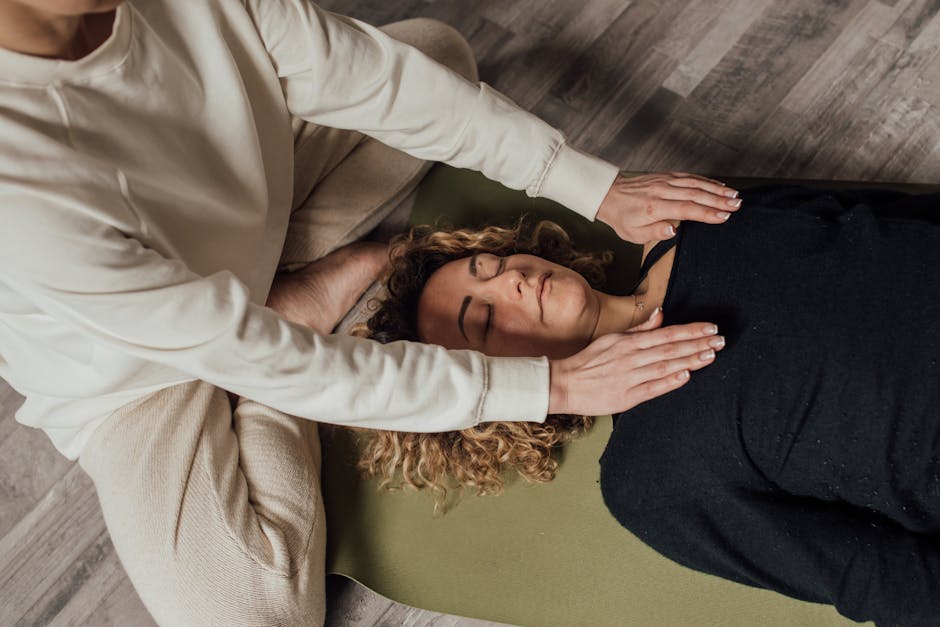
Reiki practitioners use gentle or hovering hand placements to promote relaxation. Sessions are typically quiet and restful, and many recipients report feeling calmer afterward—an effect that may support the transition into sleep. You can also learn simple self-Reiki techniques for use before bed.
Breathwork and Slow Breathing
Breath is one of the fastest bridges between the conscious mind and the autonomic nervous system. Extended exhales, alternate-nostril breathing, and coherent breathing (around five to six breaths per minute) encourage parasympathetic activation. Practicing ten minutes of slow breathing before bed is a practical, evidence-informed habit that pairs naturally with energy healing frameworks.
Sacred Sound and Soundscapes
Tibetan singing bowls, gongs, tuning forks, chanting, and ambient soundscapes use vibration and rhythm to settle the mind. Sound-based relaxation can reduce mental chatter and create a predictable bedtime ritual that signals to the body that rest is approaching. A guided sound bath for nervous system regulation can be a particularly effective way to unwind before sleep.
Qigong, Tai Chi, and Gentle Movement
Slow, mindful movement traditions combine breath, attention, and posture to cultivate calm energy. Evening qigong or gentle stretching can release physical tension that otherwise interferes with falling asleep.
Meditation and Body Scanning
Mindfulness practices, particularly body-scan meditations, train attention away from rumination and toward physical sensation. This supports the mental “letting go” that sleep requires.
Frequency Therapy and Adaptive Bioelectric Technology
Frequency-based wellness has evolved considerably. Early devices relied on static frequency sets—the same patterns repeated indefinitely. The challenge, recognized in biofeedback and neurostimulation research, is cellular adaptation: the body habituates to unchanging input, and the response diminishes over time. Adaptive systems attempt to address this by varying frequency, amplitude, and timing.
This is the design philosophy behind platforms such as those offered by PeMF Healing LLC, whose Frequency Healing platform describes more than 16,000 dynamic BioPhi programs and 1.8 million frequencies. The system incorporates AI guidance, voice scanning, breathwork, and sacred soundscapes to support natural electrical balance and to help overcome cellular adaptation to static frequencies. For individuals exploring bioelectric healing, frequency therapy, and personalized resonance-based solutions, adaptive technology represents an emerging category of wellness tools rather than a medical treatment.
As with any wellness technology, realistic expectations matter. Frequency devices are not substitutes for medical evaluation of sleep disorders, and individual responses vary. Used as part of a broader routine—alongside good sleep hygiene and professional care when needed—they may offer a structured, sensory-rich way to wind down.
Building a Practical Evening Routine
Energy healing works best when woven into consistent habits. Consider a simple sequence:
- Dim the environment: Reduce bright and blue-rich light one to two hours before bed to support melatonin production.
- Move gently: Try ten minutes of qigong, stretching, or self-Reiki.
- Breathe deliberately: Practice slow breathing with extended exhales.
- Layer sound: Use calming soundscapes, singing bowls, or a frequency-based session if you use one.
- Keep it consistent: A repeatable ritual trains the brain to associate these cues with sleep.
Pair this with foundational sleep hygiene—a cool, dark room; a consistent wake time; limited caffeine late in the day; and daytime activity as outlined in public health guidance. If sleep problems persist for weeks, or you experience loud snoring, gasping, or excessive daytime sleepiness, seek evaluation from a qualified healthcare professional. The Sleep Foundation provides helpful overviews of when to seek care.
Safety, Expectations, and Responsible Use
Energy healing is generally considered low-risk when used sensibly. Still, a few cautions apply. Avoid relying on energy practices to diagnose or treat medical conditions. People with implanted electronic devices, epilepsy, or pregnancy should consult a healthcare provider before using electrical or frequency-based wellness devices. Choose practitioners with transparent training and credentials, and treat dramatic marketing claims with skepticism—no wellness tool can guarantee sleep or health outcomes.
The most responsible framing is complementary: energy healing and bioelectric wellness may support relaxation and self-awareness, while conventional sleep medicine addresses diagnosable disorders. Both can coexist in a thoughtful routine.
Conclusion
Energy healing for sleep support sits at the intersection of ancient relaxation traditions and modern bioelectric wellness. From Reiki and breathwork to sacred sound and adaptive frequency platforms, the shared aim is to help the nervous system shift out of alertness and into balance—the state in which sleep comes more naturally. In 2026, personalized, adaptive approaches are expanding what “frequency wellness” can look like, but the fundamentals remain unchanged: consistent routines, realistic expectations, and professional care when needed. Used thoughtfully, energy-based practices can be a calming, supportive part of a broader sleep strategy.